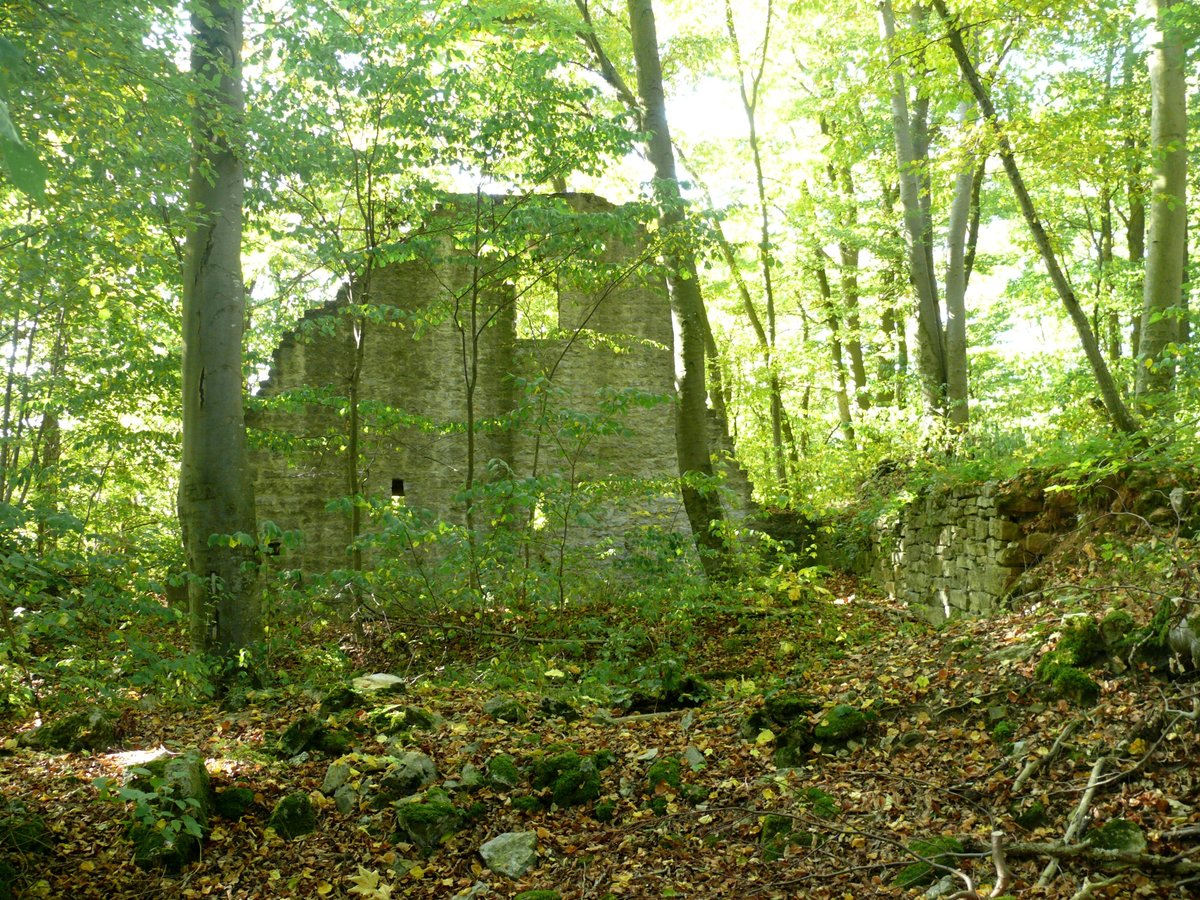
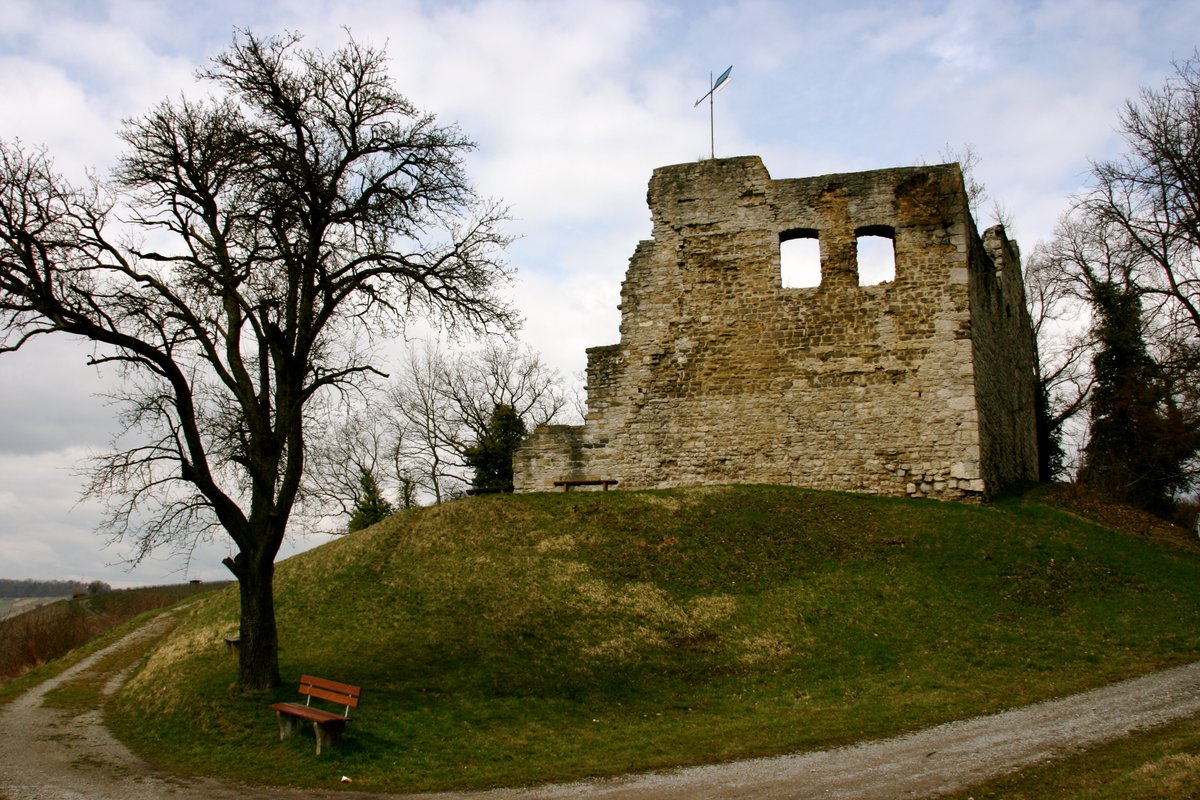
Burg Seldeneck sits on a narrow spine of land, a sharp klinge carved by the Tauber River. It is a spur castle, its land falling away into a steep drop on three sides, holding its ground 392 meters above sea level. The castle stands on the top of a valley spur, and the E8 European long distance path leads over the spur from the Tauber valley to the Hohenloher Plain.
The history of the site is a tangled web of feudal favors and shifting titles. First mentioned in 1265, the fortress was likely founded by the father of Götz (Gottfried) von Hohenlohe. It served as a fief of the Bohemian King John the Blind. When Götz held the castle, he hired a branch of the Nordenberg family to serve as Burgmann to defend the castle.
In exchange for their service, the Nordenberg family received shares of the ownership of the castle. They later became known as the Seldenecks. This was a ganerbenburg, a castle with multiple owners where different families held different pieces of the same walls. The Nordenberg family sold shares of the castle to Conrad and Arnold von Savensheim, and transferred another share to Kraft II.
By 1344, the legal records show the effects of debt and imperial bans. Conrad von Seinsheim sold all rights to Seldeneck Castle to the Burgraviate of Nuremberg to settle debts from an imperial ban received in April 1344. Meanwhile, Luppold von Seldeneck sold his share of Veste Seldeneck to Burgraves John II and Albrecht, yet he remained at the castle as a Burgvogt. Military roles like the Burgmann were handed from a military group from Gattenhofen in 1347 to Ullrich Mörder and Eberwein von Seldeneck in 1368.
The end for the fortress came in 1407. A revolt involving the League of Marbach saw the castle destroyed. The Adelgersmühle mill, first mentioned in 1341, no longer exists today. While records still mentioned officials at the site as late as 1418, the physical structure was already destroyed by 1414. Ownership eventually moved to the Imperial City of Rothenburg ob der Tauber in 1404.
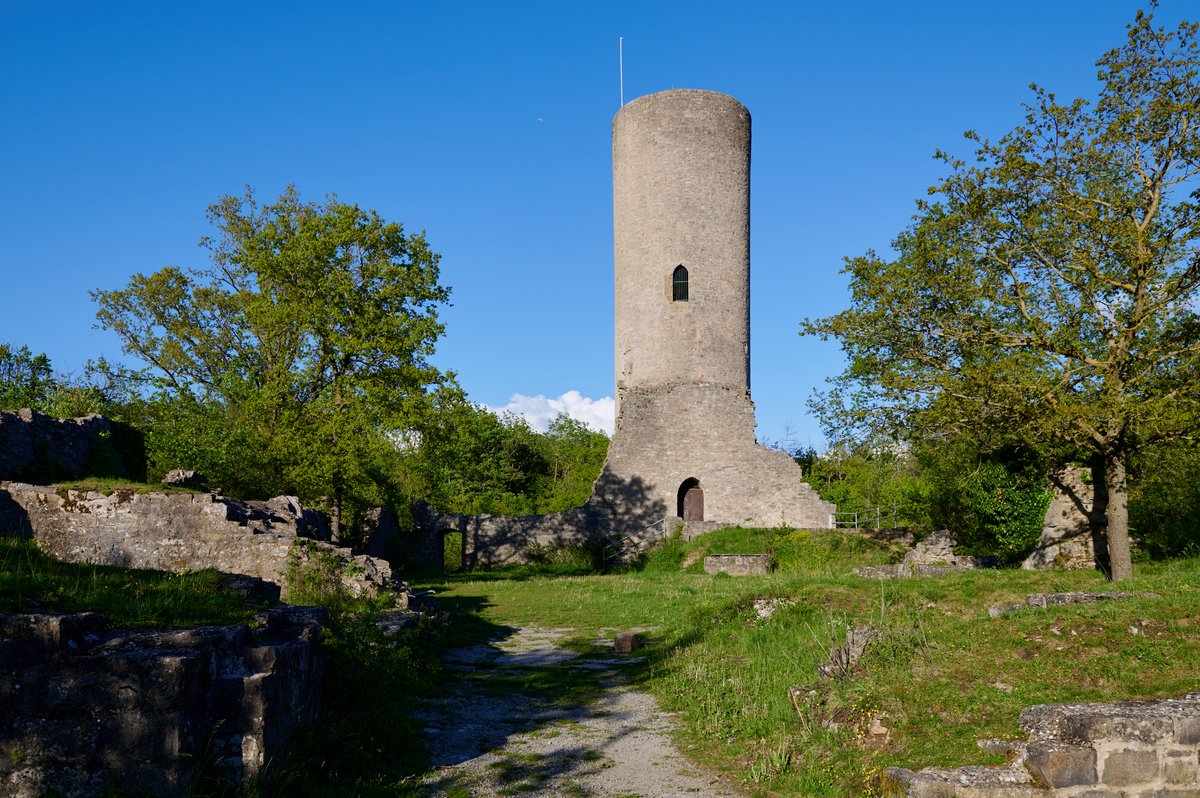
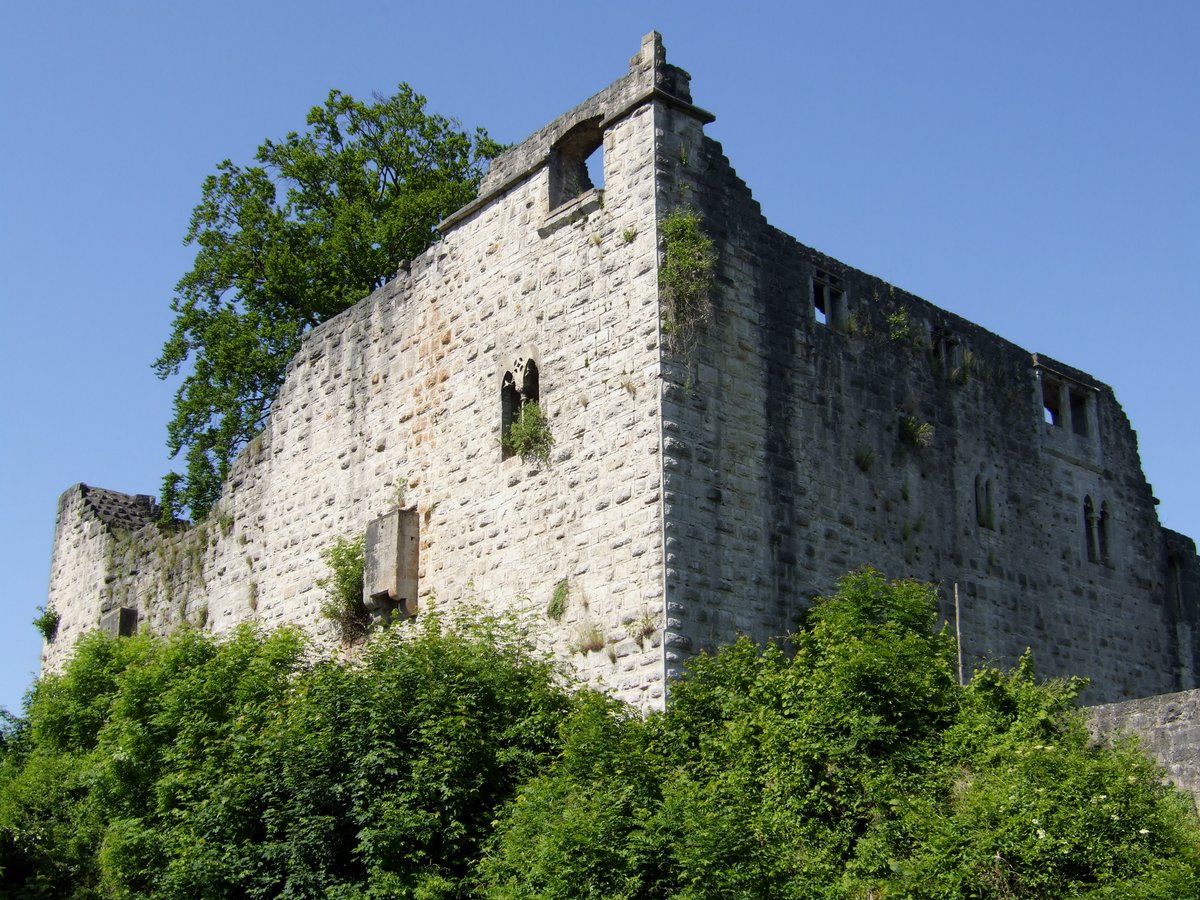
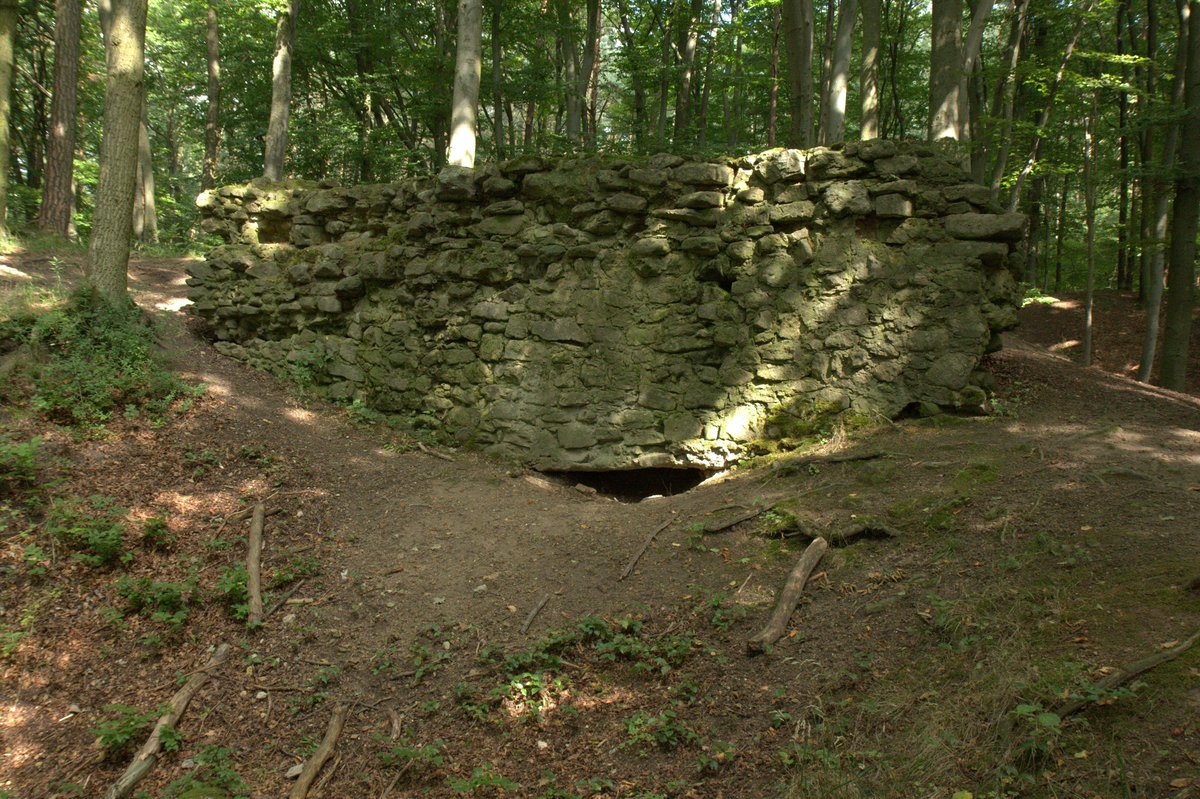
Today, the ruins stand as a boundary marker, situated just a few steps from the state border between Baden-Württemberg and Bavaria. The former course of the castle walls can still be roughly recognized in preserved areas, with the castle mound falling steeply on three sides, including the Tauber Valley.
Sources: Wikipedia, OpenStreetMap, Wikidata, Wikimedia Commons
Written by Aurora
Discuss this with the author and others
No comments yet. Be the first to start the conversation.