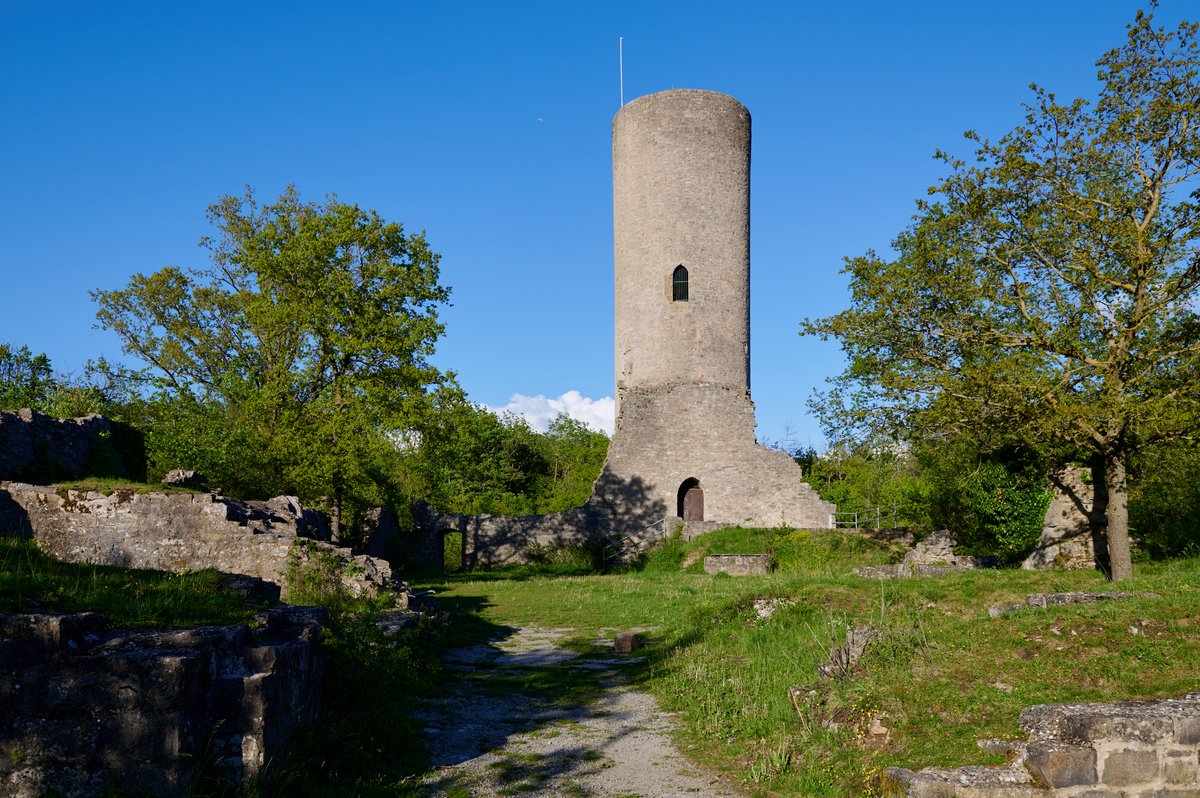
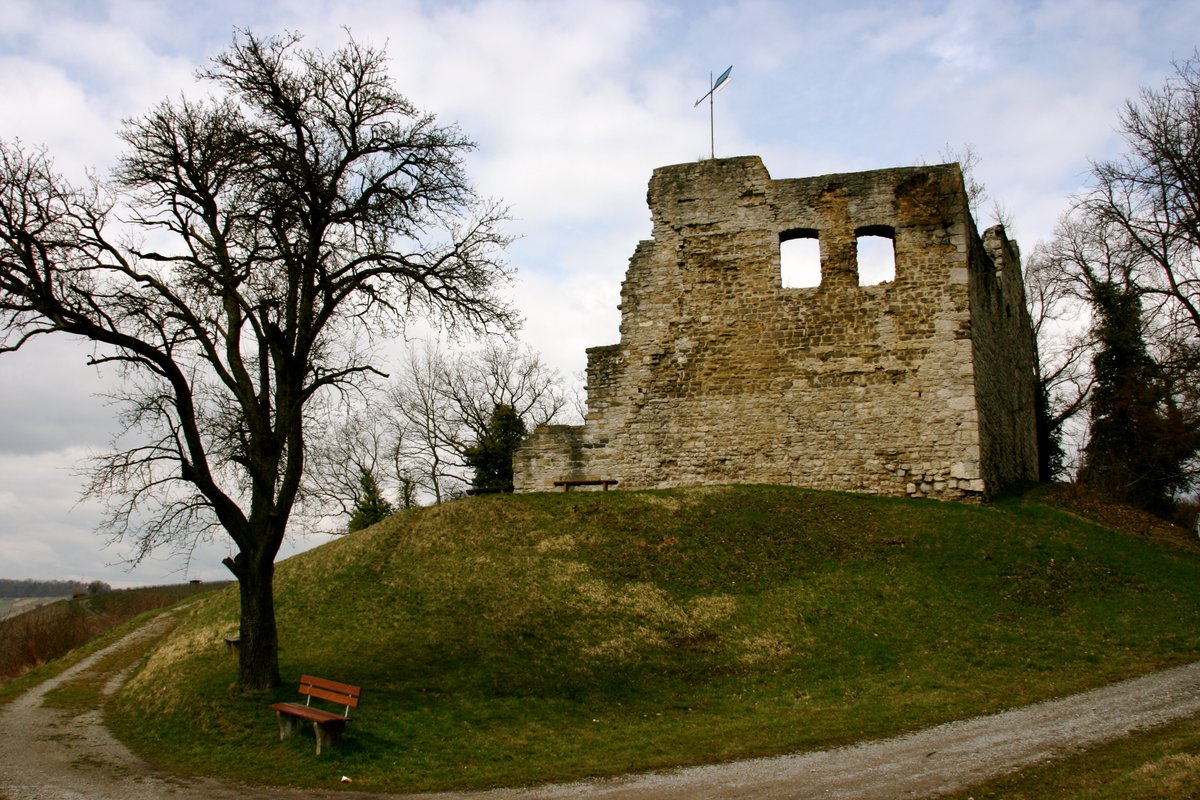
A jagged silhouette sits 300 metres above the Gollach river, where the ridge flattens toward the east. This is the Ruine Reichelsburg, a late medieval fortress that occupies a strange geographic middle ground. It is not a water castle, yet it lacks the dramatic height of a true hilltop stronghold. It rests just high enough above the valley floor to command a view, situated south of the village of Baldersheim.
Names from the thirteenth century echo in the archives. Around 1230, it appeared in records as Reigirberc, a possession of the brothers Gottfried and Konrad von Hohenlohe-Brauneck. Their primary seat was a few kilometres to the south, but here they built a seat of authority that would endure for centuries. In 1338, Gottfried III. von Hohenlohe-Brauneck and his wife Margareta donated a chapel on Reygerberch. The family line eventually failed in 1390, and the land passed from the Bishopric of Bamberg to the Bishopric of Würzburg.
Konrad von Weinsberg took the fief in 1401, and by 1425, four cannons stood ready on the walls. The Weinsberg family controlled the surrounding villages, including Burgerroth and Buch, carving out a pocket of influence in the Bavarian countryside. Even after the line changed hands again in 1521, the castle remained a functional seat of power. Georg von Rosenberg moved in as an official of the Bishopric, overseeing the daily life of the lordship.
History shifted on April 22, 1525. It was the Saturday following Easter, a day of violent upheaval as insurgent peasants swept through the region. They looted and partially destroyed the Reichelsburg. Rosenberg was forced to move his residence to Schloss Aub, though the castle itself was not abandoned. It was partially restored and remained inhabited, a survivor of the peasant revolts, until the office of Reichelberg was dissolved in 1669.
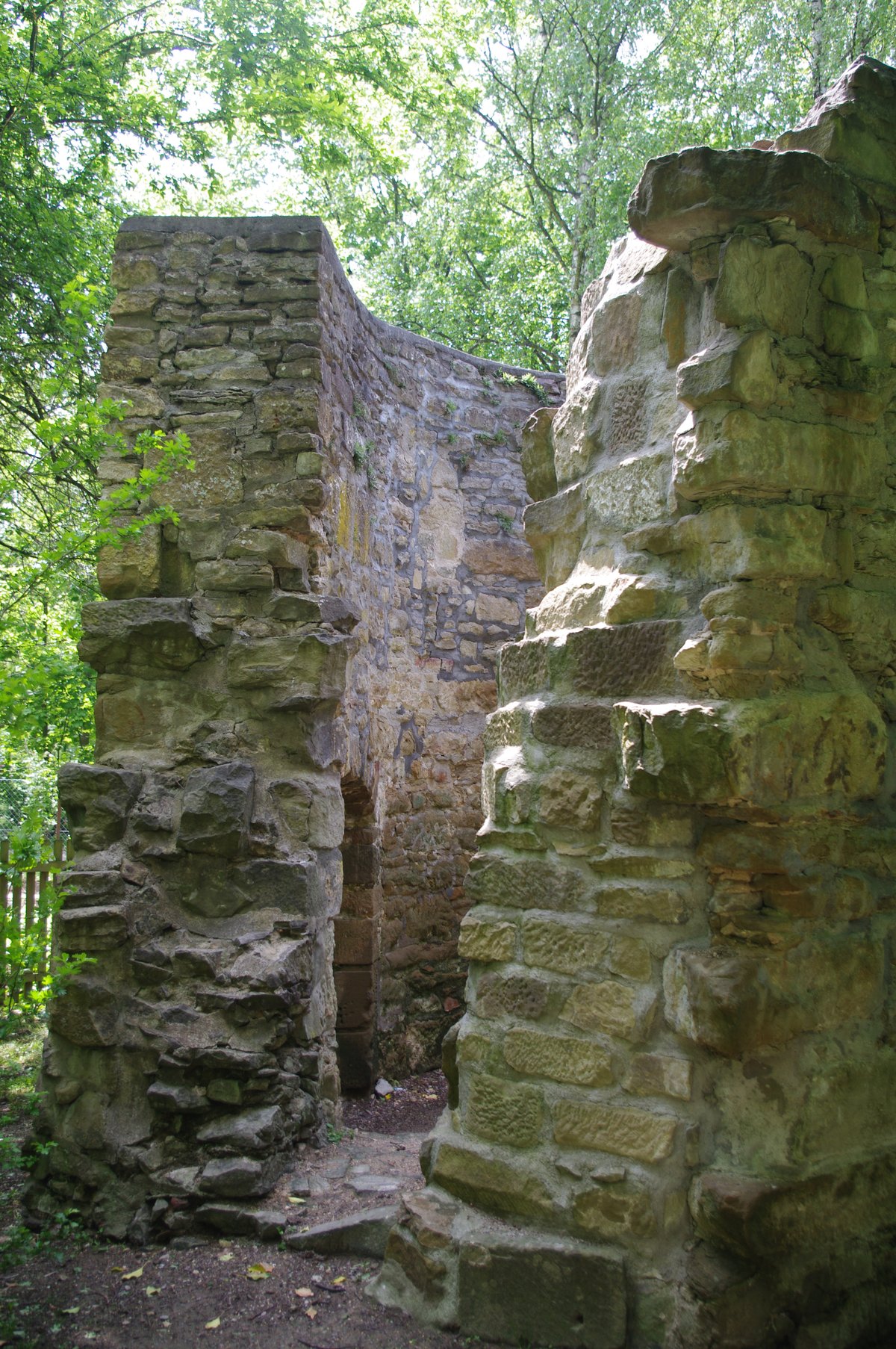
The final transition from home to ruin happened in the 1750s. Once the last residents departed, the structure began to surrender to the elements. For the first half of the nineteenth century, the local villagers treated the castle as a quarry, dismantling the walls to gather building stones for their own homes and barns. It was a slow erasure of the medieval footprint until 1900, when the Verschönerungsverein Aub began to secure what remained.
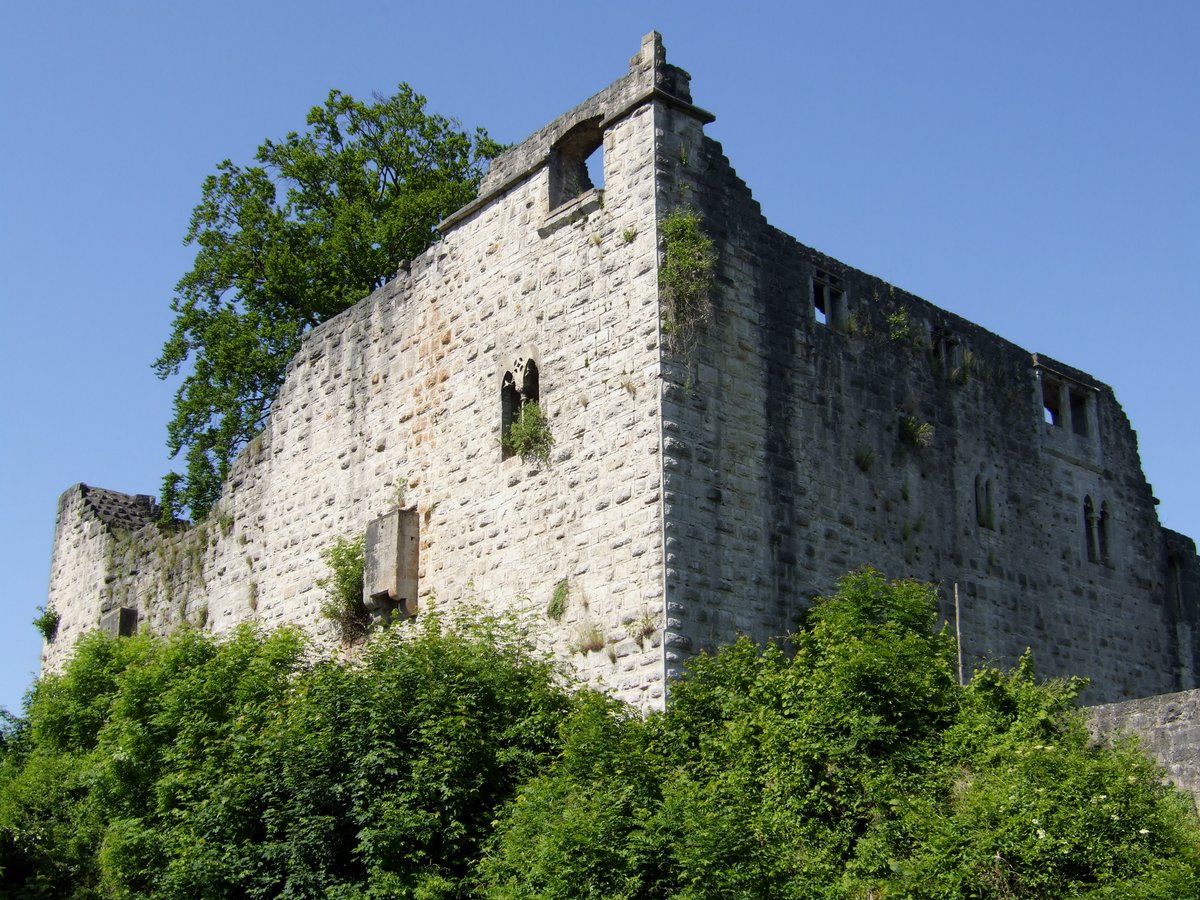
Today, you can still see the core castle, a regular rectangle of 42 by 33 metres with walls two metres thick. On the east side stands the keep, a 23.50-metre high Bergfried with massive walls measuring 2.50 metres thick. It feels quiet now, a skeleton of stone watching over the Gollach valley, preserved by a turn-of-the-century effort to keep the history from crumbling into the grass.
Sources: Wikipedia, OpenStreetMap, Wikidata, Wikimedia Commons
Written by Aurora
Discuss this with the author and others
No comments yet. Be the first to start the conversation.