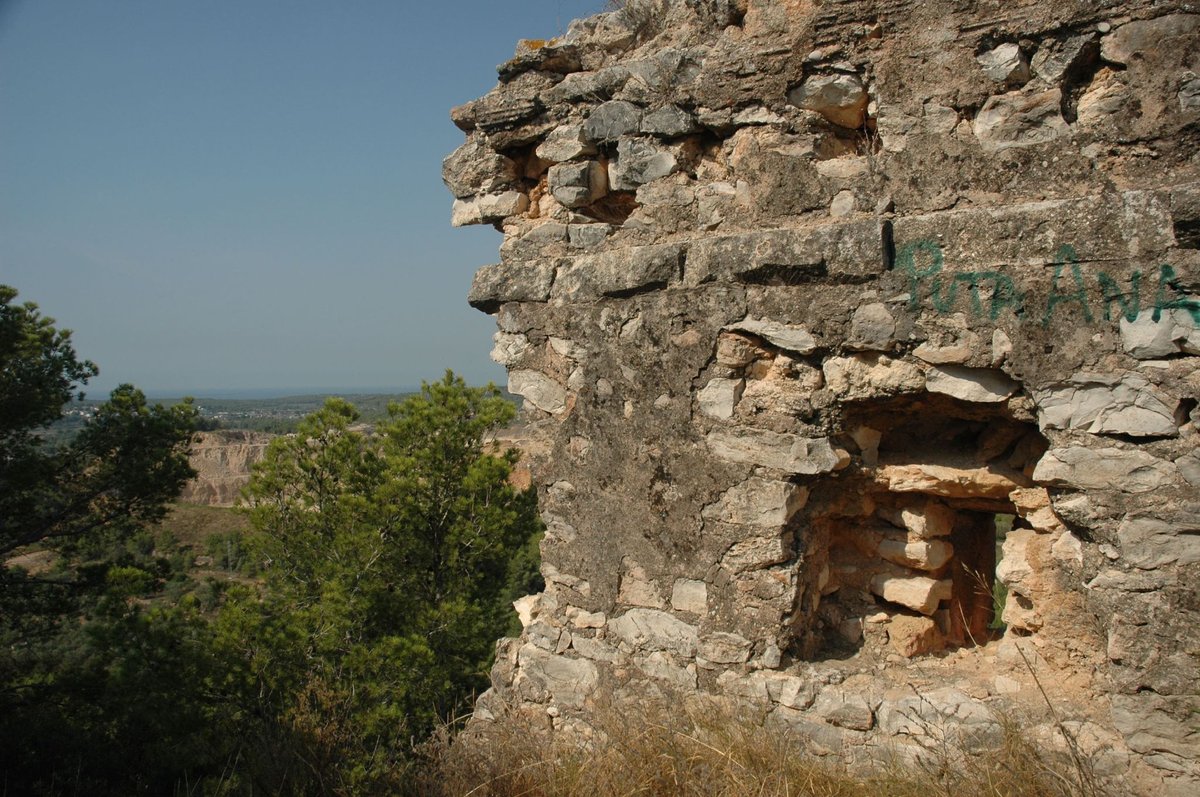

The castle of Montoliu, also known as the castle of Santa Margarida or el Castellot, is situated in the eastern sector of the Tarragona plain near the mouth of the Gaià river. Its history is rooted in ancient land grants, including an 1118 donation from the count of Barcelona, Ramon Berenguer III, to the bishop of Barcelona. Scholars have suggested that this site may be identical to the castle of Ullastrell, which was granted to Bernat Amat de Claramunt by the counts of Barcelona in 1060, on the condition that a castle be built there.
The Claramunt family held the dominant lordship of the castle during the 12th and 13th centuries. In 1251, a documented dispute arose between Guillema de Claramunt and Ponç de Cervera over the territory, with the church figure Ramon de Penyafort intervening to advise. While the castle remained in the hands of Guillema de Claramunt, the archbishop Pere d'Albalat purchased the Codony site and parts of the villages of Cubelles, Tamarit, and Montoliu in 1244. Later, a descendant of the Claramunt family, Berenguer de Montoliu, commanded the Catalan fleet during the reign of King James II.
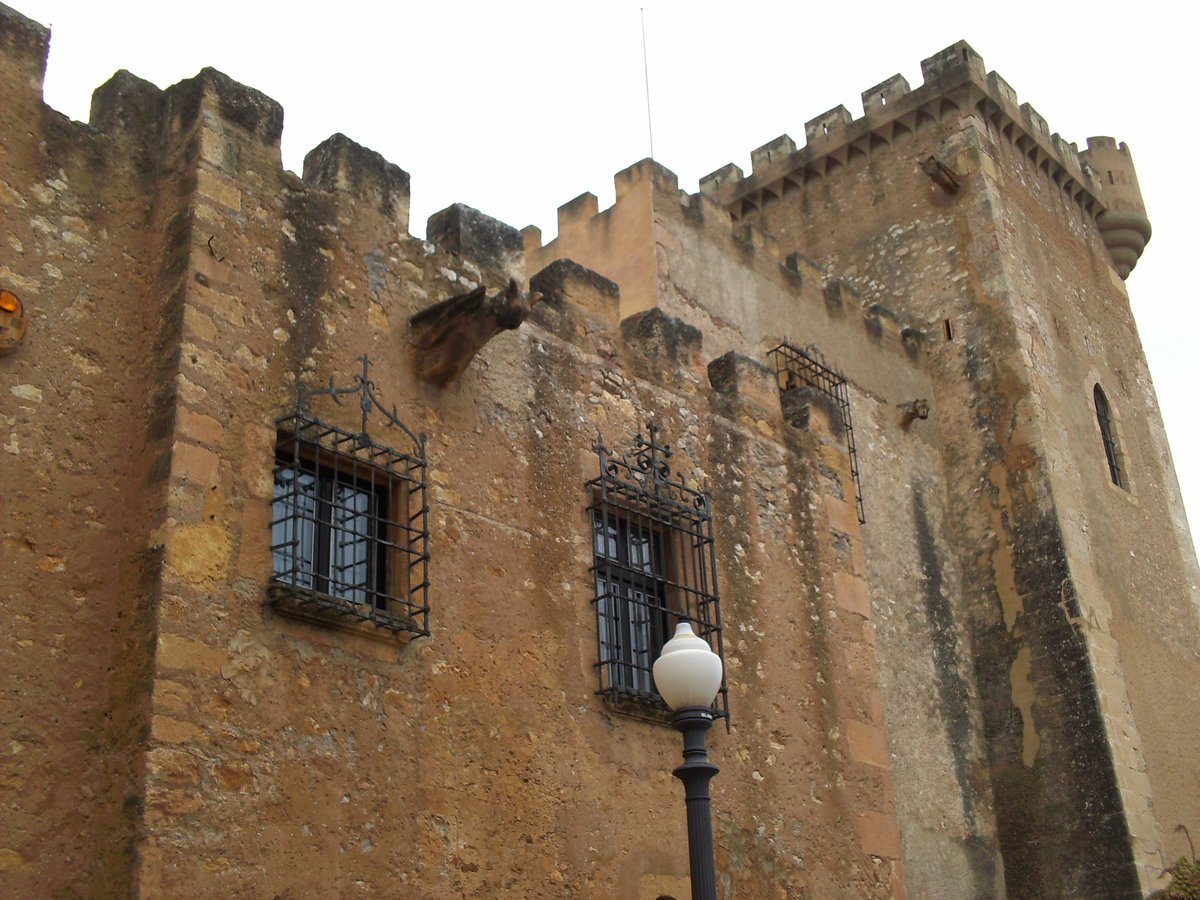
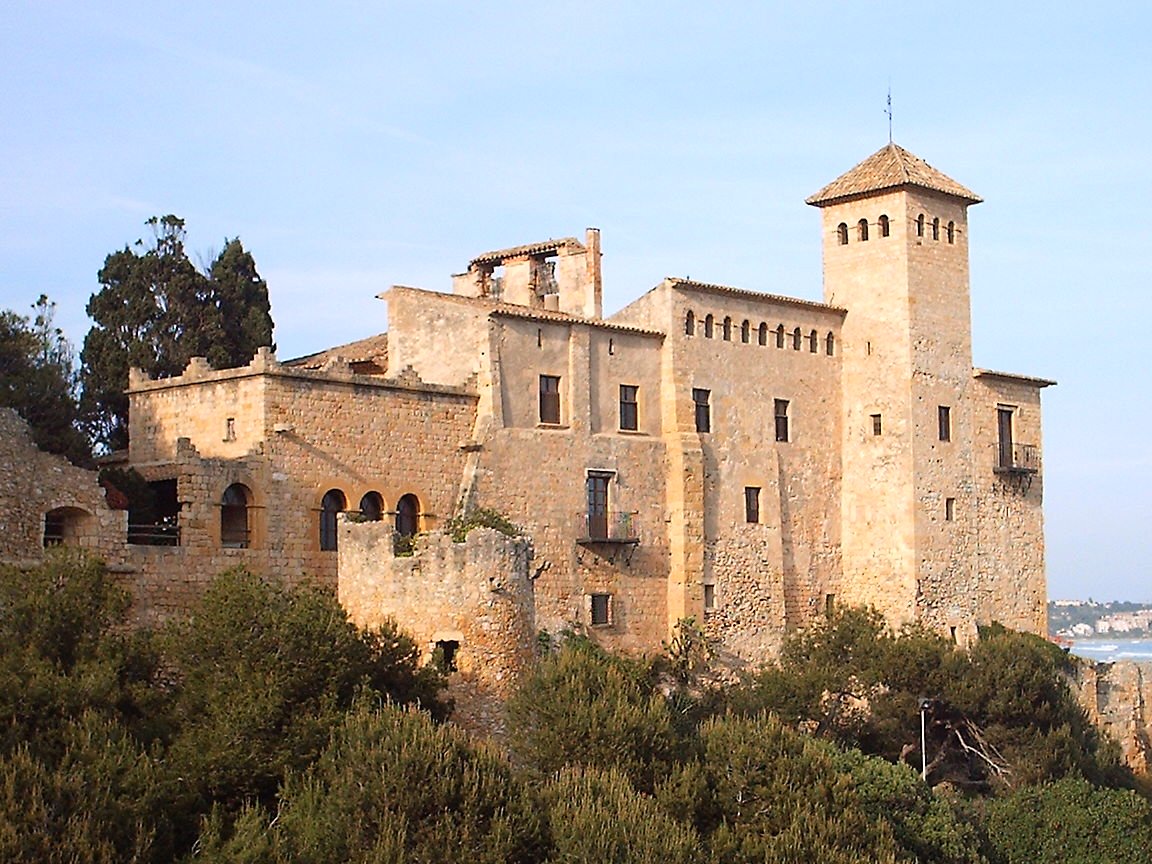
Architecturally, the fortress is notable for its vast boundaries, which once stretched from the Gaià river to the Francolí river. At its center, a circular tower dating back to the 11th century remains, featuring walls of 170 cm thick. The southeastern corner features a tower with a nearly square plan. Built with materials ranging from roughly worked stones to well-sculpted blocks, the structure reflects different construction phases from the 12th and 13th centuries, including distinct Gothic elements.
Sources: Wikipedia, OpenStreetMap, Wikidata, Wikimedia Commons
Written by Nik Frost
Discuss this with the author and others
No comments yet. Be the first to start the conversation.