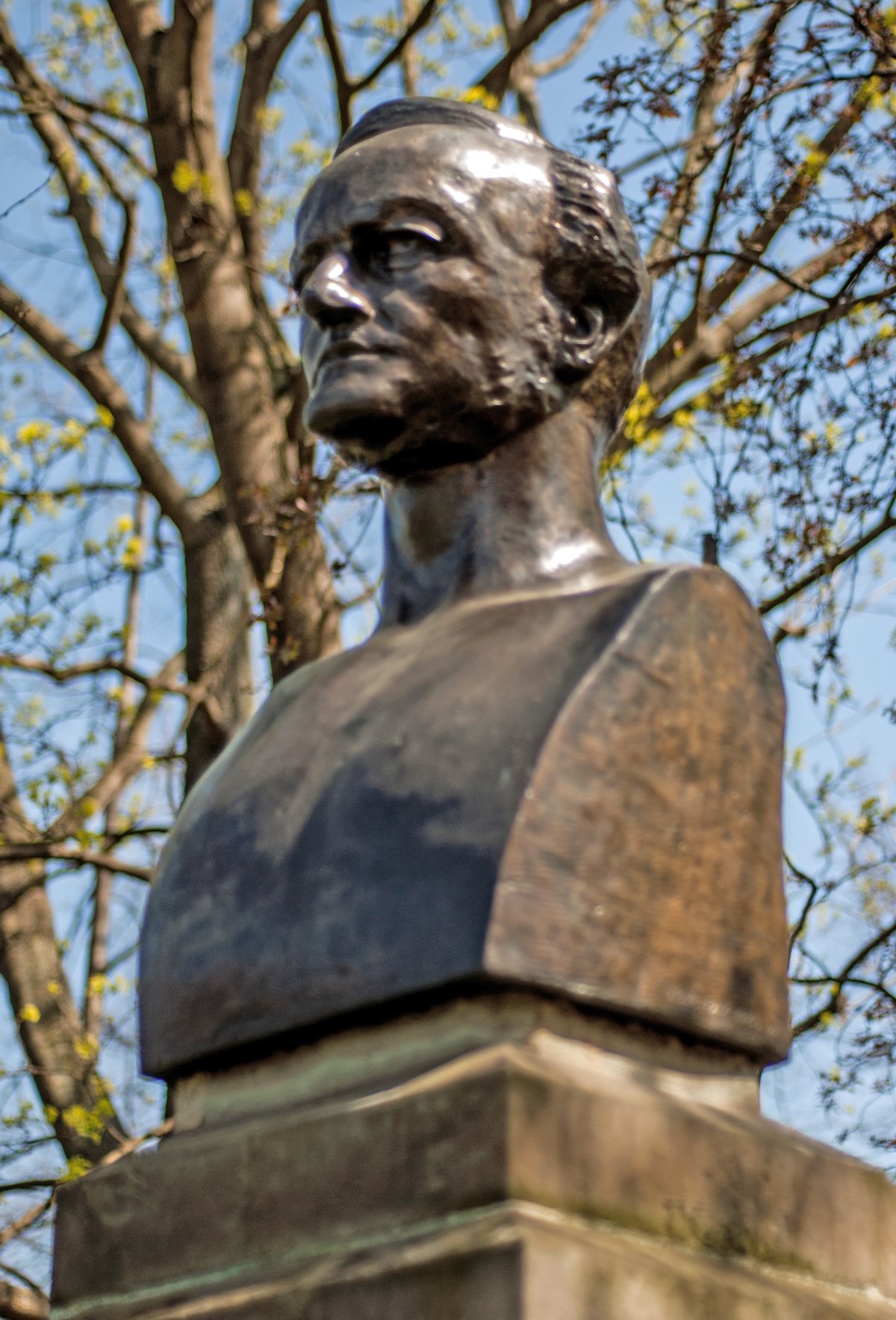
A bronze face watches the Swan Pond in the Promenadenring. This bust of Richard Wagner is a study in dark patination and austere simplicity, showing the composer in a frontal view without the indication of clothing.
Its origin reflects a long history of stalled ambitions. Sculptor Max Klinger first attempted to create a representative monument in 1903, but efforts failed through the First World War. Plans during the Nazi era to erect a monumental memorial at the Richard Wagner Hain were also unsuccessful. In 1983, to mark Wagner's 170th birthday as part of the "Richard Wagner Days of the GDR," the city finally installed a modest tribute based on a design that had existed in marble and plaster for decades.
In 1982, the Leipzig bronze foundry Noack cast the memorial from a plaster model of Klinger's 1904 work. The bust is 93 centimetres tall and rests on a simple sandstone base. The front bears the name of the composer, while the back credits the sculptor.
Today, it sits slightly hidden on the eastern slope behind the opera house. It was the first completed public memorial to the composer in his birthplace, though a second memorial by Stephan Balkenhol was erected in Leipzig in 2013.
Sources: Wikipedia, OpenStreetMap, Wikidata, Wikimedia Commons

Written by Aurora
Discuss this with the author and others
No comments yet. Be the first to start the conversation.