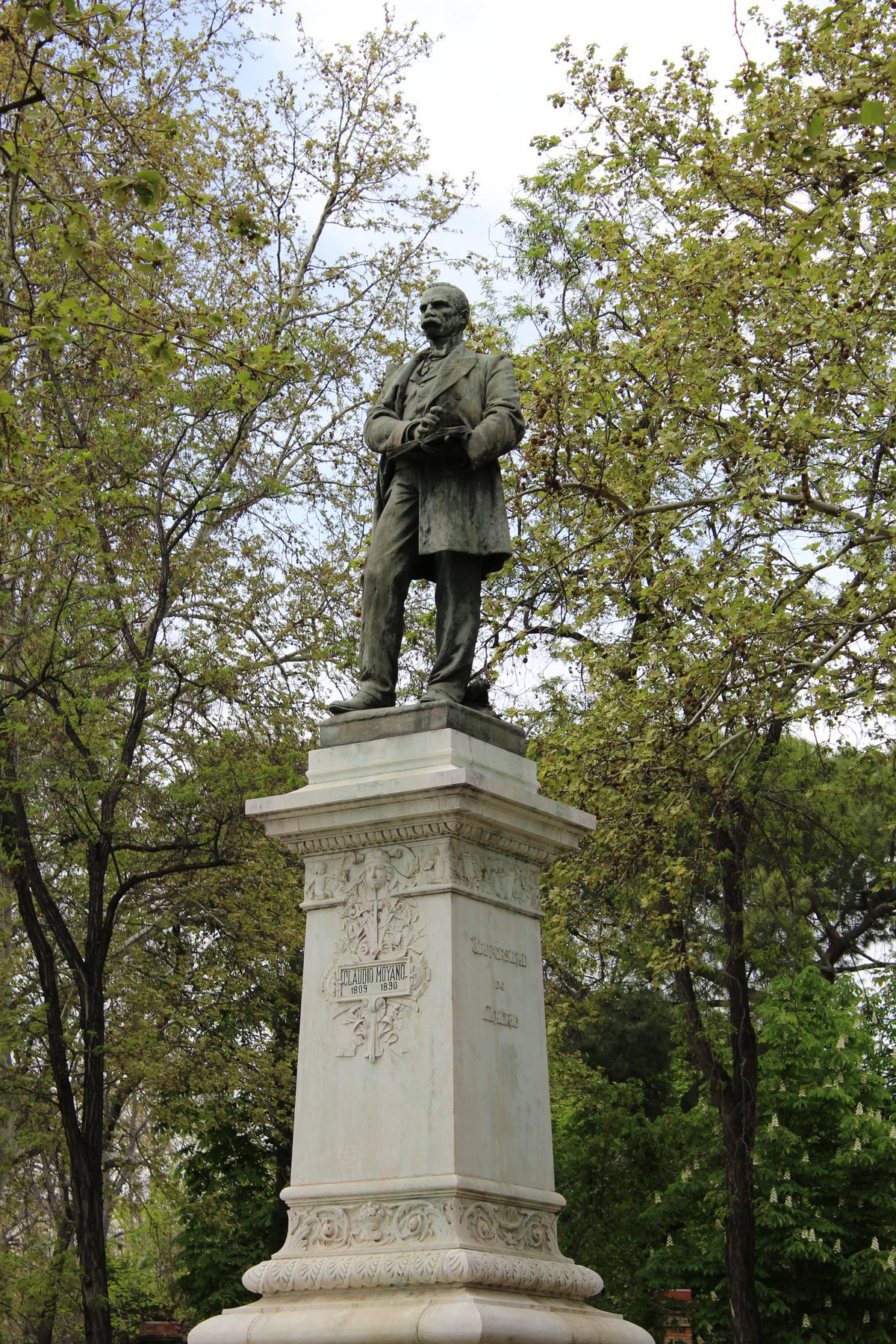

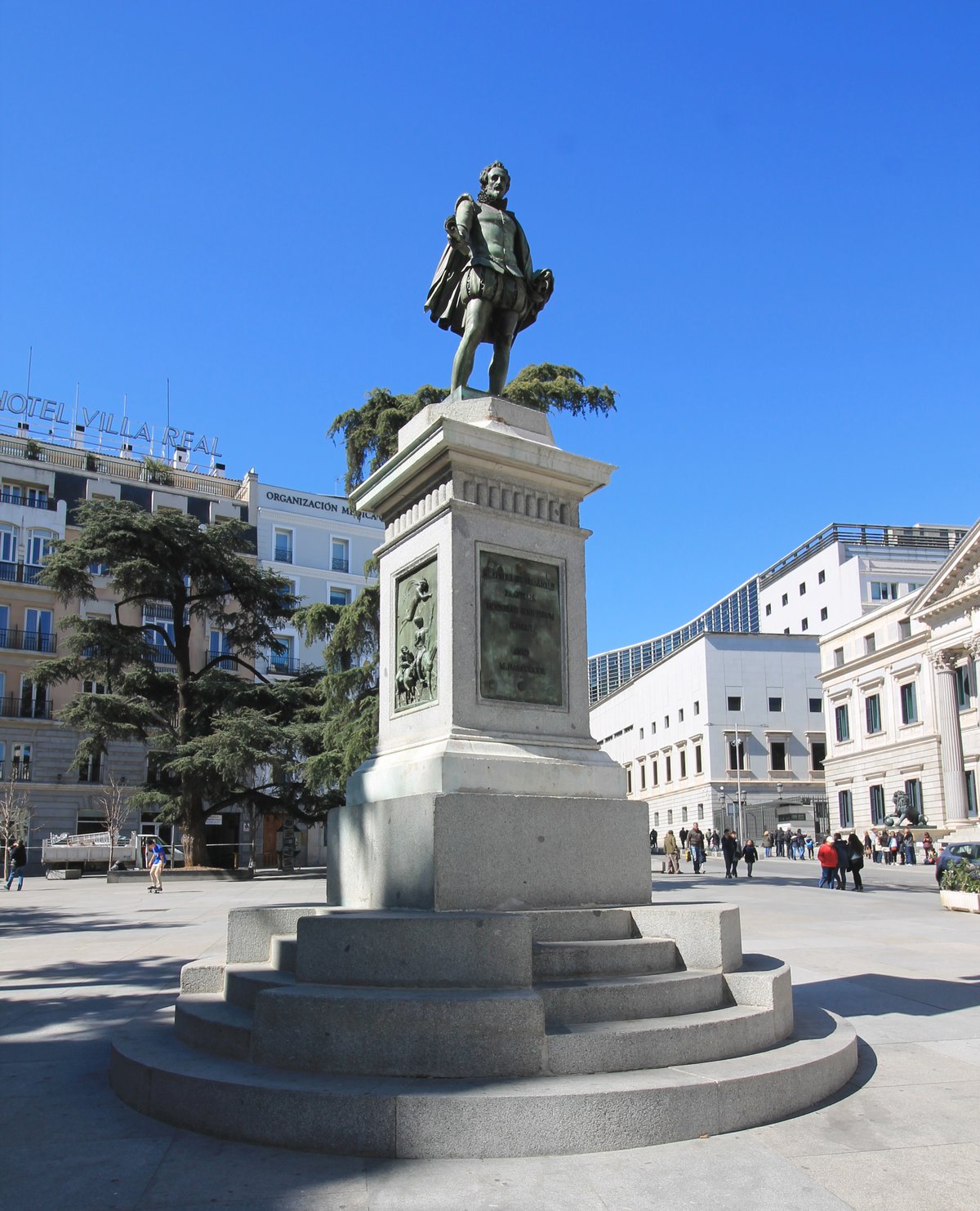
The Monumento a Claudio Moyano is a piece of public art in Madrid, Spain, located at the Plaza del Emperador Carlos V. It features a bronze statue of Claudio Moyano, a 19th-century statesman known for authoring the 1857 Law of Education, standing atop a tall stone pedestal. The monument was designed by Agustín Querol and unveiled in November 1900.
In 1894, Eduardo Vicenti, the Director-General for Public Instruction, resumed an initiative to erect the statue after a previous attempt had failed to collect enough money. A popular subscription was organized by the teachers of the Province of Zamora to collect funds from teachers across all Spanish provinces. The managing committee awarded the design to Agustín Querol in 1896. The base of the pedestal features bronze reliefs depicting Moyano reading his teaching project in the Congress of Deputies, an allegory of an Angel of the Schools, and a frontal relief related to the monument's inauguration.
The monument was first unveiled at the plaza de Atocha in 1900, attended by a retinue of officials including the Minister of Public Instruction and representatives from schools across the country. Throughout the 20th century, the monument was moved several times, first to the plaza de Luca de Tena and later to gardens in front of a school. In 1982, Mayor Enrique Tierno Galván decided to return the monument to its original location, a move completed on 28 March 1982 by municipal architect Joaquín Roldán.
Sources: Wikipedia, OpenStreetMap, Wikidata, Wikimedia Commons
Written by Nicolo Ciampini
Discuss this with the author and others
No comments yet. Be the first to start the conversation.