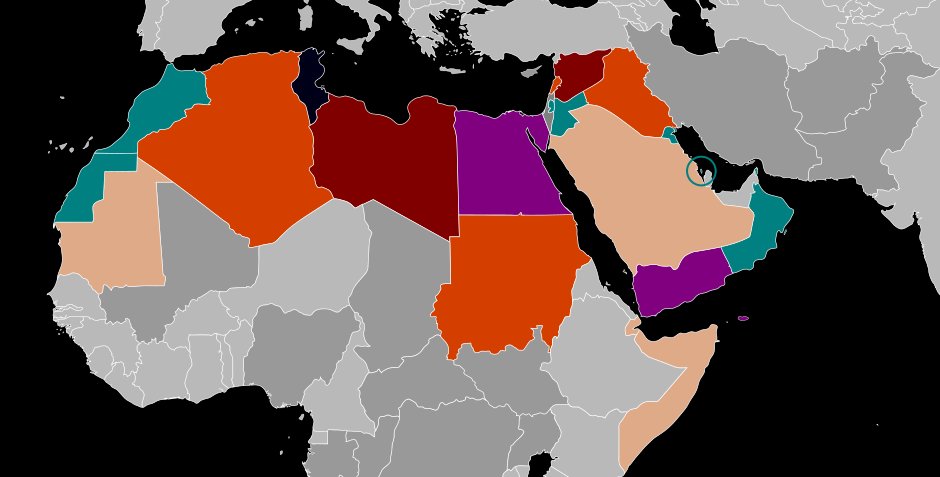

The Arab Spring began in Tunisia in response to the death of Mohamed Bouazizi by self-immolation. From Tunisia, the protests initially spread to five other countries: Libya, Egypt, Yemen, Syria and Bahrain. The movements were driven by dissatisfaction with the rule of local governments, particularly among youth and unions, and may have been influenced by wide gaps in income levels and pressures caused by the Great Recession.
By mid- to late 2012, the wave of initial revolutions and protests faded as many demonstrations were met with violent responses from authorities, militias, and militaries. This period saw the rise of multiple large-scale conflicts, including the Syrian civil war, the rise of ISIS in Iraq, and the Yemeni crisis. Some referred to the succeeding and still ongoing conflicts as the Arab Winter.
While the initial hopes for ending corruption and increasing economic equity quickly collapsed, the underlying conditions of authoritarianism and exploitation remain. New waves of protests began in 2018, leading to the resignation of leaders in Iraq and Lebanon and the overthrow of presidents in Sudan and Algeria. As of 2025, conflicts continue in regions like Syria and Yemen, marking a long-term transformation of the region's political landscape.
Sources: Wikipedia, OpenStreetMap, Wikidata, Wikimedia Commons
Written by Mutabor
Discuss this with the author and others
No comments yet. Be the first to start the conversation.