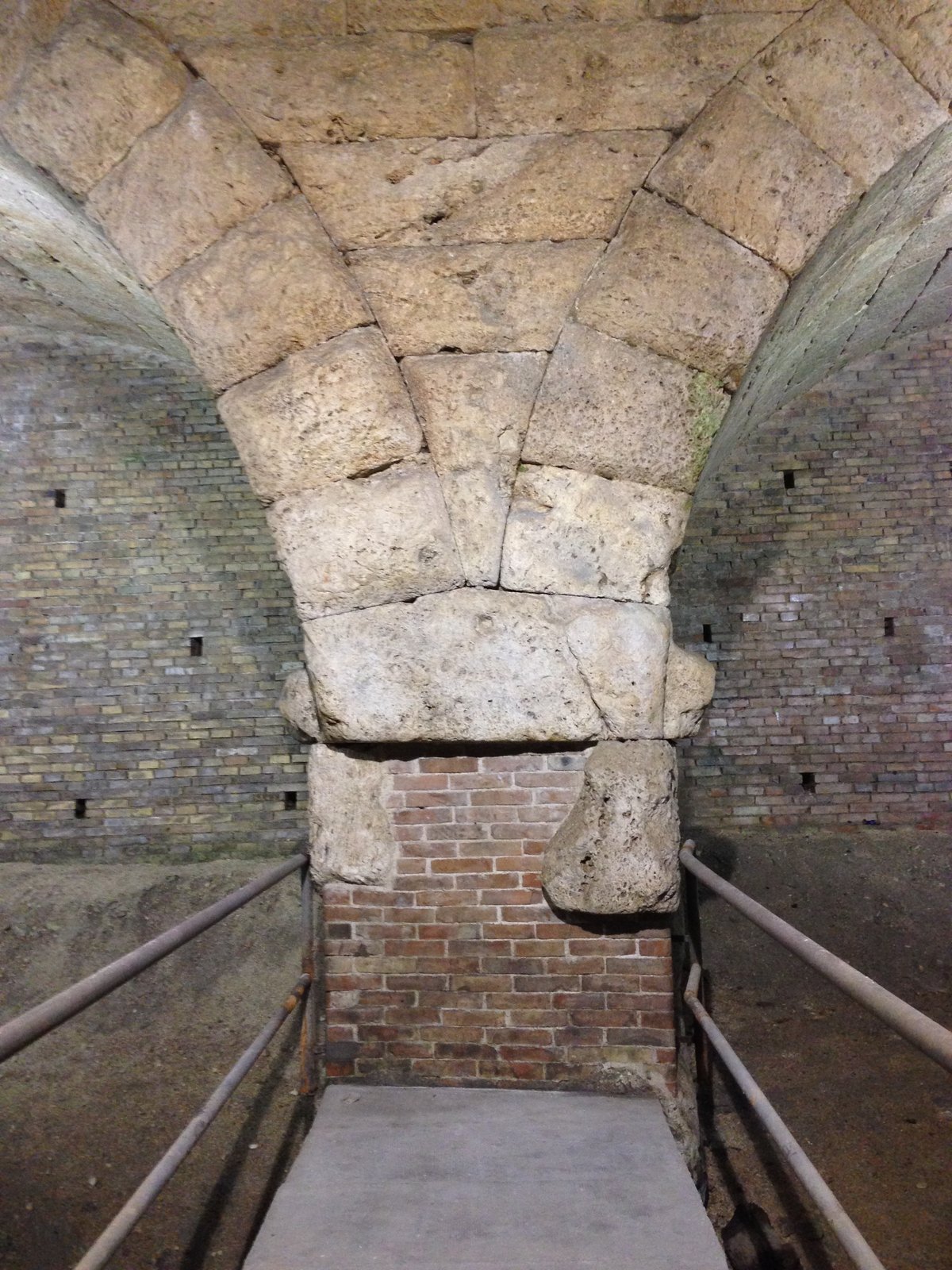

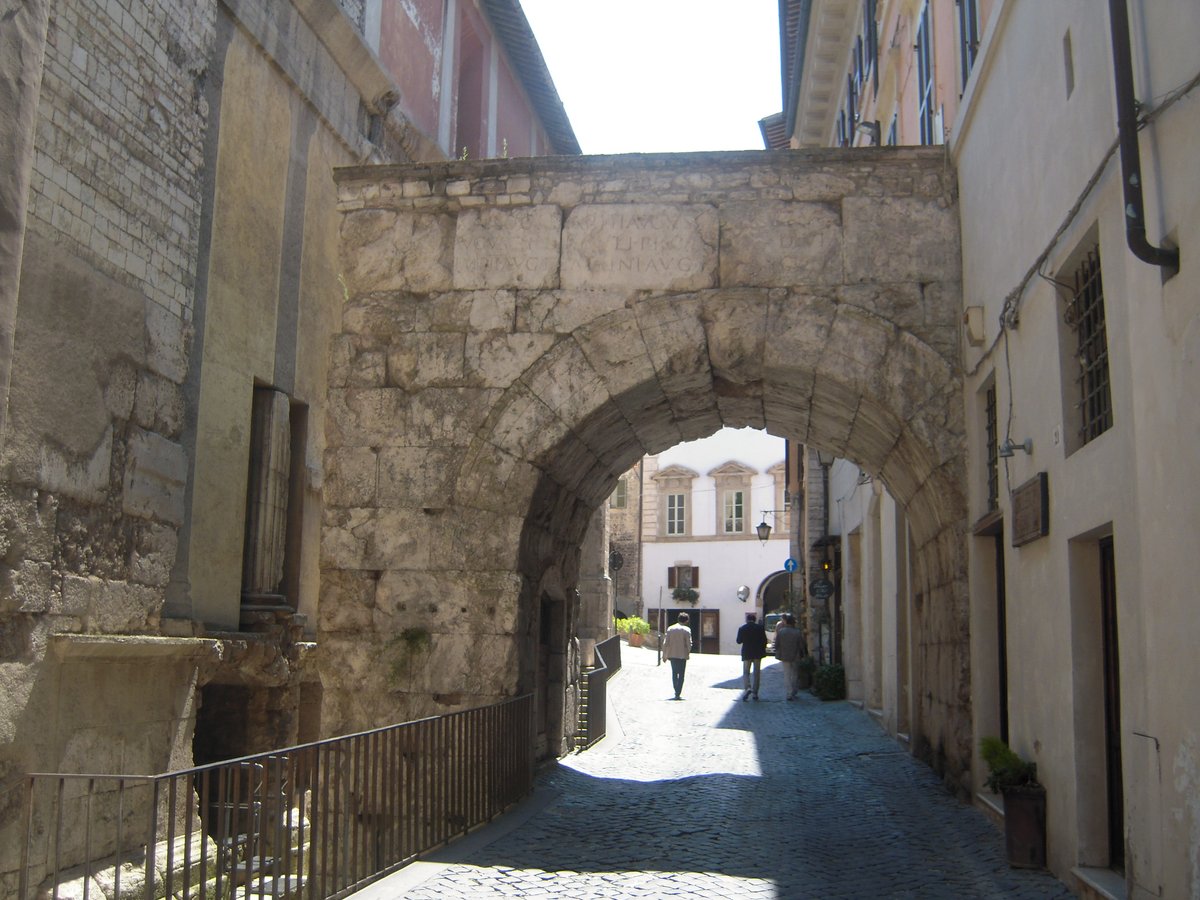
The Ponte Sanguinario is a massive structure built with large blocks of travertine to carry the Via Flaminia over the Tessino river. Built perhaps around 27 BC or as early as 500 BC, it features three semi-circular arches. Today, only two of these arches are visible from the access point, as one remains buried under the embankments near the Porta San Gregorio.
The bridge eventually lost its original function as the Tessino river slowly shifted its bed northward over the centuries. By the end of the 13th century, the water was redirected, and the bridge remained abandoned. It was gradually covered by flood deposits until the surrounding street level rose, leaving the monument hidden until it was rediscovered during public works in 1817.
The name Sanguinario has several possible origins. Some agiographic tales link it to the execution of martyrs whose heads were cast into the river. Other theories suggest the name is a corruption of "Sandapilarius," referring to a nearby Roman gate, or that it derives from a nearby stream called the Sanguineto. The bridge was also known as Ponte San Gregorio in the municipal statutes of 1296.
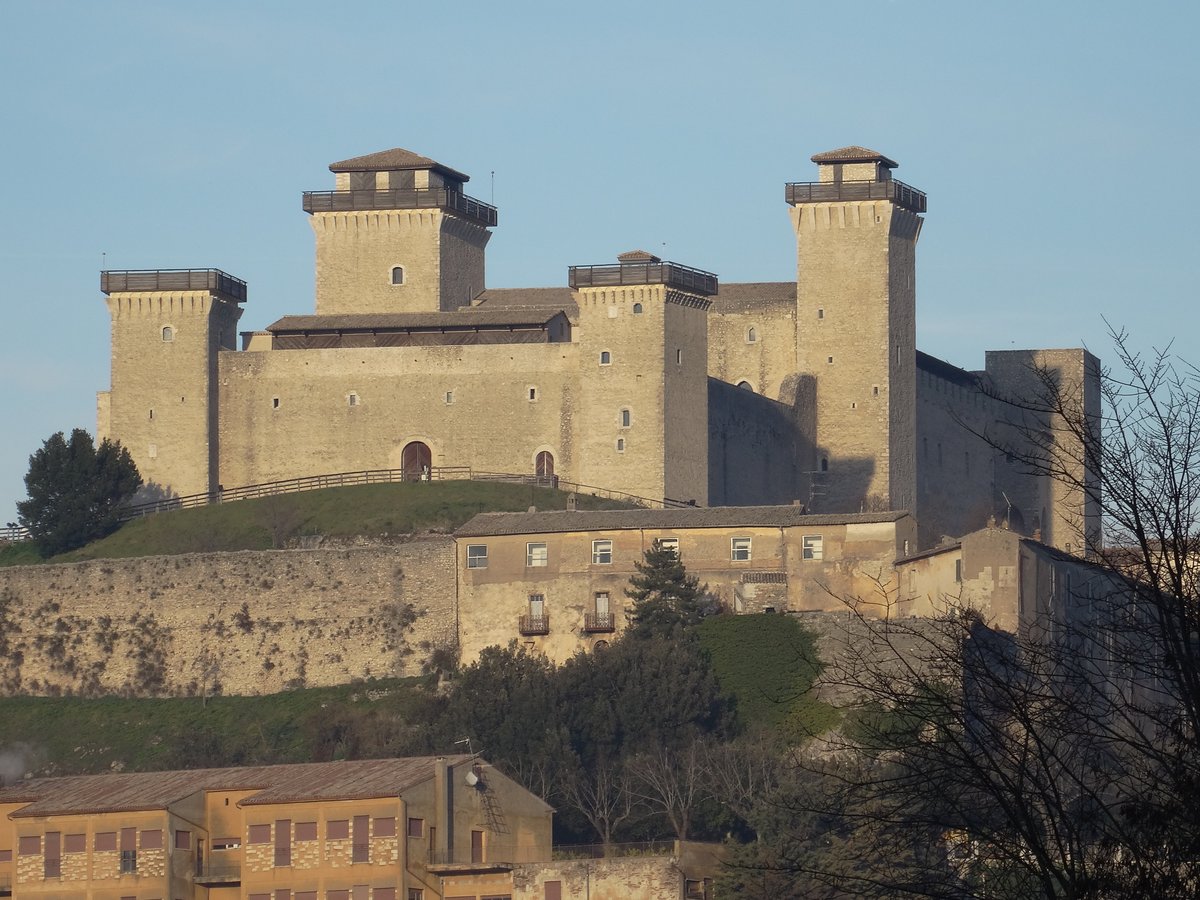
Local legends add further mystery to the site. One tradition claims that the patron saint of Spoleto, San Ponziano, was beheaded on the bridge, and his head traveled three leaps to a spot where a spring of pure water emerged. Another legend describes a subterranean tunnel connecting the bridge to the Rocca Albornoziana, allegedly used by Lucrezia Borgia in the late 15th century, though this passage has never been found. Visitors can reach the site today via a short staircase in the Piazza della Vittoria.
Sources: Wikipedia, OpenStreetMap, Wikidata, Wikimedia Commons
Written by Nicolo Ciampini
Discuss this with the author and others
No comments yet. Be the first to start the conversation.