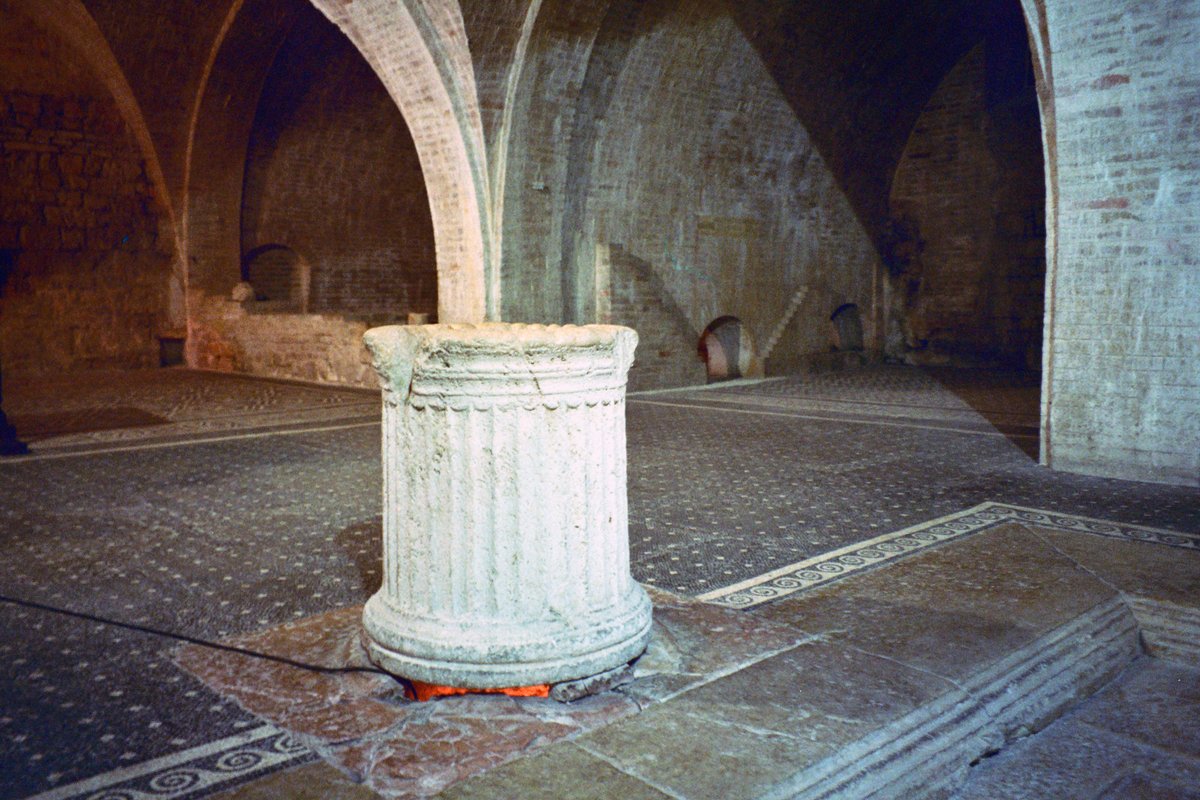

Discovered between 1885 and 1886 by Giuseppe Sordini, this Roman house, could you believe it? Once the domain of Vespasia Polla, the mother of Emperor Vespasian, was buried under Spoleto’s Piazza del Municipio and the Palazzo comunale. As the excavations continued until 1914, a restoration a hundred years later was due. Rumors chew around that the house might have gobbled up by flames during the high medieval period, yet this is a tale that's still in question.
Much of the original structure vanished over time and various restorations, but the house still manages to cast a spell on its recent viewers. It's a curious peek into the lives of its past residents. The structure, much like other Roman homes of high-ranking dwellers, boasted an impluvium for rainwater collection and a compluvium for light in the atrium. Side rooms, or cubicula and alae, donned notable mosaic floors, while the triclinium kept fragments of fresco.
Pieces of columns remained from the peristilium. However, certain rooms and the entrance were lost, so we now step in through the atrium. The house, though smaller than others of high-ranking dwellers in Rome, hints at an upper floor. It was adorned with abundance: mosaics, frescoes, stuccos, and colored terracotta. Significant artifacts were found and proudly displayed within its walls. Despite some losses, the mosaic floors remained well-preserved, thanks to various conservation efforts.
The house has been documented extensively and can be found in scholarly works, with numerous images available on Wikimedia Commons. A brief guide will help you cross the threshold.
Sources: Wikipedia, OpenStreetMap, Wikidata, Wikimedia Commons
Written by Nicolo Ciampini
Discuss this with the author and others
No comments yet. Be the first to start the conversation.