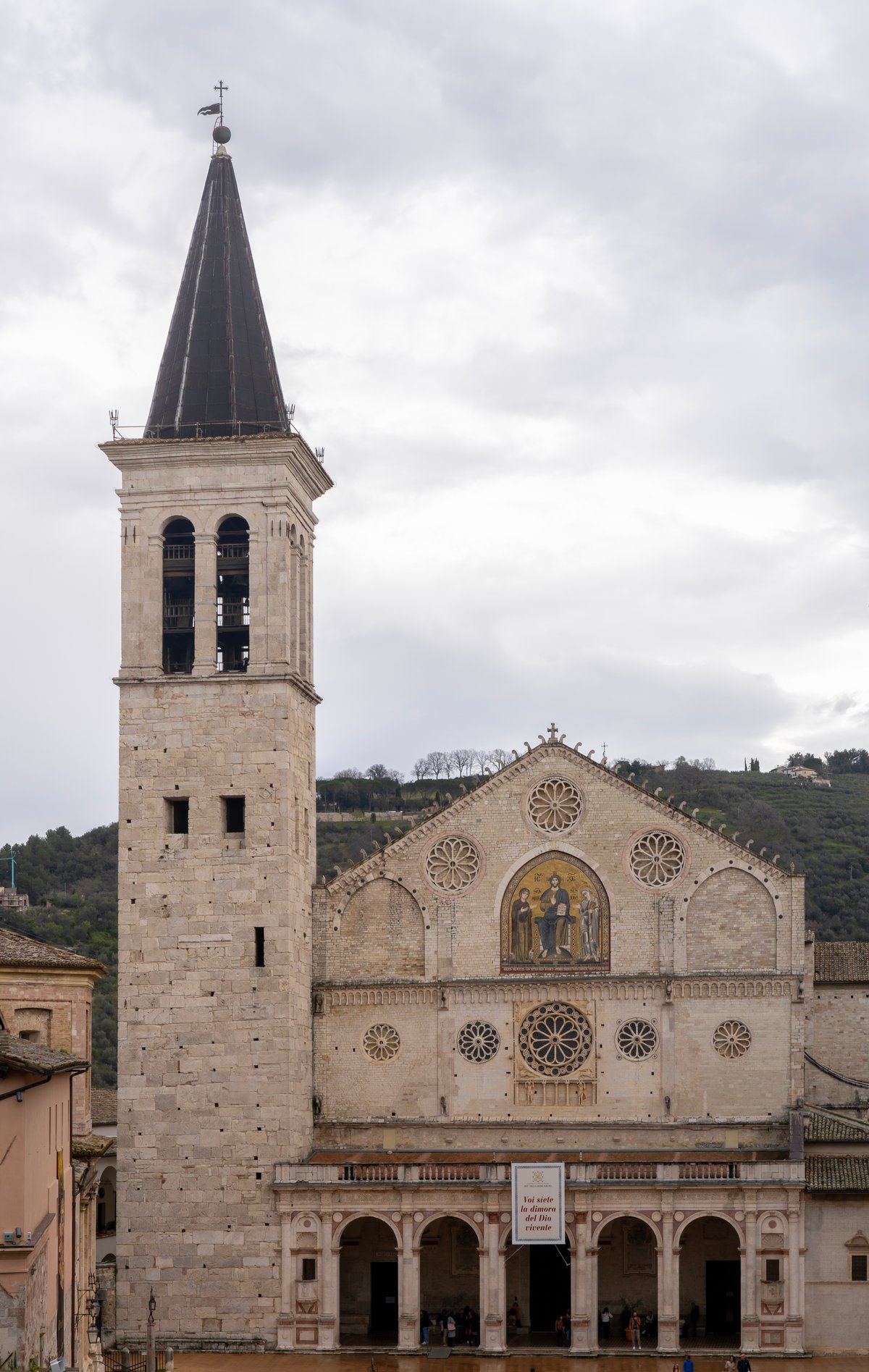

The upper facade of the Spoleto Cathedral displays a Byzantine-hieratic mosaic portraying Christ giving a Benediction. It was signed by one Solsternus in 1207. He signed his work with the inscription "Doctor Solsternus, hac summus in arte modernus" - calling himself an outstanding modern artist.
He was certainly ahead of his contemporaries, because it would take half a century before the mosaics in Roman churches would surpass his style. The cathedral was built from the second half of the twelfth century after the city had been devastated by Frederick Barbarossa's troops, over an area where there had previously stood an earlier cathedral dedicated to Saint Primianus. It stands as a Romanesque example of architecture, even though the interior was significantly modified in the 17th and 18th centuries.
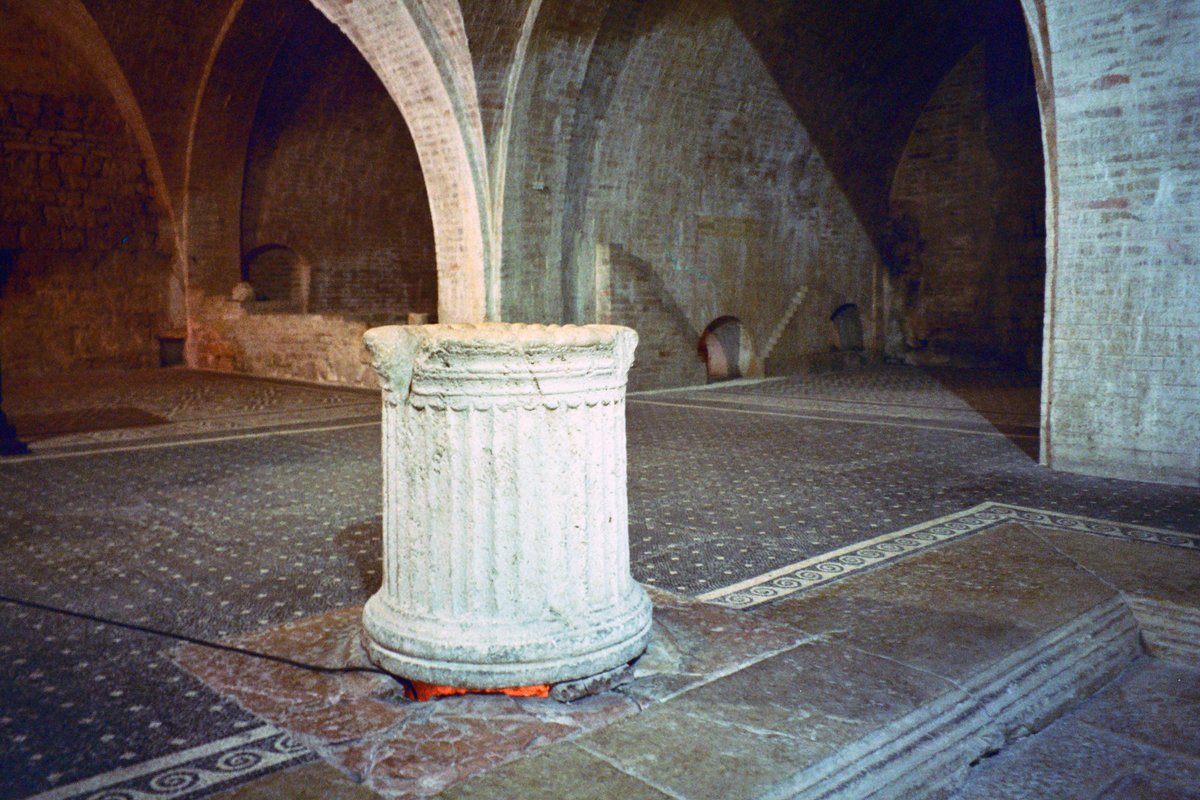
The original Cosmatesque floor of the central nave remains a survival. Visitors can see the frescoed apse with four scenes from the Life of the Virgin, begun in 1467 by Filippo Lippi and completed two years later by his pupils Fra' Diamante and Piermatteo Lauro de' Manfredi da Amelia. Lippi is buried in the south arm of the transept. The church also contains the crypt of the former cathedral of San Primiano under the Chapel of the Relics.
Sources: Wikipedia, OpenStreetMap, Wikidata, Wikimedia Commons
Written by Nicolo Ciampini
Discuss this with the author and others
No comments yet. Be the first to start the conversation.