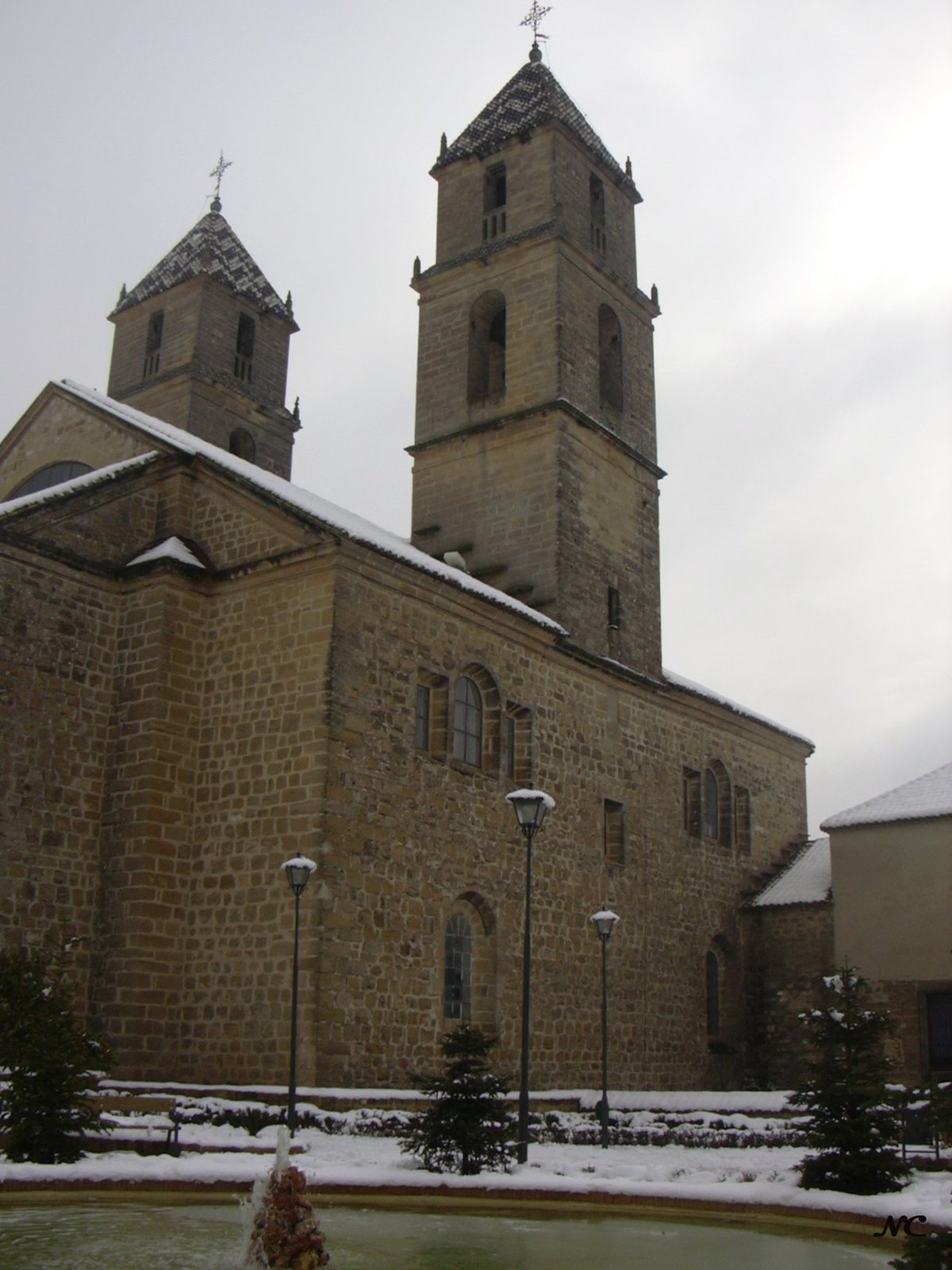

In 1562, Andrés de Vandelvira began work on the Hospital de Santiago, commissioned by Diego de los Cobos, bishop of Jaén. The construction took 15 years and was completed in 1575. Santiago's is a monumental national building, known as the ‘Escorial of Andalucía', that still stands on Calle del Obispo Cobos in Úbeda. Today it functions as a cultural center, conference center, and exhibition space. Initially, it served as a hospital and church for the poor sick, alongside being a palace for the bishop, who, Diego de los Cobos, also paid for its construction.
Santiago's is an austere yet grandiose building, featuring a double arcade in its main square made of marble from Carrara. Despite its size, some parts of the hospital remain incomplete, a testament to the cultural shifts over the centuries. Its claustriform structure exhibits a strong Hispanic-Islamic influence, with the potential for further research to explore its striking juxtaposition of tradition and modernity.
Sources: Wikipedia, OpenStreetMap, Wikidata, Wikimedia Commons
Written by Nik Frost
Discuss this with the author and others
No comments yet. Be the first to start the conversation.