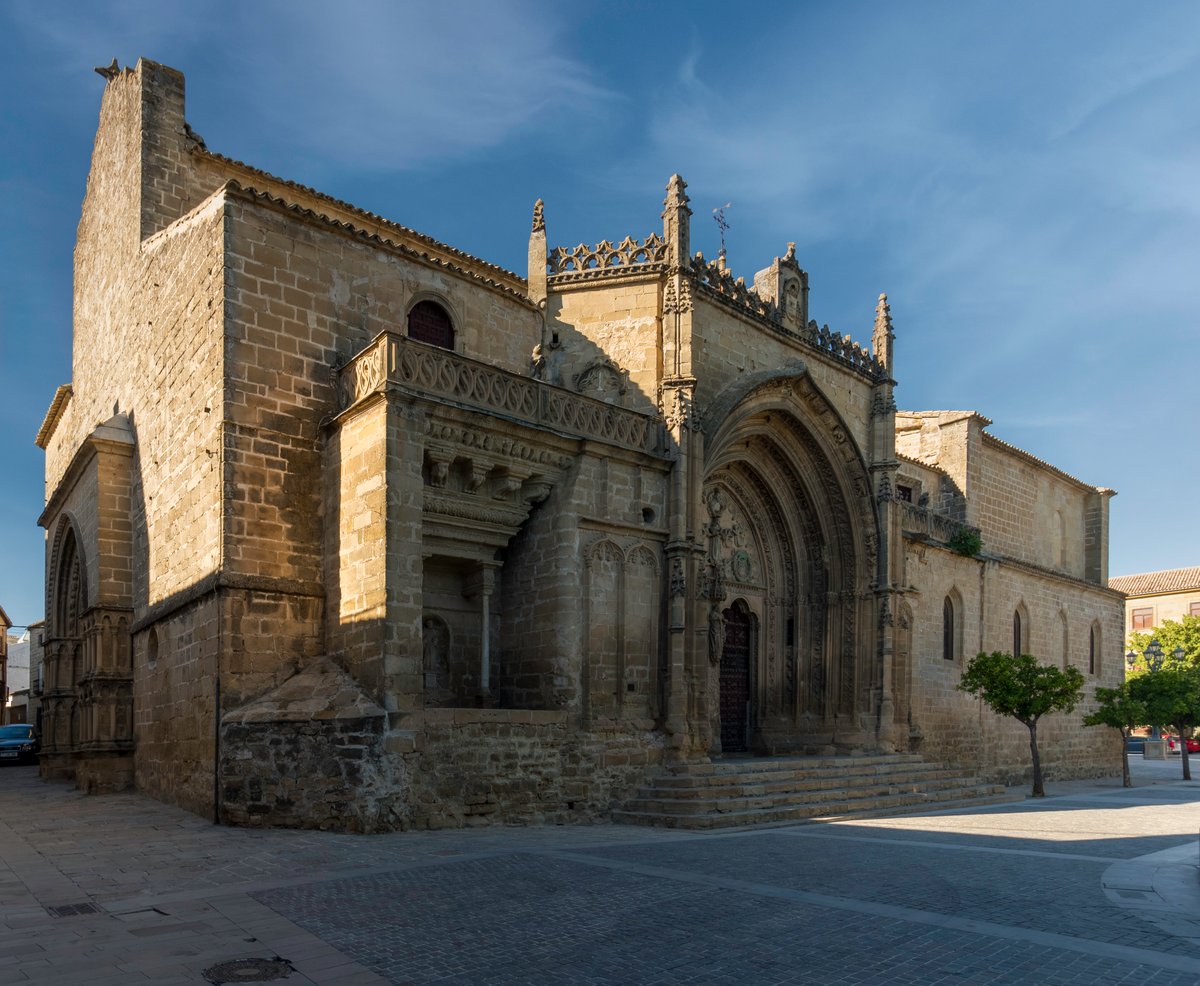

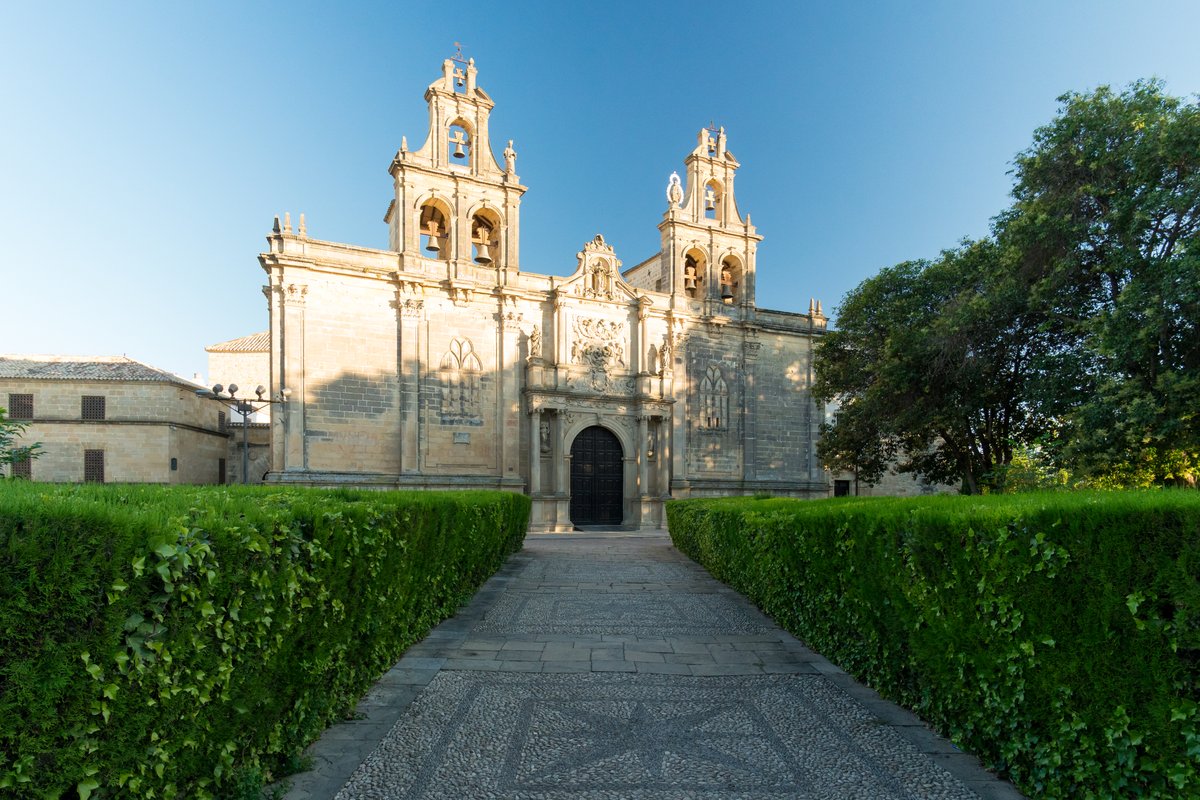
In the central square of Úbeda, the Iglesia de San Pablo stands as a symbol of the city's history. Believed to have been established during the Visigothic period, it originally served as a gathering point for the city council and nobility until the 15th century. The building was declared a historic monument in 1926 and underwent a major renovation program led by Alonso Suárez de la Fuente del Sauce, which added new features to the structure.
The church features a Romanesque main portal called the Portal of the Carpenters and a south portal with Gothic arches in the Isabelline style. Despite numerous reforms, the original Romanesque apse has been preserved, featuring curious corbels with a popular dancer who jumps, leaps, and contorts - a figure surrounded by musicians, jugglers, and acrobats. The church also includes a tower and a 16th-century fountain attached to the head.
Inside, the church has a three-aisle layout and a polygonal head with a late Gothic rib vault. It contains a series of interesting funerary chapels featuring Plateresque wrought iron work. The exterior is finished with a two-colored ceramic roof, marking its place within the town's heritage.
Sources: Wikipedia, OpenStreetMap, Wikidata, Wikimedia Commons

Written by Nik Frost
Discuss this with the author and others
No comments yet. Be the first to start the conversation.