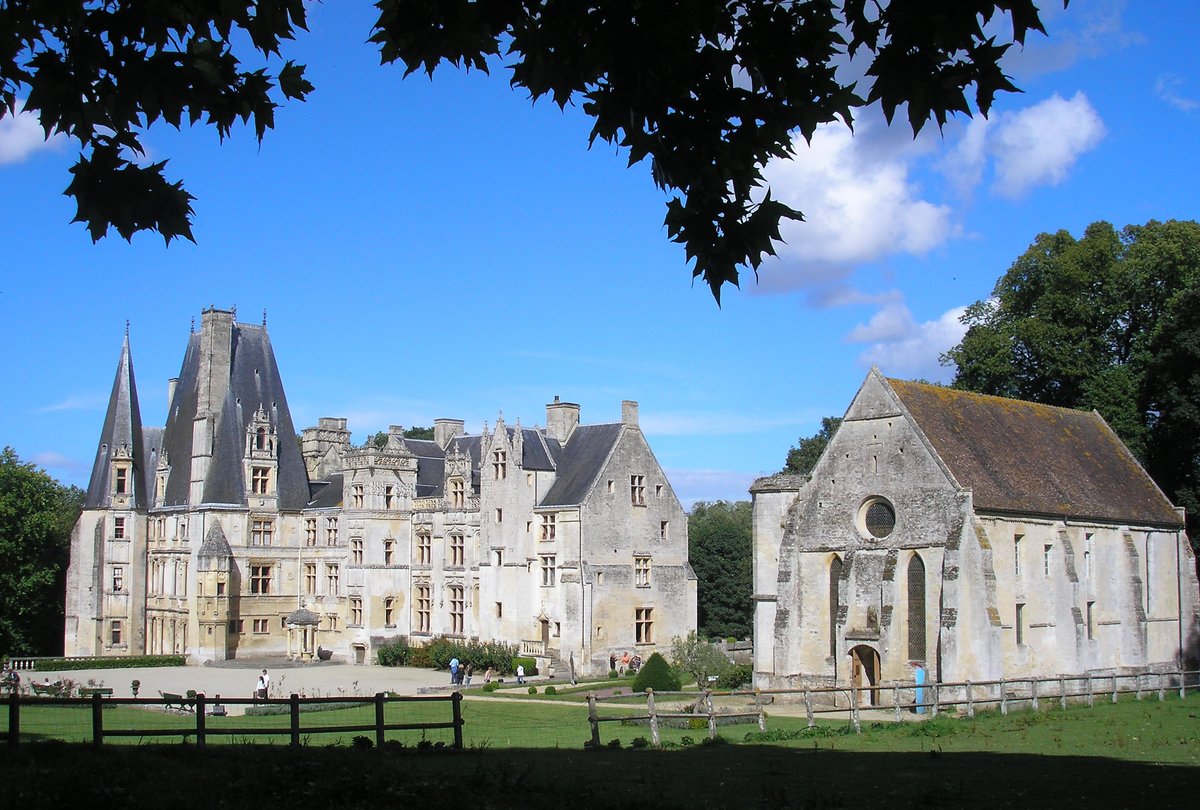

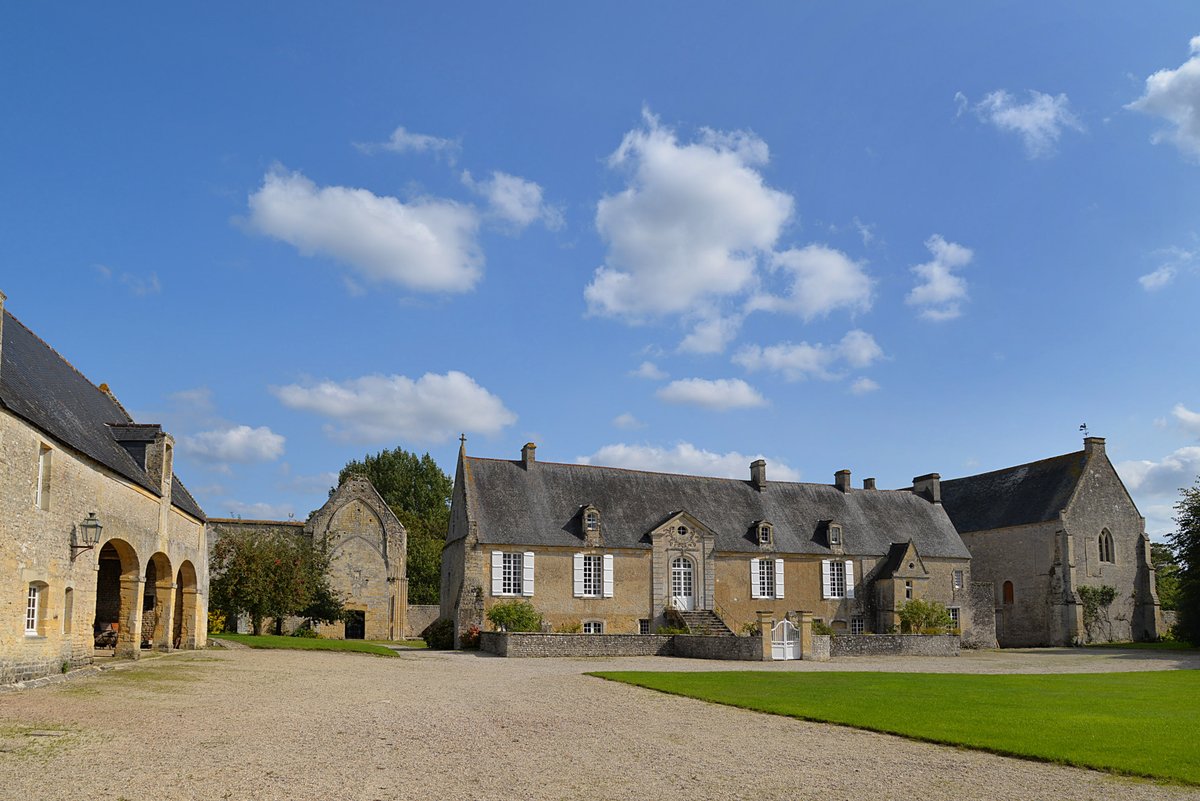
The Château de Fontaine-Henry sits in the Calvados department of Normandy, described as a "Loire château lost in Normandy." The originally medieval structure is renowned for its façades, which are marked primarily by the Louis XII and Renaissance styles. Its high French roofs rise to nearly 15 metres on the quadrangular Gros Pavillon, making the château considered to possess some of the highest roofs in France.
The estate has been passed down from generation to generation for approximately ten centuries, never being sold. This continuity allowed several families to leave their mark, including the House of Harcourt, who reconstructed the château after the Hundred Years' War. From the late 15th century to the 1560s, they carried out works that gave the residence its present appearance, achieving a remarkable harmony comparable to the Hôtel d'Escoville and Hôtel de Than in Caen.
Architectural evolution is visible throughout the site, from the austere Gothic style of the chapel and the Old Manor to the later decorations of the Gros Pavillon. While it remains unfinished, the residence is one of the most valuable examples of the evolution of Norman taste from the reign of Charles VIII to that of Henry II. The d'Harcourt family consistently sought to keep the château in harmony with the artistic styles of their time.
Today, the current owner, Marquis Pierre-Apollinaire d'Oilliamson, has opened the estate to tourism to promote its historical and artistic heritage. Visitors are invited to rediscover 800 years of history through a summer entertainment programme called Les enchantées, exploring a complex assemblage of residential buildings that has survived through the centuries.
Sources: Wikipedia, OpenStreetMap, Wikidata, Wikimedia Commons
Written by Nicolo Ciampini
Discuss this with the author and others
No comments yet. Be the first to start the conversation.