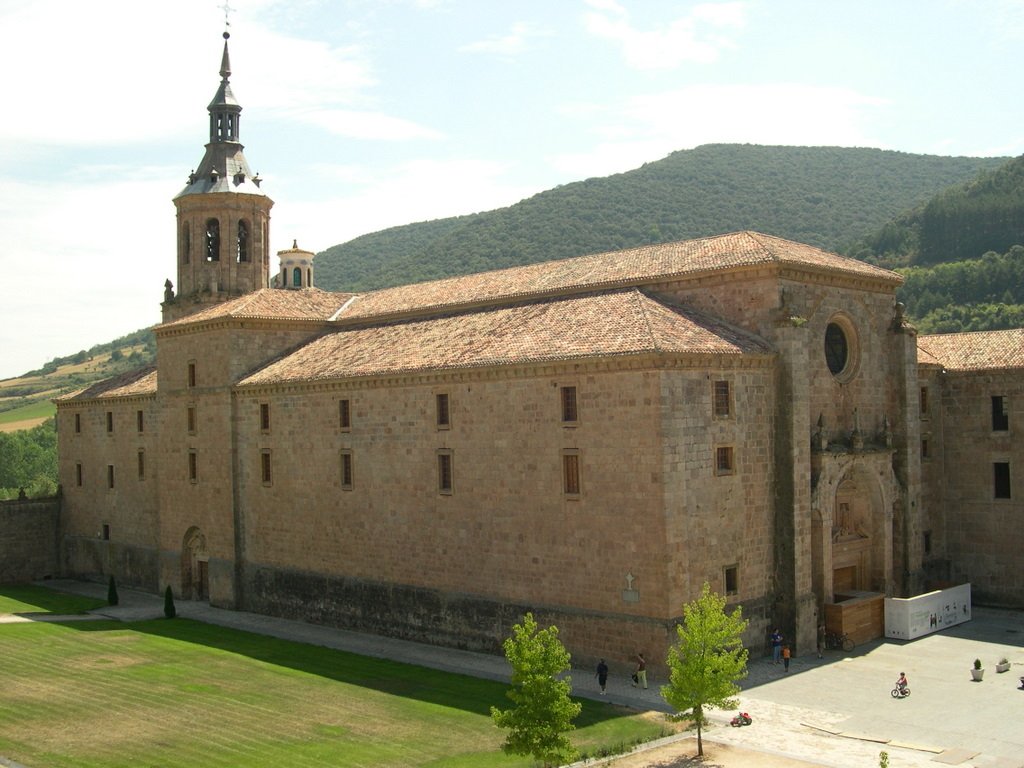

In the northeast of Spain, the Monastery of San Millán de Yuso stands among the Distercios mountains. This cultural treasure has preserved history, spirituality, and culture for over 1500 years. It was here that the Glosas Emilianenses, the first recorded text in the Spanish language, were written [1].
The Monastery of San Millán de Yuso was built in the 16th century [1], while its sister, Suso, is believed to be built on the site of a hermitage where Saint Millán lived [1].
In the 11th century, the relics of Saint Millán were moved from Suso to the monastery of Santa Maria la Real de Nájera. However, the story goes that the bueyes (bulls) transporting the relics came to a halt in the valley, and it was interpreted as a sign that Saint Millán should remain in the valley, leading to the construction of Yuso [1].
Today, a part of the monastery has been converted into a hotel [1]. San Millán de Yuso attracts pilgrims on the Way of St James [1] and anyone seeking an unforgettable cultural experience.
[1] UNESCO World Heritage Centre. (n.d.). Monasteries of San Millán de la Cogolla. Retrieved August 1, 2023, from https://whc.unesco.org/en/list/810
Sources: Wikipedia, OpenStreetMap, Wikidata, Wikimedia Commons
Written by Nik Frost
Discuss this with the author and others
No comments yet. Be the first to start the conversation.