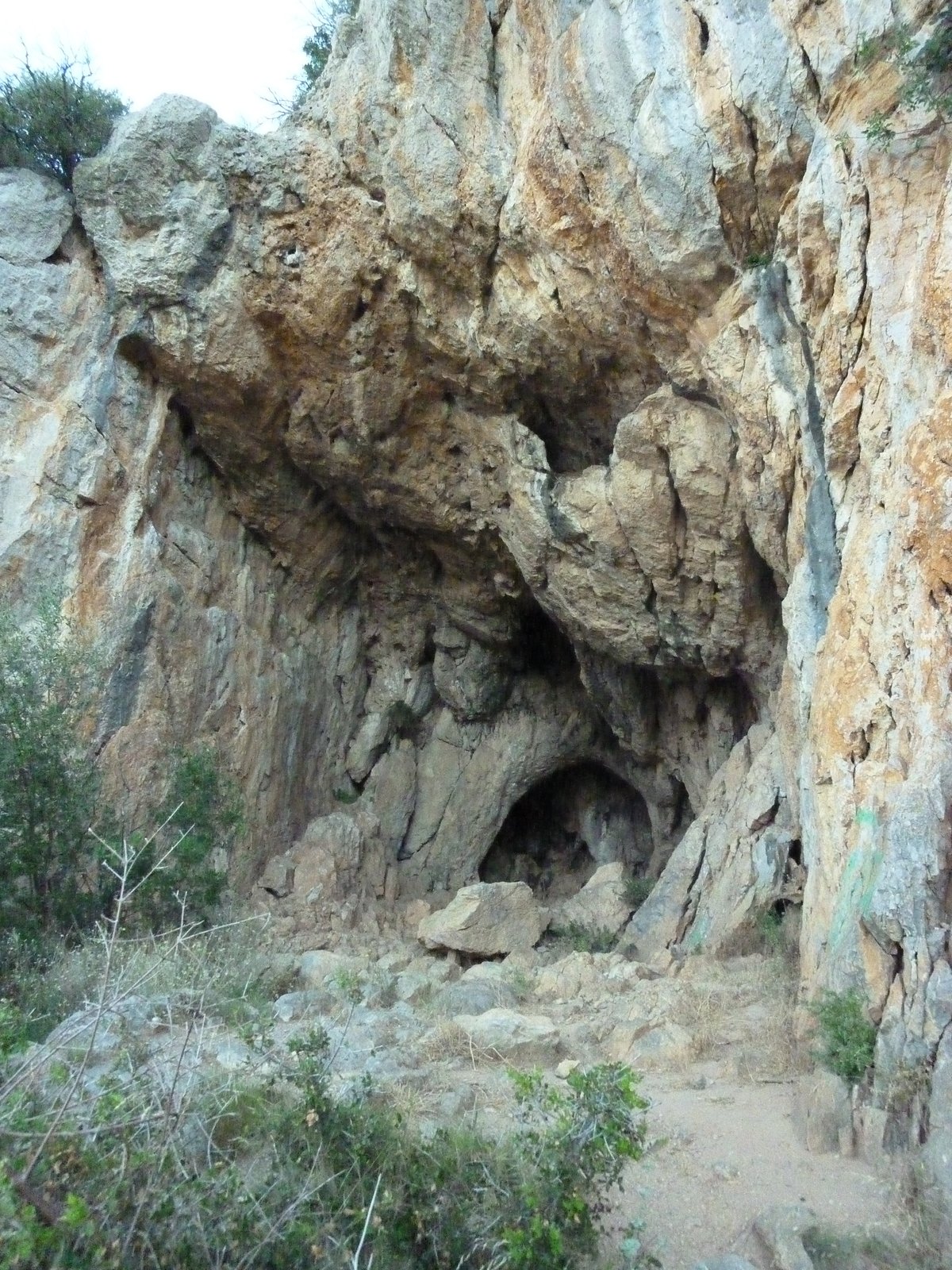

The Cau del Duc, nestled in Spain's Montgrí massif, is classified as an archaeological site and is part of the Inventory of the Archeological and Paleontological Patrimony of Catalonia. The cave is located on the south slope of Mount Santa Caterina and can be reached from the Coll de Santa Caterina or the Cross, following the 'roques planes. A large opening on the south face of the cave is visible from the town of Torroella de Montgrí. The roof has a few meters of height and the floor has a slight slope outwards.
Within the cave, the Pic del Montgrí was found. The first paleontological excavations carried out by Lluís Pericot and Matías Pallarés in 1922 collected a handful of pieces of lithic industry, which were deposited at the Museum Arqueològic de Barcelona. The simplicity of the finds led Pericot to ask for advice from Hugo Obermaier about the type of culture they were dealing with, who classified them as of asturian (Mesolithic) type, recently characterized.
However, in 1956, Pericot, in the light of the findings made in the caves of Serinyà, changed his opinion, considering that the objects had an older age and would belong to a more ancient Moustérien period, situating themselves at the beginning of the Würmian glaciations (around 80,000 years ago). In 1965, Henry de Lumley and Eduard Ripoll studied the pieces found by Pericot and Pallarés in the 1920s, which were at the Museum Arqueològic. The analysis of the tools carried out by Lumley and Ripoll concluded that these belonged to the Moustérien and not to the Asturian, and that they had been made by Neanderthals.
A recent doctoral thesis (2005) places the occupation of the Cau del Duc (both in Torroella and in Ullà) for indirect datings between 150,000 and 350,000 years BP, mentioning that Carbonell and others consider the simultaneous occupation of the two places and consider them a center of exploitation of the nearby territory.
Sources: Wikipedia, OpenStreetMap, Wikidata, Wikimedia Commons
Written by Nik Frost
Discuss this with the author and others
No comments yet. Be the first to start the conversation.