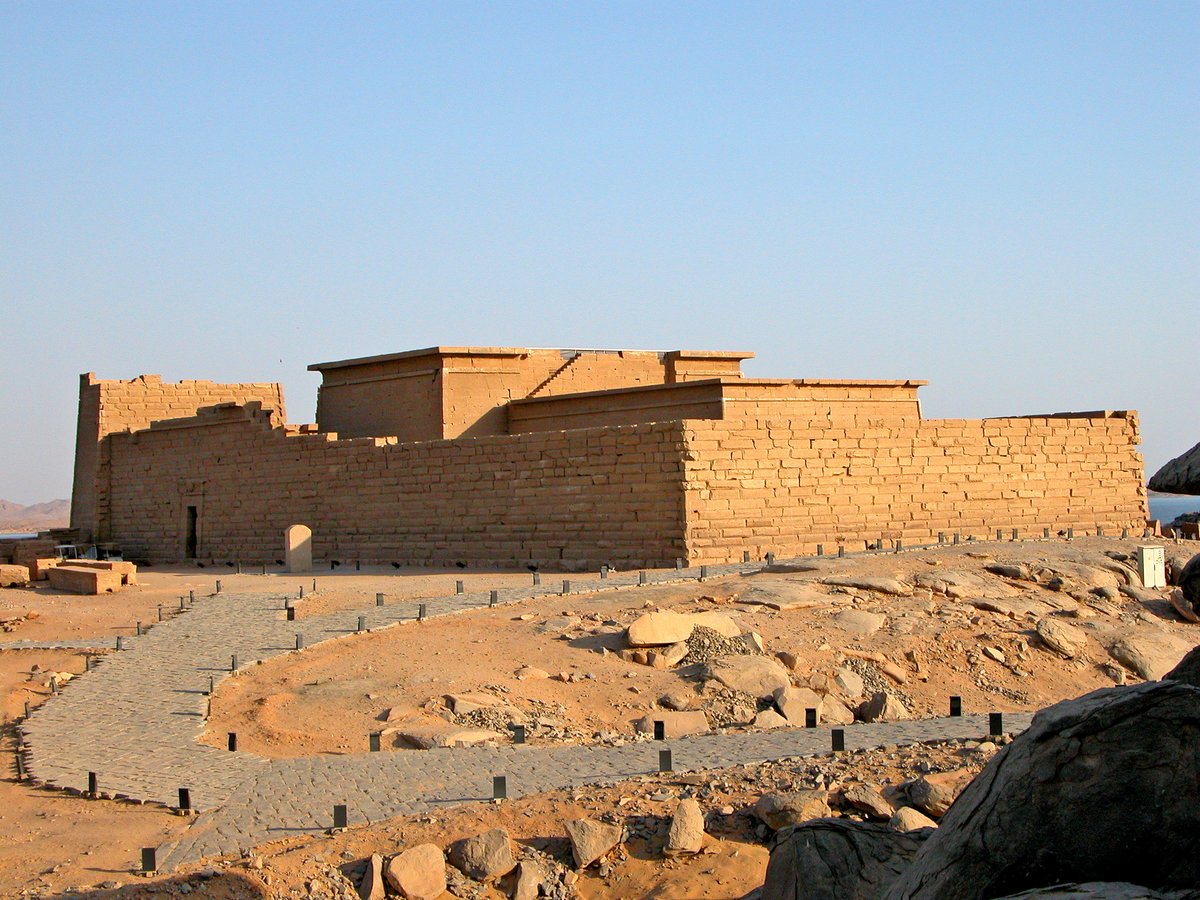
In the heart of Lower Nubia, upon the banks of the Nile River, resides the Temple of Mandulis. Dedicated to the deities Mandulis, a Nubian sun god, and Horus, god of the sky and earth, this temple remained unfinished. Established around 30 BC, the construction was abruptly halted, leaving behind intricately carved statues and hieroglyphics. This temple was not the temple's first residence. An older one, constructed by Amenhotep II, held court here before.
Unlike the Temple of Kalabsha – as it was known in a prior life – this temple was left incomplete, a testament to the intricacies of ancient craftsmanship and religion. The statues of Mandulis and Horus are elaborate, a reflection of the era's skill and artistry. Yet, the temple carries a sense of melancholy, as if still awaiting the divine touch that was never to arrive. The temple was later repurposed as a church with the spread of Christianity through Egypt.
A Roman Governor, Aurelius Besarion, inscribed a prohibition against pigs in the temple, a record now missing from its current location. Another inscription, from the Nubian king Silko, records his victory over the Blemmyes, but, like Besarion’s inscription, it too is now found elsewhere, displaced when the temple was moved. The Temple of Kalabsha was relocated in 1960, as part of the International Campaign to Save the Monuments of Nubia, and now sits proudly on the UNESCO World Heritage List. Despite its incompletion, it is considered one of the finest examples of Egyptian architecture in Nubia.
Sources: Wikipedia, OpenStreetMap, Wikidata, Wikimedia Commons
Written by Mutabor
Discuss this with the author and others
No comments yet. Be the first to start the conversation.