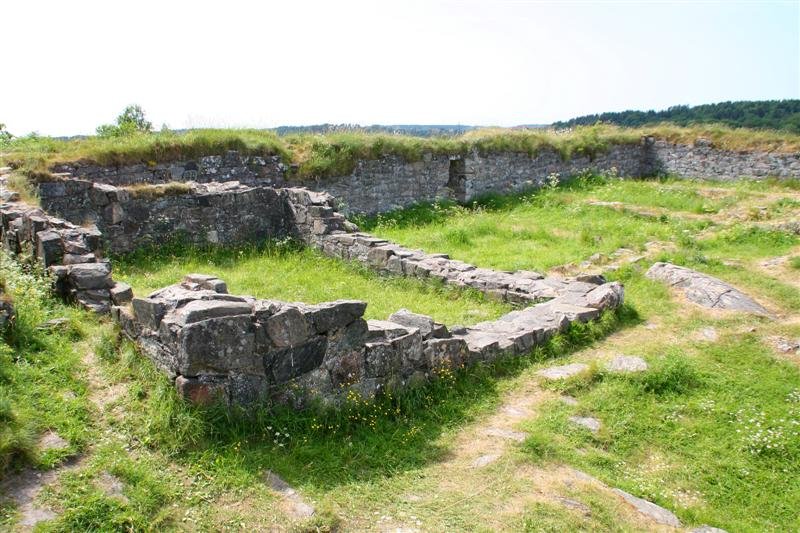

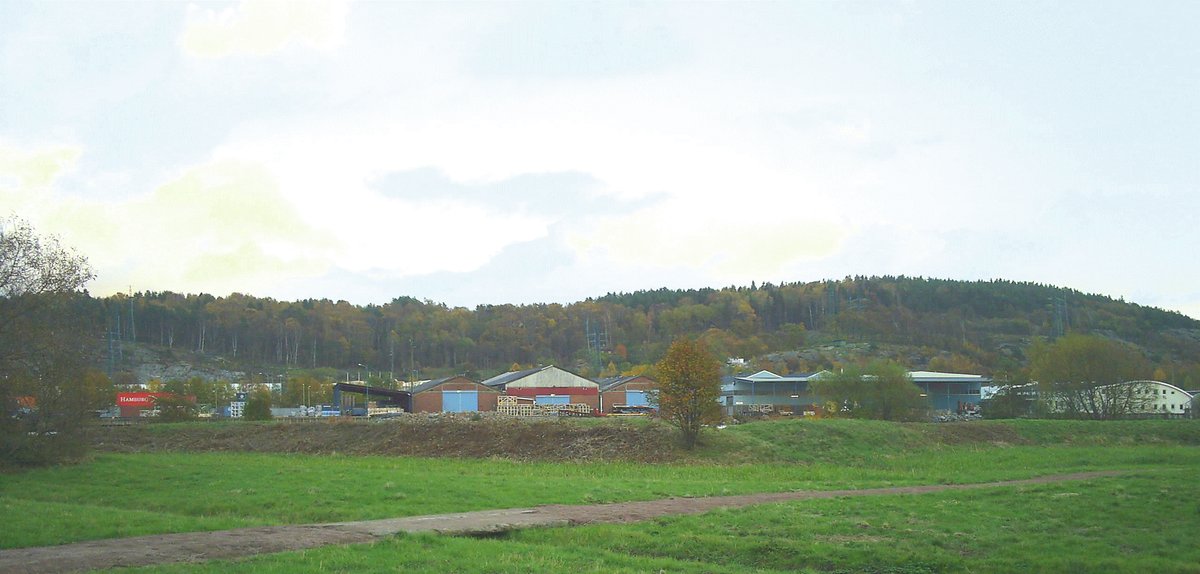
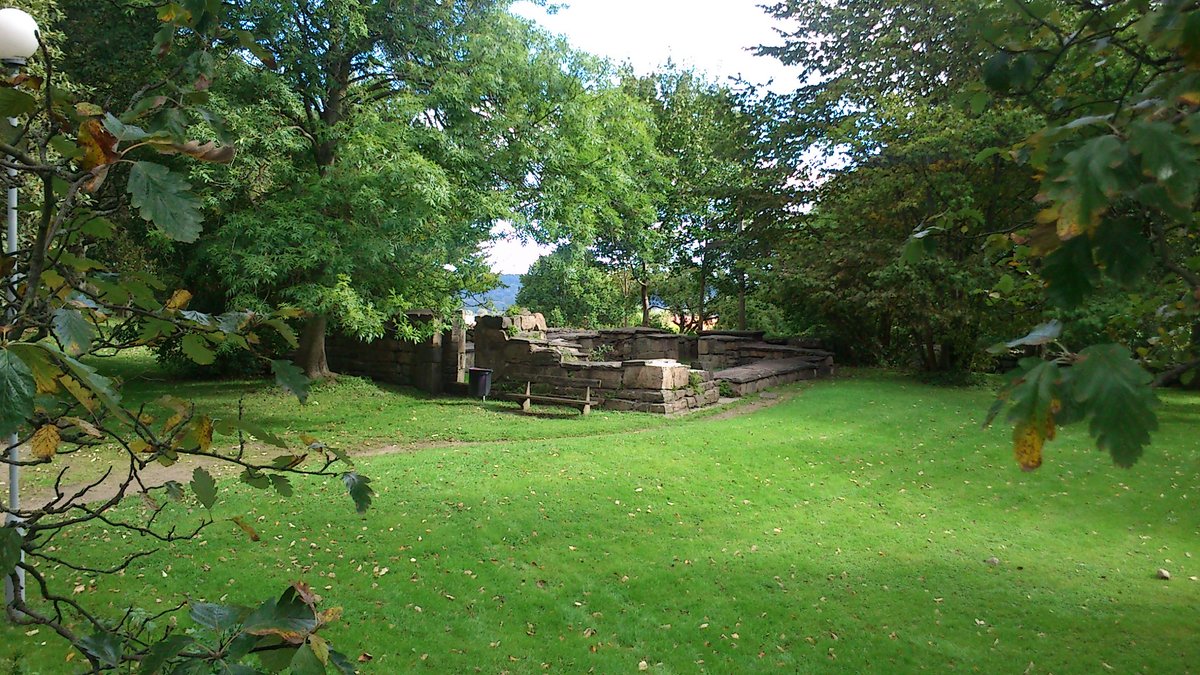
Ragnhildsholmen is a small island on the southern shore of the Nordre älv in the Säve parish of Hisingen, within the Göteborg municipality. It features the ruin of a 1200s fortress located near the early medieval town of Kungahälla. The island is named after Ragnhild Jonsdotter, who was married to the nobleman Skule Bårdsson and was the mother-in-law of King Håkon Håkonsson. In older records from the early 1500s, the castle was also referred to as Nyklaborg, a likely distortion of Miklaborg, meaning 'the great castle'.
The fortress consisted of a main wall surrounding a square courtyard with buildings for the garrison and supplies. On the eastern side was a rough square tower, and the southern side featured a defensive structure for the gate, all surrounded by a rampart with a ditch. Icelandic annals mention that Håkon Håkonsson built the castle before 1257. In 1275, the Swedish king Valdemar Birgersson and his wife were quartered there. In 1304, Magnus Ladulås's son, Duke Erik, received Ragnhildsholmen and the surrounding land as a fief from the Norwegian king Håkon V.
The friendly relationship between the Duke and Håkon V broke down, and the Norwegian king attempted to retake the castle by force in 1308 but failed. To reduce the castle's importance, he had Bohus fästning established on Bagaholmen further up the river. In 1309, Ragnhildsholmen was reportedly surrendered to King Håkon, but it was retaken by Duke Erik in 1310. The castle was used for less than 100 years before it was likely destroyed by fire and its stones were used to build Bohus fästning. An excavation by archaeologist Wilhelm Berg in 1881-1882 uncovered coins, weapons, and tools, though most of the remaining stonework was destroyed before 1891.
Today, Ragnhildsholmen is an utflyktsmål known for its ruins and its wildlife, serving as a nesting site for the nightingale, wood warbler, and common buzzard.
Sources: Wikipedia, OpenStreetMap, Wikidata, Wikimedia Commons
Written by Nik Frost
Discuss this with the author and others
No comments yet. Be the first to start the conversation.