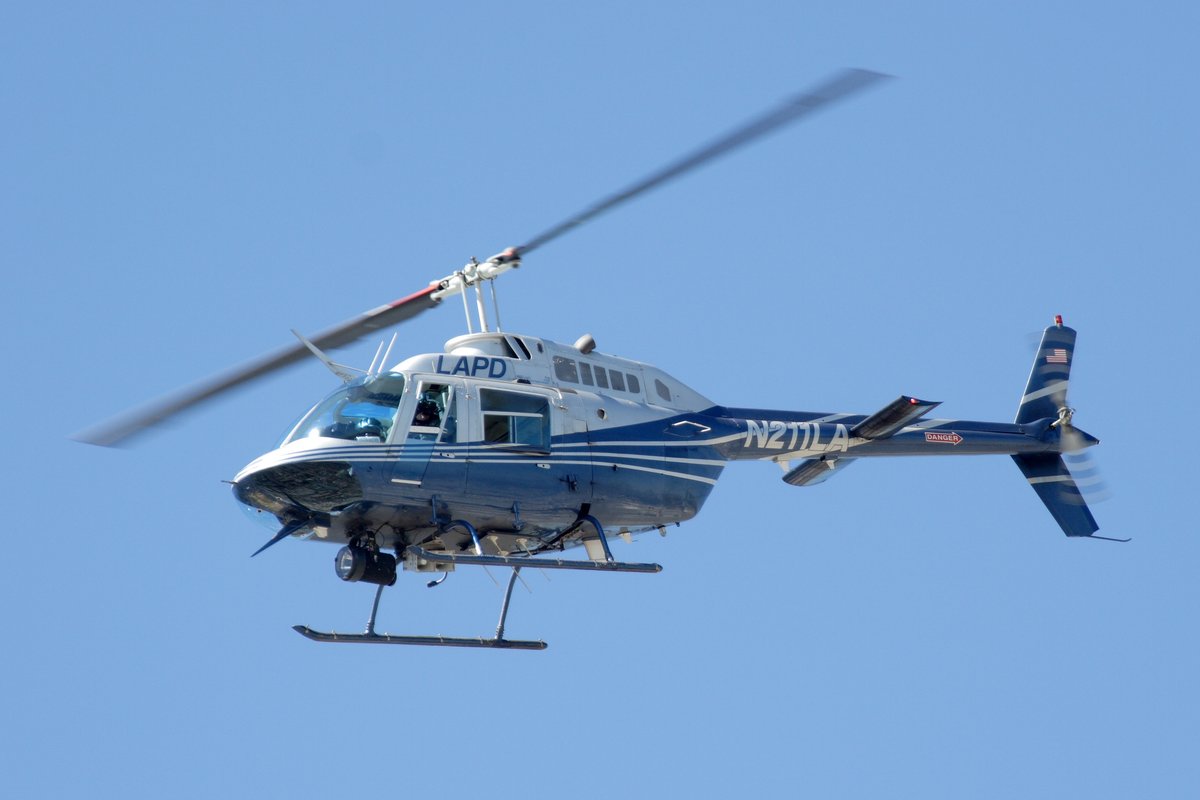

The Bell 206 is a family of two-bladed, single- and twin-engined helicopters manufactured by Bell Helicopter at its Mirabel, Quebec, plant. Originally developed as the Bell YOH-4 for the United States Army's Light Observation Helicopter program, the design was not selected by the Army. Bell redesigned the airframe and successfully marketed the aircraft commercially as the five-place Bell 206A JetRanger. The first prototype, designated YOH-4A, flew on December 8, 1962. The aircraft gained FAA certification on October 20, 1966, and began delivery to customers in January 1967, with the first aircraft purchased by Harry Holly, CEO of the Hollymatic Corporation.
The 206A was eventually selected by the Army as the OH-58 Kiowa and by the Navy as the TH-57 Sea Ranger. Over time, Bell introduced various models, including the 206B JetRanger II in 1971 and the 206B-3 JetRanger III in 1977, which featured a modified tail rotor and a more powerful engine. The LongRanger (206L) is a stretched variant with seating for seven, adding 30 inches to the fuselage to accommodate two rear-facing seats. Since 1975, Bell has produced more than 1,700 LongRangers across all variants, including the military 206L TexasRanger released in 1981.
The helicopter family includes various engine configurations and upgrades. While the original 206L used an Allison 250-C20R engine, subsequent models like the 206L-1 used a 250-C28, and the 206L-3 and 206L-4 used the 250-C30P. Twin-engined conversions and new-builds of the LongRanger were also offered as the TwinRanger. The JetRanger remains popular with news media, while the LongRanger is commonly used as an air ambulance and as a corporate transport.
Sources: Wikipedia, OpenStreetMap, Wikidata, Wikimedia Commons




Written by Nik Frost
Discuss this with the author and others
No comments yet. Be the first to start the conversation.