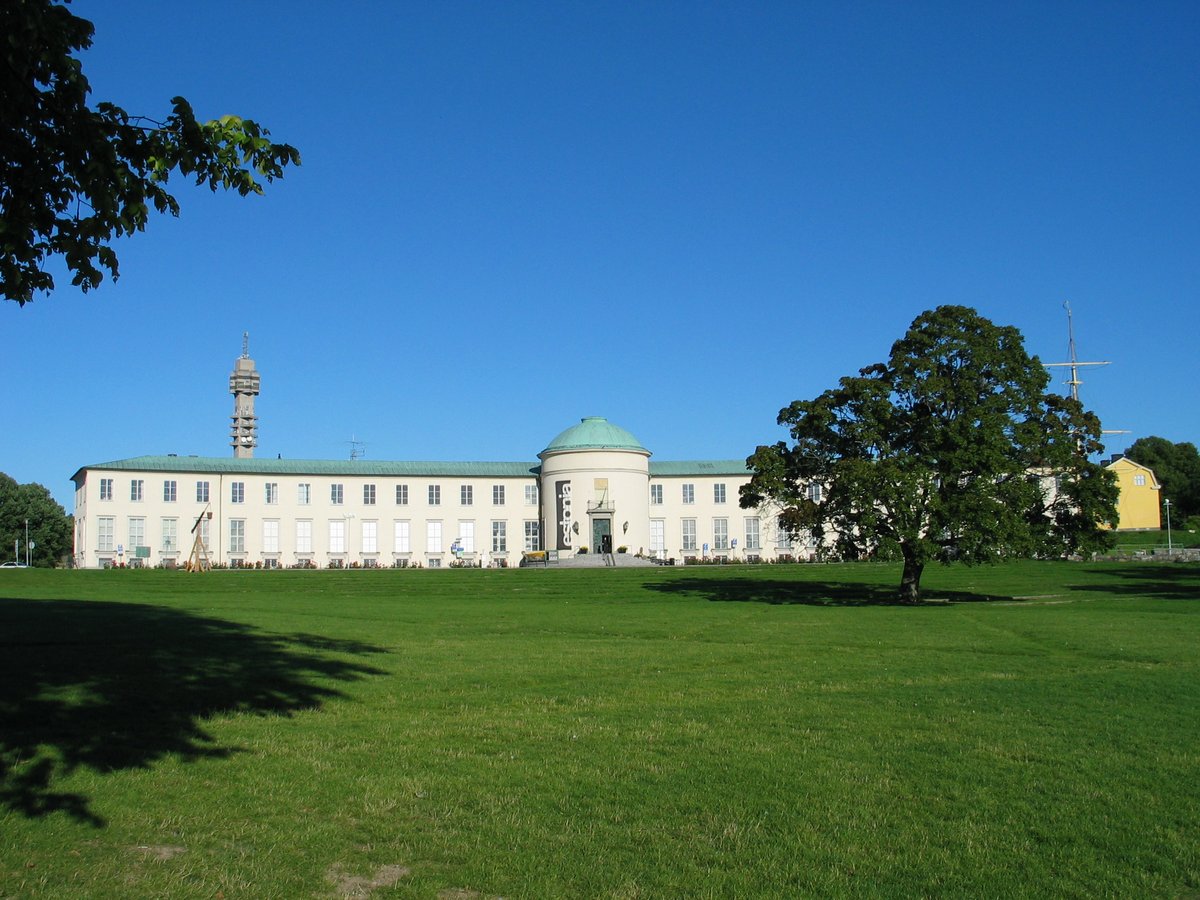

The Maritime Museum stands as a gently curved building influenced by the neoclassicist design of Olof Tempelman. Designed by Ragnar Östberg and constructed between 1933 and 1936, it was the last major commission of his career. Located on the site of the 1930 Stockholm Exhibition, the building marks the architect's point of view in the debate over the introduction of the Functionalist style in Sweden. The central cupola is built entirely of brick.
Step inside to explore a collection that covers the full breadth of Swedish maritime life. You can examine models of 18th-century ships on the bottom floor or descend to the basement to see a replica of a cabin from King Gustav III's ship, the Amphion. This space also houses the ship's original stern. Furthermore, the museum is responsible for the listing of historical ships in Sweden, documenting both ships and pleasure boats of historical significance.
Beyond the archives and the library, the building houses a model workshop, wood shop, photo studio, and a café added in the 1990s. Since 1975, the park out front has hosted open-air concerts featuring the Royal Stockholm Philharmonic Orchestra along with international acts like Oasis and Pearl Jam. Outside, a bronze statue of a sailor stands as a memorial to those lost during World War II.
Sources: Wikipedia, OpenStreetMap, Wikidata, Wikimedia Commons




Written by Nik Frost
Discuss this with the author and others
No comments yet. Be the first to start the conversation.