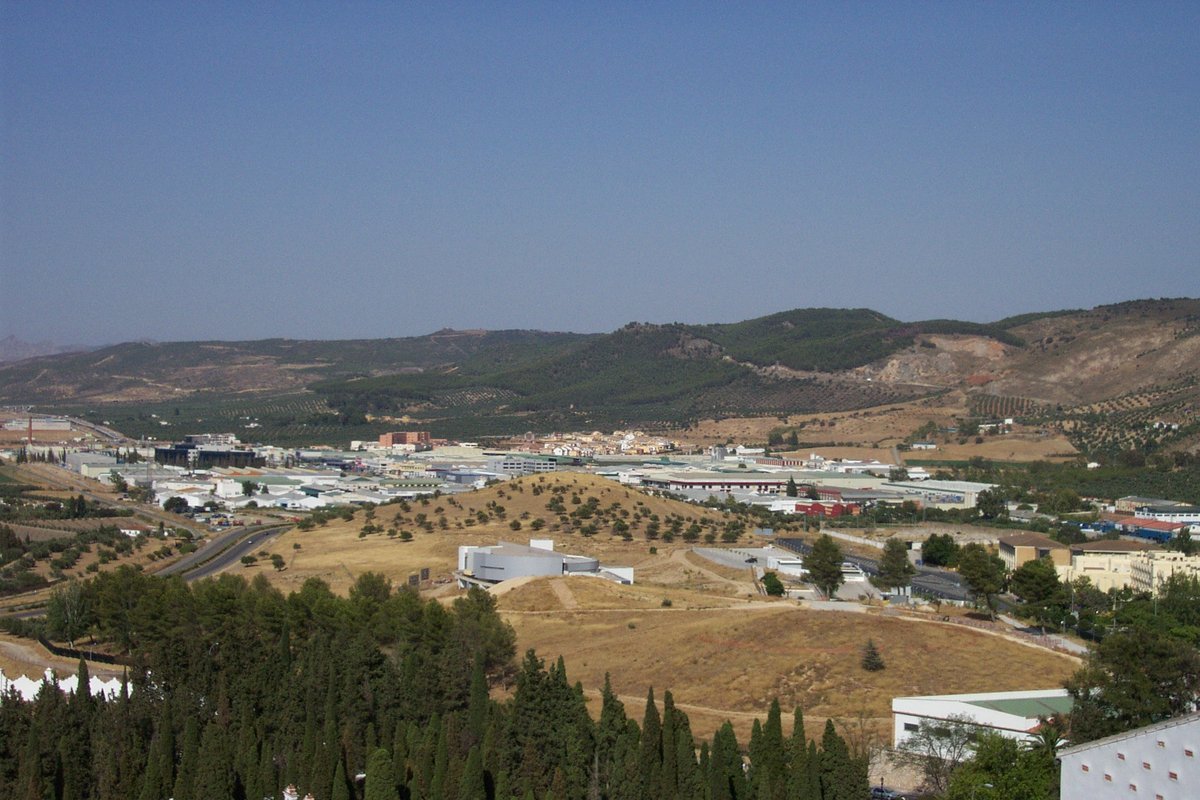

In the hills of southern Spain lies the small town of Antequera, where ancient monuments hold the key to a forgotten past. The Antequera Dolmens Site, as it is officially known, is a cultural heritage ensemble, comprised of three megalithic tombs - the Dolmen of Menga, the Tholos of El Romeral, and the Dolmen of Viera - and two natural mountain features. These monuments, dating back over 6,000 years, are a World Heritage Site, designated as such for their unique universal value.
They reflect a stage of human history in which the first ceremonial monuments in Western Europe were built, and represent a masterpiece of the human creative genius. But it’s the unusual orientation of these structures that sets them apart. The Dolmen of Menga points to a nearby peak, Peña de los Enamorados, while the Tholos of El Romeral is oriented to the mountains of El Torcal. This anomalous alignment suggests that our ancestors had a keen understanding of the celestial sphere and the landscape, and used it to construct their sacred sites.
The site, with its unusual and enigmatic nature, is an integration and close dialogue between the megalithic architecture and the landscape, and serves as a testament to the ingenuity and spirit of our early ancestors.
Sources: Wikipedia, OpenStreetMap, Wikidata, Wikimedia Commons
Written by Nicolo Ciampini
Discuss this with the author and others
No comments yet. Be the first to start the conversation.