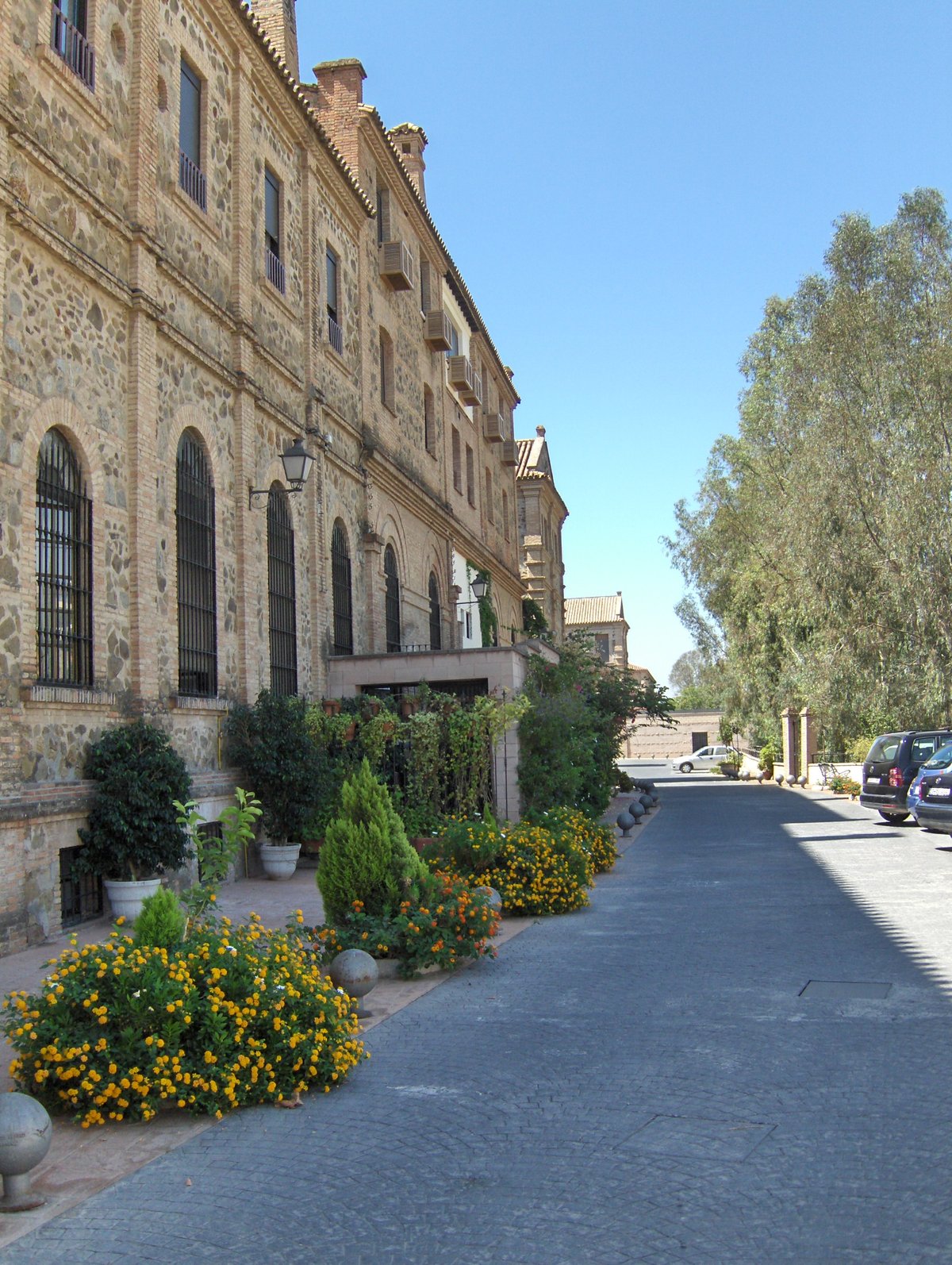

The Seminario Diocesano de Málaga is a center for priestly formation situated in a privileged location of hills and vegetation. The complex is a monumental example of official architecture from the early 20th century, showcasing a regionalist and neo-Mudéjar style. The initial buildings were constructed between 1921 and 1924, designed by Fernando Guerrero Strachan, Rafael Benjumea Burín, and Fernando Loring Martínez.
The history of the site is marked by significant religious and architectural milestones. In the 1920s, the seminary was improved by visiting other study centers, including the Pontificia Universidad Gregoriana in Rome. During this era, the site saw a royal visit in February 1926. A notable religious event occurred in 1927 when a three-meter tall statue was blessed and placed atop the church. Although this image was later toppled by anti-clerical groups, the seminary itself was saved from the 1931 burnings that destroyed 41 other religious buildings in the city.
The history of the institution includes a period of tragedy in 1936, when the rector Enrique Vidaurreta Palma, along with several teachers and seminarists, were murdered out of hatred for the faith. Some of those killed were later beatified. The seminary continued to evolve, undergoing further expansion between 1951 and 1965 under the direction of architect Enrique Atencia Molina.
Sources: Wikipedia, OpenStreetMap, Wikidata, Wikimedia Commons





Written by Nicolo Ciampini
Discuss this with the author and others
No comments yet. Be the first to start the conversation.