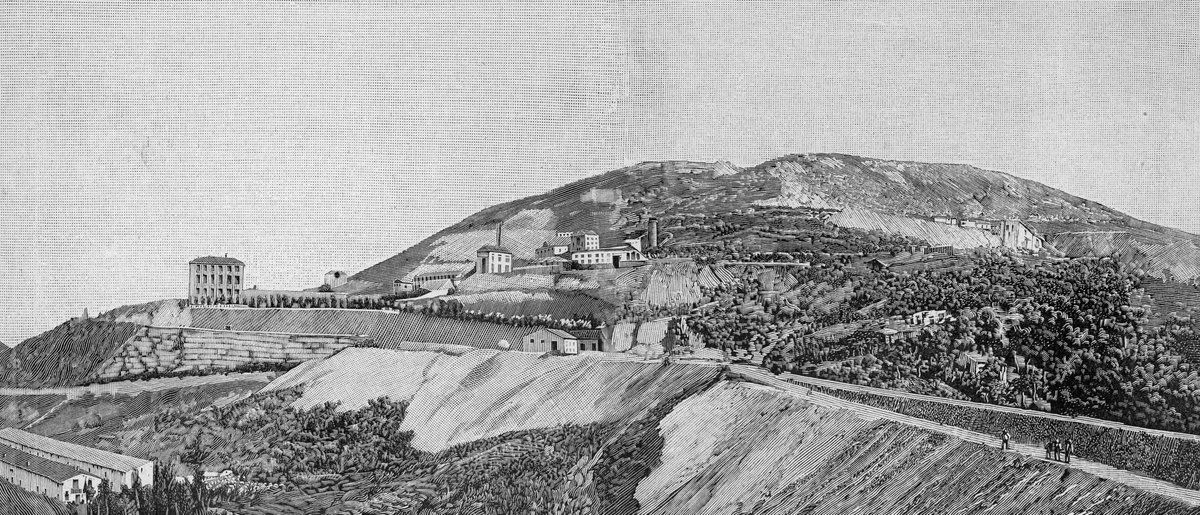
For over three hundred years, the Monteponi Mine in Iglesias, Italy, has been a towering monument to humanity's relentless pursuit of resources. Started in the 17th century, the mine's riches, particularly lead, silver, and zinc, were systematically extracted by miners, harbingers of the industrial revolution. In 1725, the first foundry of the mine was built, marking a significant milestone in the process of industrializing Italy. However, it wasn't until 1848 that the stage was set for full efficiency when the new mineral law of Sardinia separated the right of surface ownership from that of subterranean resources.
This paved the way for a society named Monteponi, founded in 1850 by a group of entrepreneurs under the leadership of Paolo Antonio Nicolay. Under the management of Adolfo Pellegrini, the mine expanded its extraction areas and invested in infrastructure and facilities. It was in 1870 that the mine really began to flourish when the ferrovia Monteponi-Portovesme connected the mine to the rest of the railway network. This allowed for easier transportation of the resources extracted.
The real development of the mining activity continued until the first World War, despite the difficulties of the period. The mine managed to overcome the war with success. Throughout the 20th century, the management of the mine went through various phases and changes of ownership, with groups like the ENI and the Samin acquiring the Monteponi and other lead-zinc mining companies. However, the decline of lead and zinc prices on the international market and the progressive depletion of the ore extracted led to the final closure of the mines in the 1990s.
Despite the closure, the Monteponi Mine has left an important historical and cultural heritage. The industrial and residential complex of the mine reflects the technological and productive progress that characterized the mining industry over the decades.
Sources: Wikipedia, Wikidata, Wikimedia Commons
Written by Sardinian
Discuss this with the author and others
No comments yet. Be the first to start the conversation.