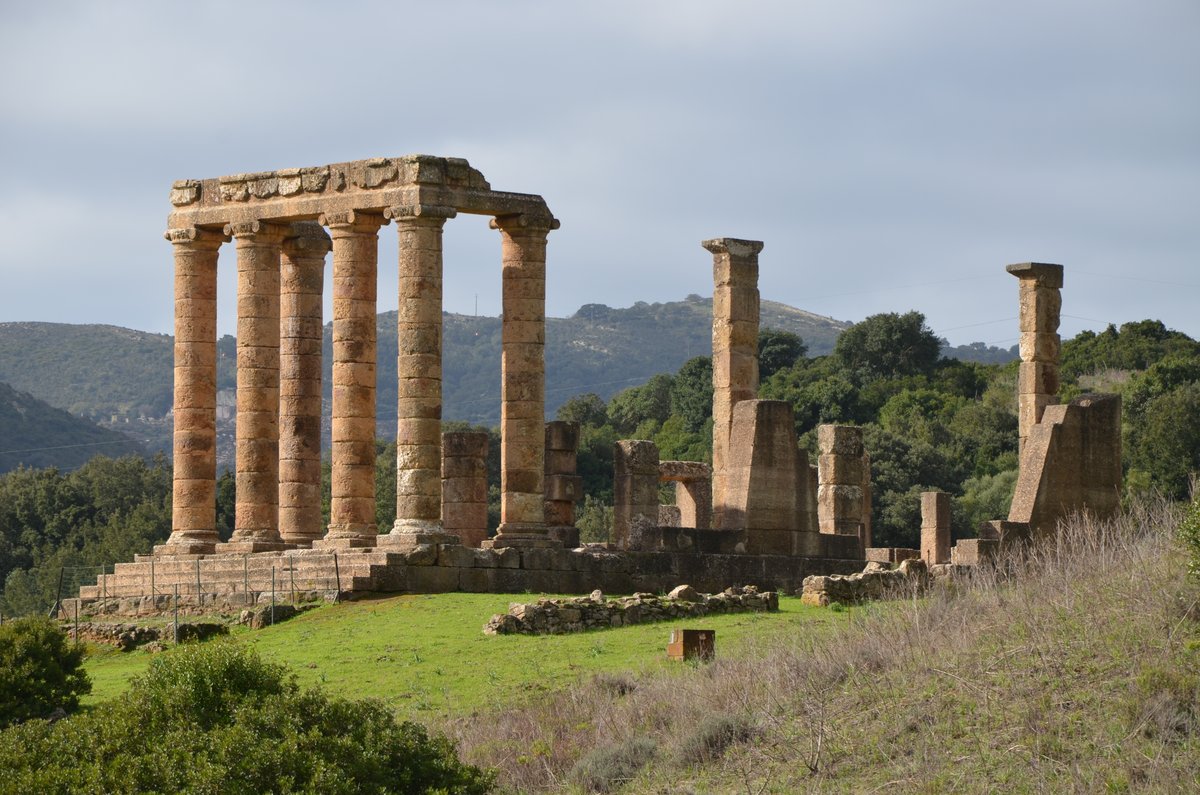
The Temple of Antas in Fluminimaggiore, southern Sardinia, Italy, is an ancient Carthaginian-Roman temple that underwent significant changes throughout its history. It was originally built around 500 BC by the Carthaginians, who dedicated it to the god Sid Addir, an incarnation of the local god Sardus Pater Babai. The Roman temple was constructed by Emperor Augustus, and later reinforced and altered under Caracalla (213-217 AD). The archaeological area of the temple includes a small necropolis, remains of an ancient Nuragic village (13th-10th centuries BC), Roman quarries of limestone, and an ancient path connecting the temple to a sacred cave where the water cult was practised.
The temple includes six Ionic columns with a height of some 8 metres, with remains of a mosaic-covered pavement and two square reservoirs for water. A statue of the Sardus Pater was likely housed in the cella, but only a finger of the statue has remained.
Sources: Wikipedia, Wikidata, Wikimedia Commons
Written by Sardinian
Discuss this with the author and others
No comments yet. Be the first to start the conversation.