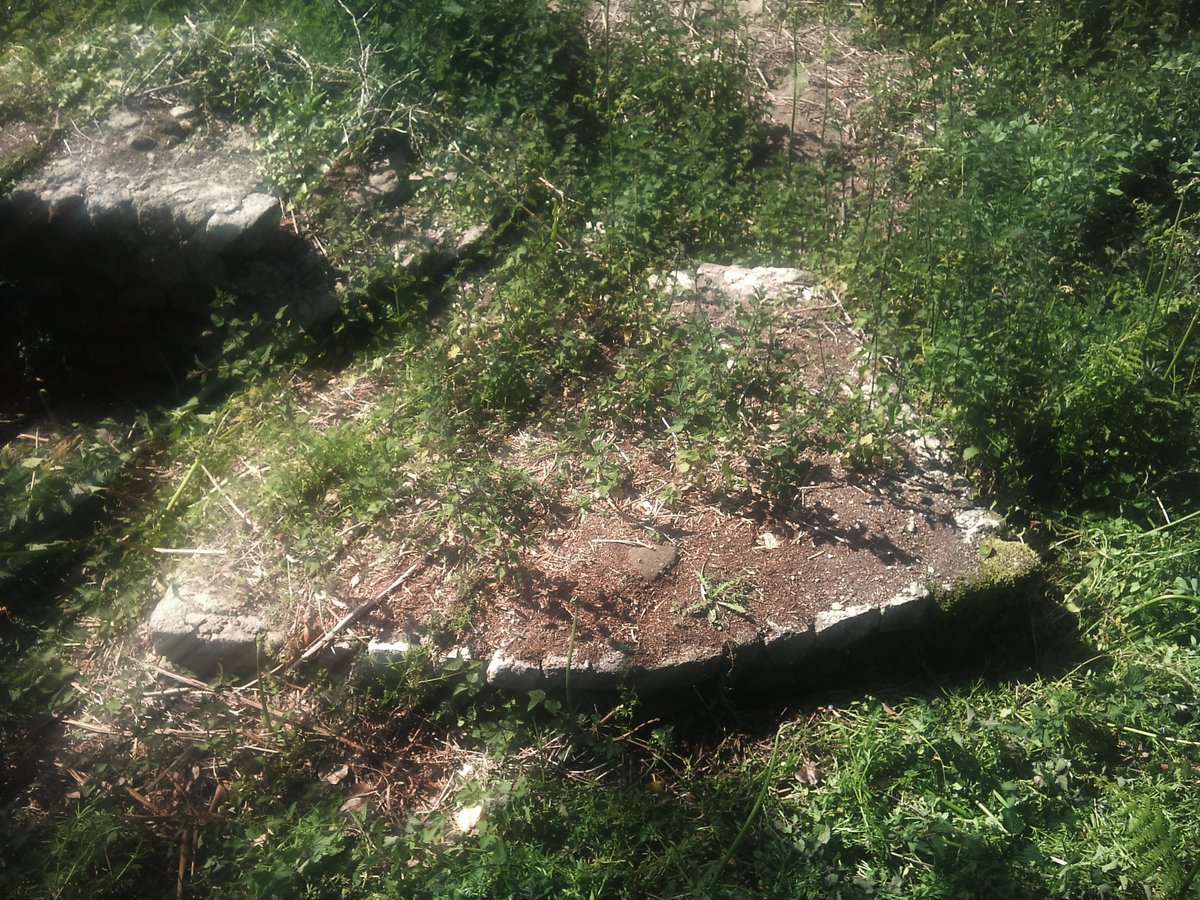

The Temple de Trégouzel is a fanum whose remains were discovered during the 19th century near Ploaré in Douarnenez. The site shows that three to four buildings succeeded one another in the same location between the La Tène period and the end of the 4th century AD. The site is situated near an ancient road that connected Quimper to the cap Sizun and was part of a significant production area for salt and garum.
The oldest evidence of occupation dates back to the Middle La Tène period with ceramic fragments. By the 2nd century BC, a massive wooden structure with large post holes was built, potentially as a cult building, before it was destroyed by fire. This was followed by two separate masonry structures during the Julio-Claudian era. These included an Augustan-era building made of dry stone and a rectangular building constructed between the years 40 and 90.
Toward the end of the 1st century, during the reign of Domitian, the temple was rebuilt into a monumental structure. This fourth state featured an octagonal cella with walls two meters thick, which suggests a height of perhaps 20 meters. The monument included a concentric gallery open to the north, though the gallery was interrupted in the south by a rectangular room. This room was the part of the structure that 19th-century researchers initially identified as the entire cella.
By the mid-4th century, coins from Constance II indicate that the site was occupied once more before being finally abandoned. After this period, the structures were systematically stripped of their stones down to the base of the walls. Today, the site remains a listed historical monument, preserving the sequence of this long-term occupation.
Sources: Wikipedia, OpenStreetMap, Wikidata, Wikimedia Commons
Written by Nicolo Ciampini
Discuss this with the author and others
No comments yet. Be the first to start the conversation.