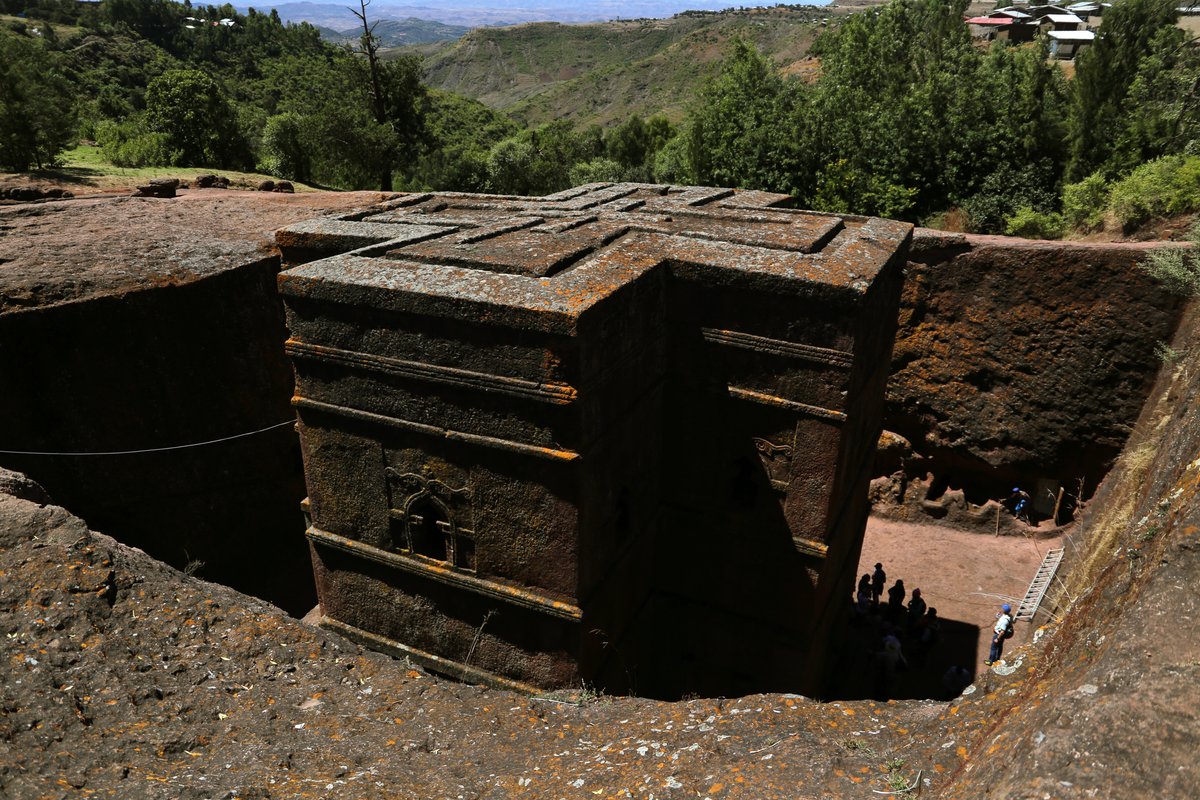

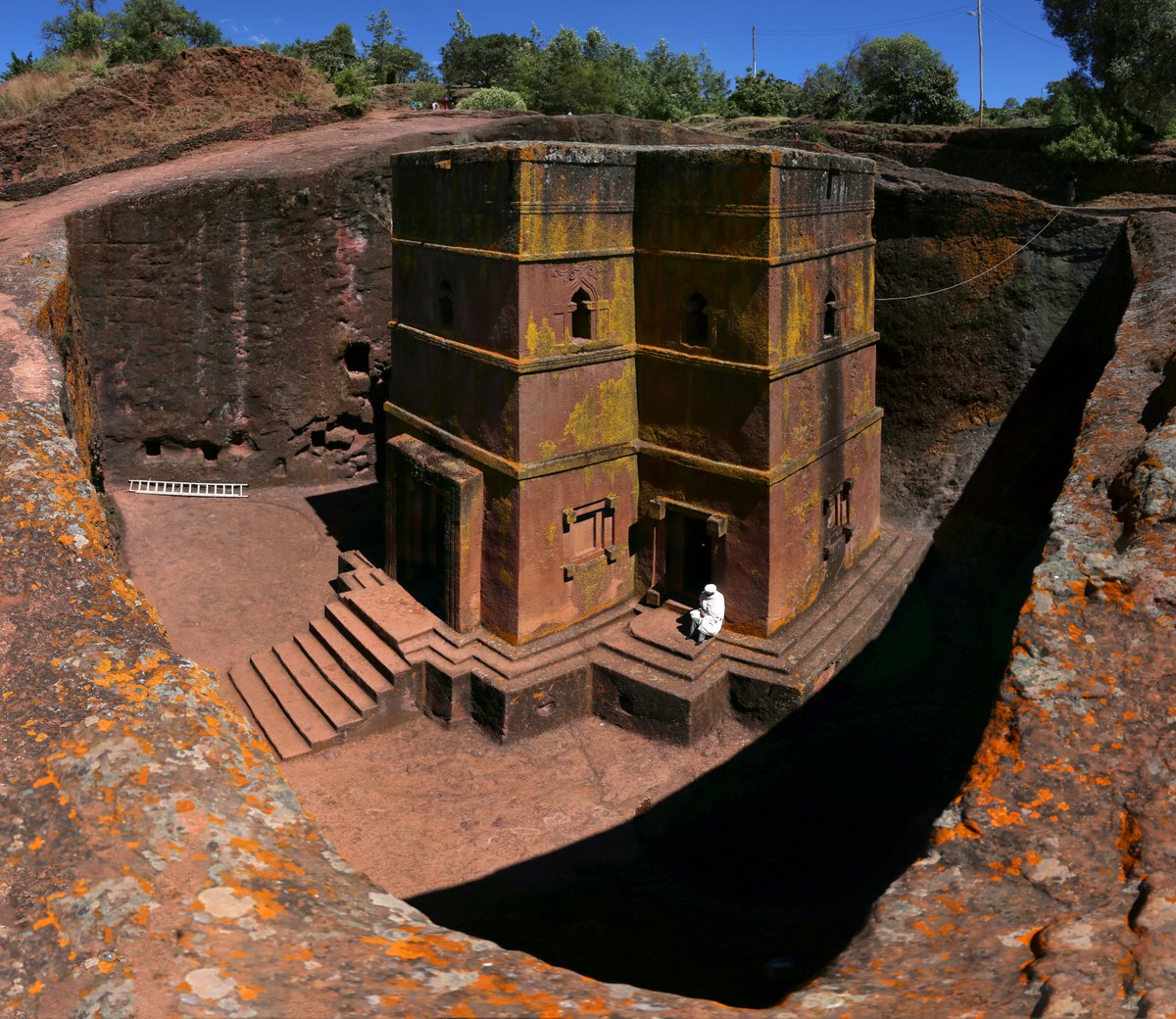
In the heart of Ethiopia lies the site of the rock-hewn churches of Lalibela, named after King Gebre Meskel Lalibela, who ruled in the late 12th and early 13th century. Commissioned by the king to recreate the holy city of Jerusalem, 11 churches were carved from the scoriaceous basalt rock. These worship places remain in use today as a site for the Ethiopian Orthodox Christian Church.
The churches are unique in their design, showing architectural diversity through human figures of bas-reliefs in Biete Golgotha Mikael and colorful paintings of geometrical designs and biblical scenes in Biete Mariam. The site consists of five churches north of the town's river Jordan, five south of the river, and one independently located. Each grouping of churches is connected by a system of tunnels and trenches, with Biete Giorgis connected by trenches on its own. The northern churches include Biete Medhane Alem, Biete Maryam, Biete Golgotha Mikael, Biete Meskel, and Biete Denagel. The southern churches are Biete Amanuel, Biete Qeddus Mercoreus, Biete Abba Libanos, Biete Lehem, and Biete Gabriel-Rufael.
The churches were created through a subtractive process using hammers and chisels to excavate trenches surrounding the monolithic and semi-monolithic structures, and a system of tunnels connecting the groups. Construction was done from top to bottom. Today, these churches continue to serve as a place of worship, prayer, and pilgrimage. They are used for the celebration of religious festivals like Timkat and Genna, serve as a home to clergy, and bring together religious adherents and leaders each year.
Several recent conservation and restoration projects have been implemented at the site, but have been flawed in execution. A project funded by the American Embassy for the restoration of Bet Gabriel-Rufael and subsequently Bet Golgotha-Mikael saw issues emerge between parties regarding the understanding of the project's full scope. There has also been a lack of adequate communication and sharing of information regarding project plans between the Authority for Research and Conservation of Cultural Heritage (ARCCH) and the local committee and church.
Sources: Wikipedia, OpenStreetMap, Wikidata, Wikimedia Commons
Written by Mutabor
Discuss this with the author and others
No comments yet. Be the first to start the conversation.