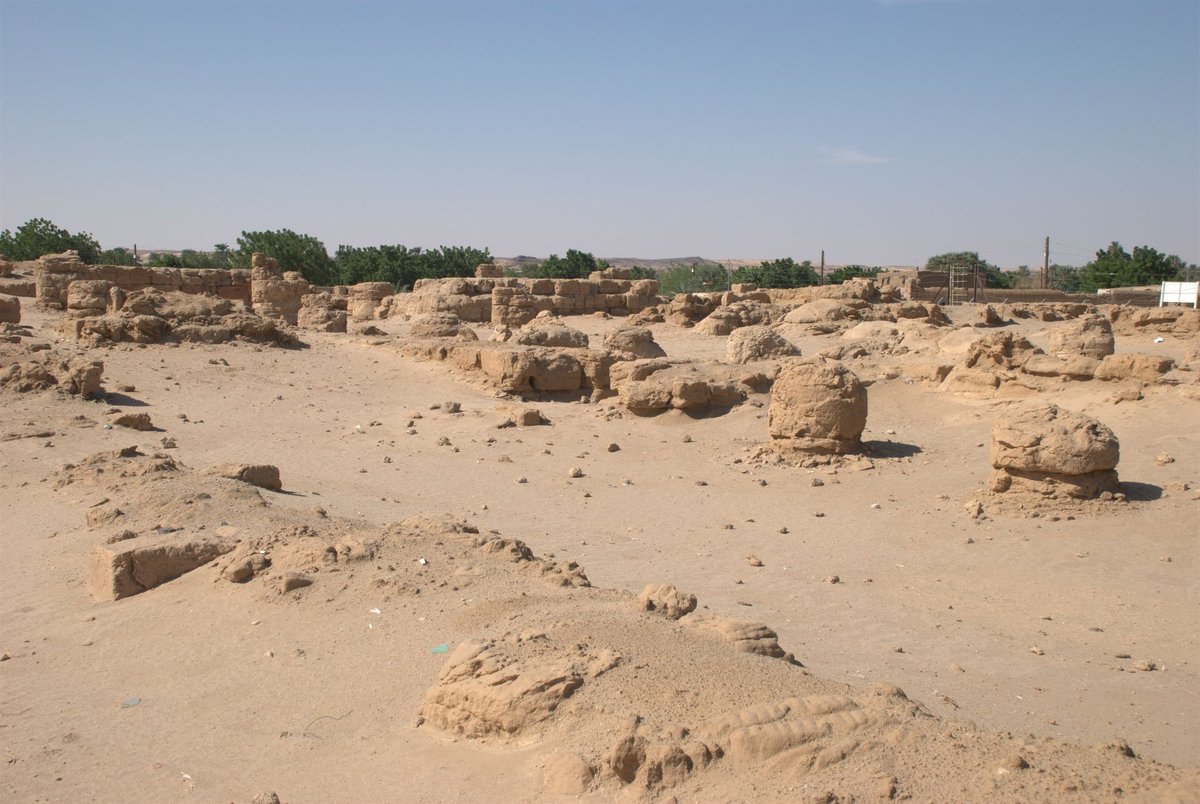

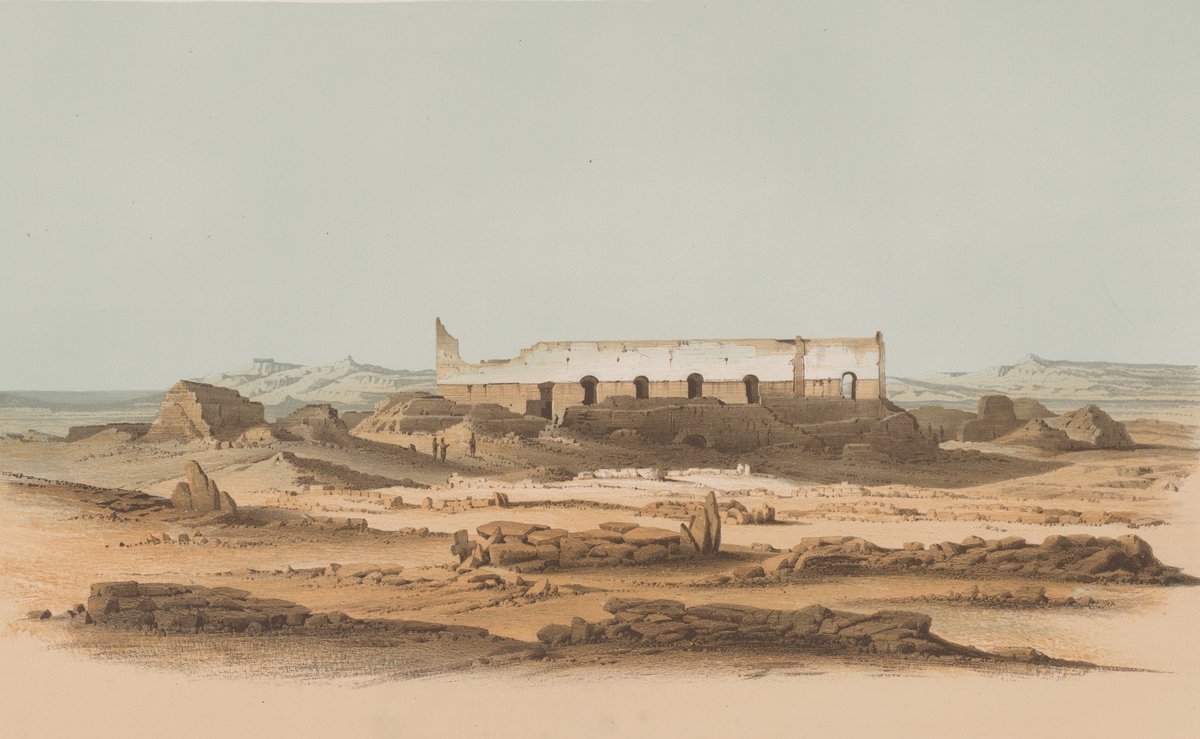
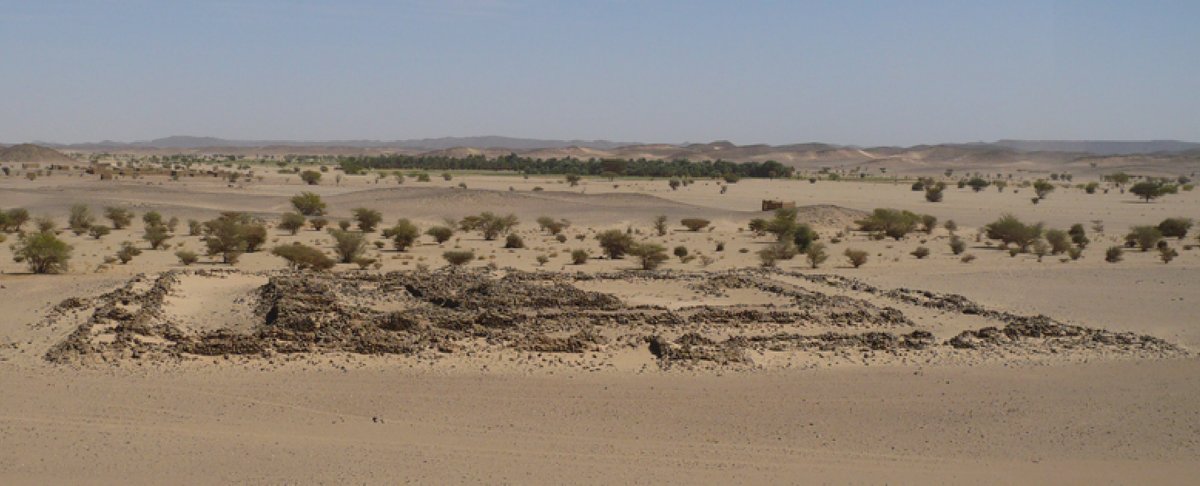
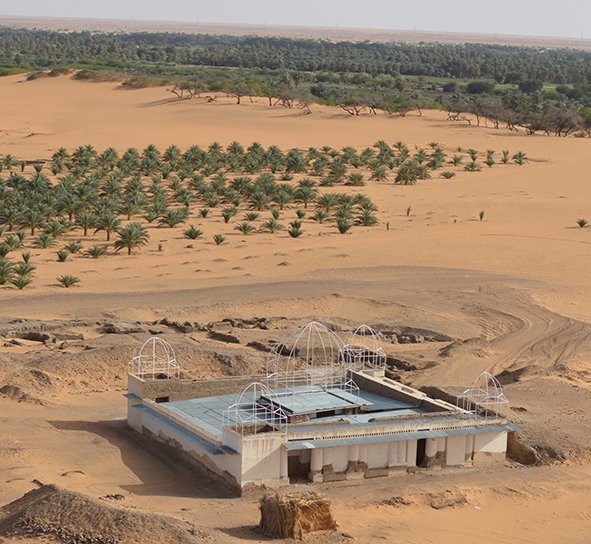
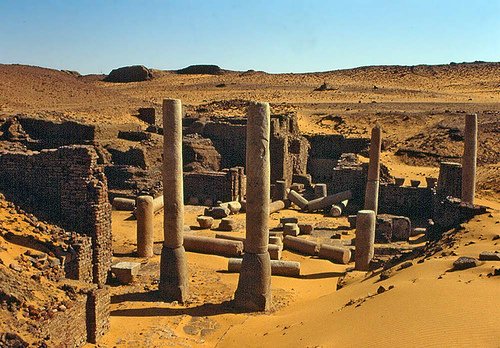
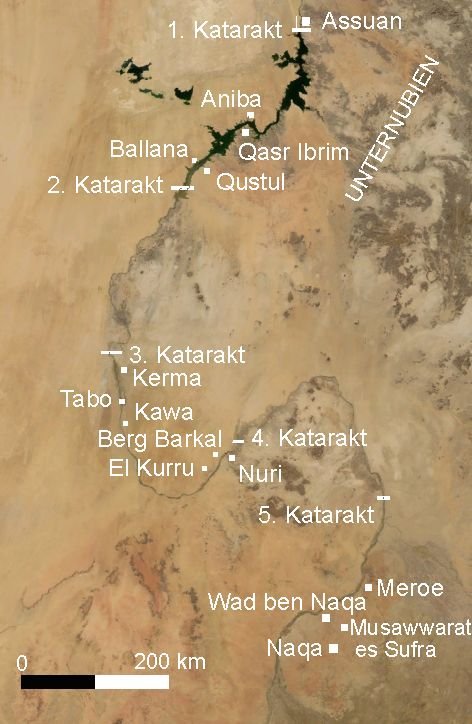
Sanam is a modern village in Sudan located on the bank of the Nile river next to Merowe. This site contains the remains of an ancient town that flourished during the Napatan Period - perhaps the remains of Napata, the capital of the Kushite empire from about 800 to 300 BC. Between 1912 and 1913, Francis Llewellyn Griffith excavated parts of the town, uncovering a badly preserved temple and a large building he called the treasury.
The treasury is 267 meters long and is the largest building in Sanam. While mostly empty, it once contained elephant tusks and served as a distribution point for goods. A seal revealed by Griffith indicates the treasury existed from 747-716 BC to 593-568 BC. East of the treasury lies SA.K 300, a workshop for high-value goods that produced items for royalty. Nearby is a temple built under King Taharqo with additions by King Aspelta, which was dedicated to the god Amun and modeled after Egyptian monuments.
The archaeological record also includes a large cemetery containing 1,500 tombs belonging to common people, which differs from a second cemetery at Eltameer used for higher-status individuals. Recent studies from 2016 to 2018 used magnetic gradiometry to map the settlement, revealing structures from the Napatan through the Meroitic periods. These surveys documented the dimensions of seven specific buildings and confirmed that while many structures existed, there were no housing structures found in the surveyed area.
Sources: Wikipedia, OpenStreetMap, Wikidata, Wikimedia Commons
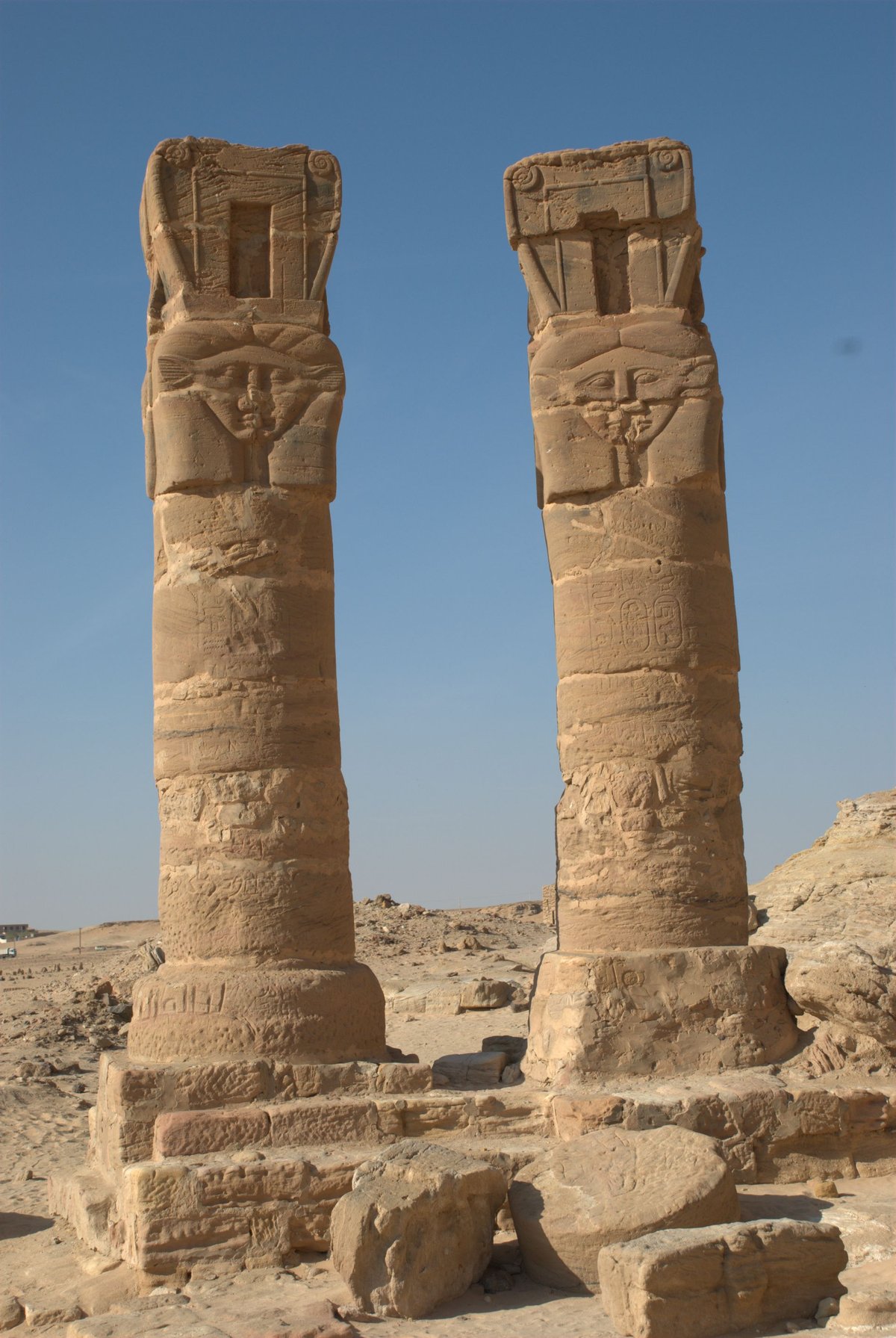
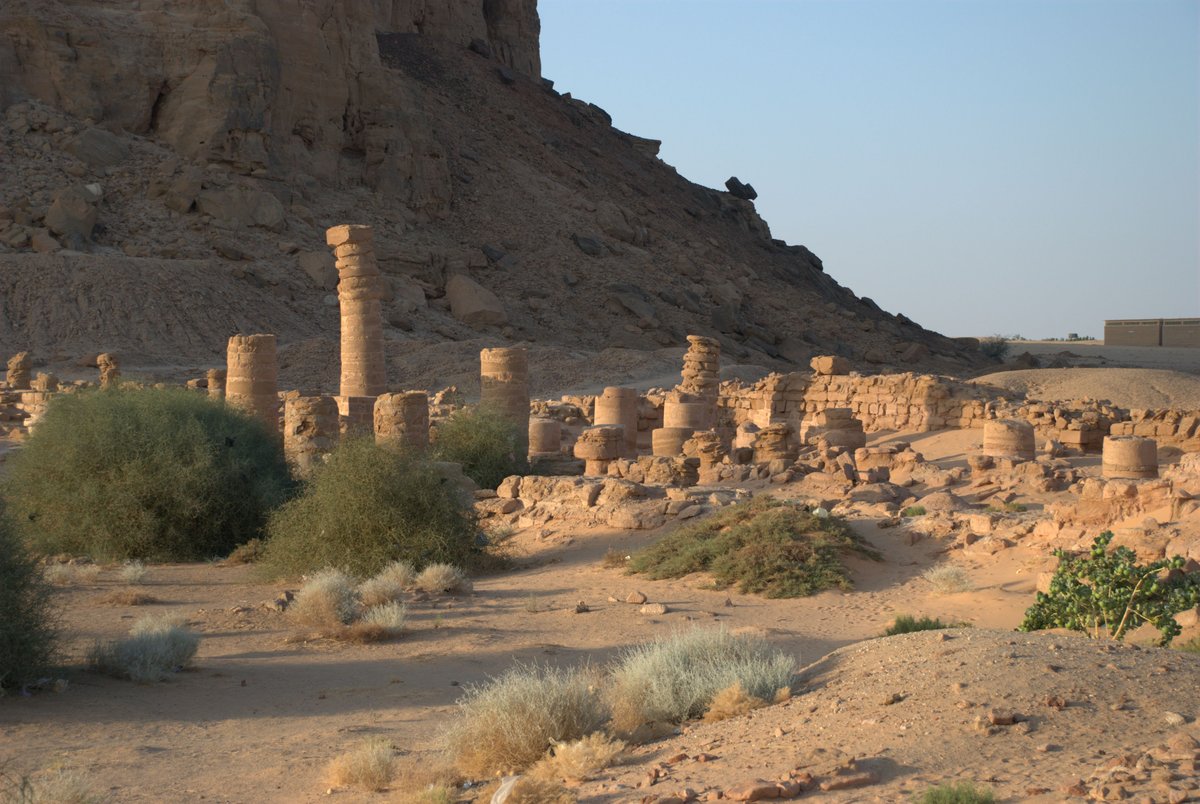
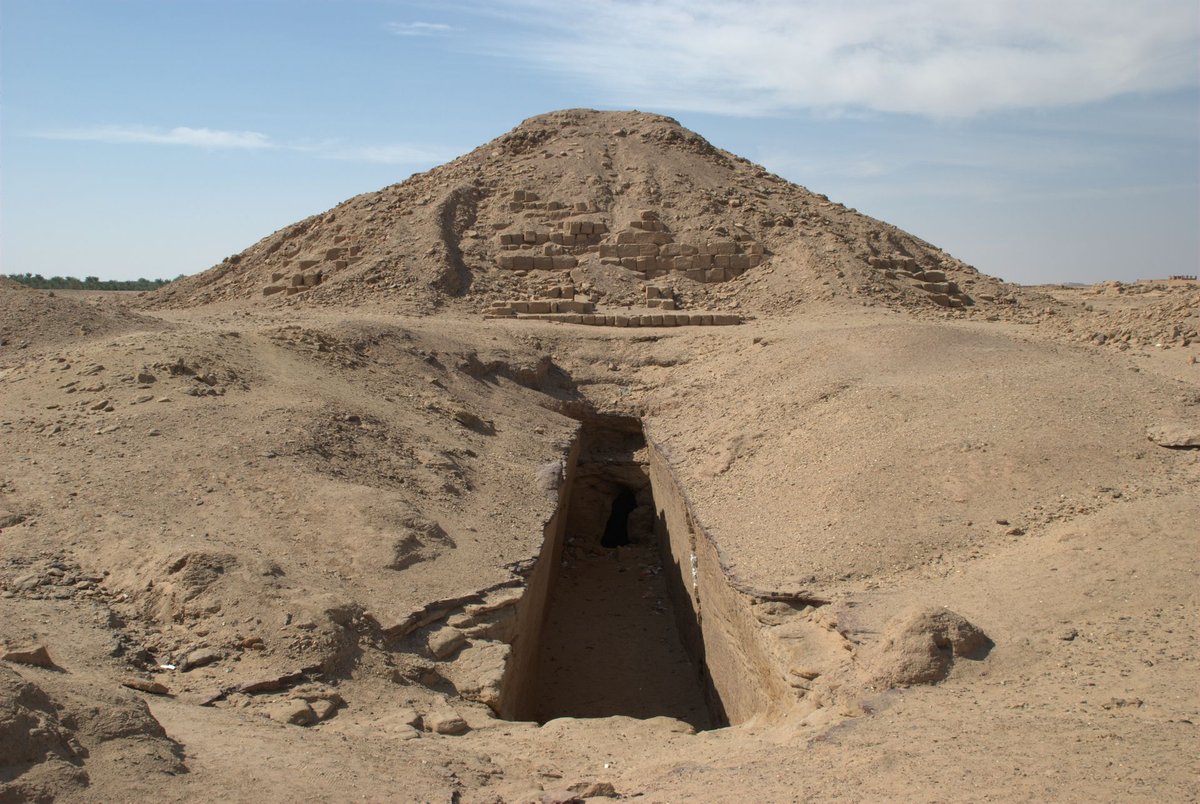
Written by Mutabor
Discuss this with the author and others
No comments yet. Be the first to start the conversation.