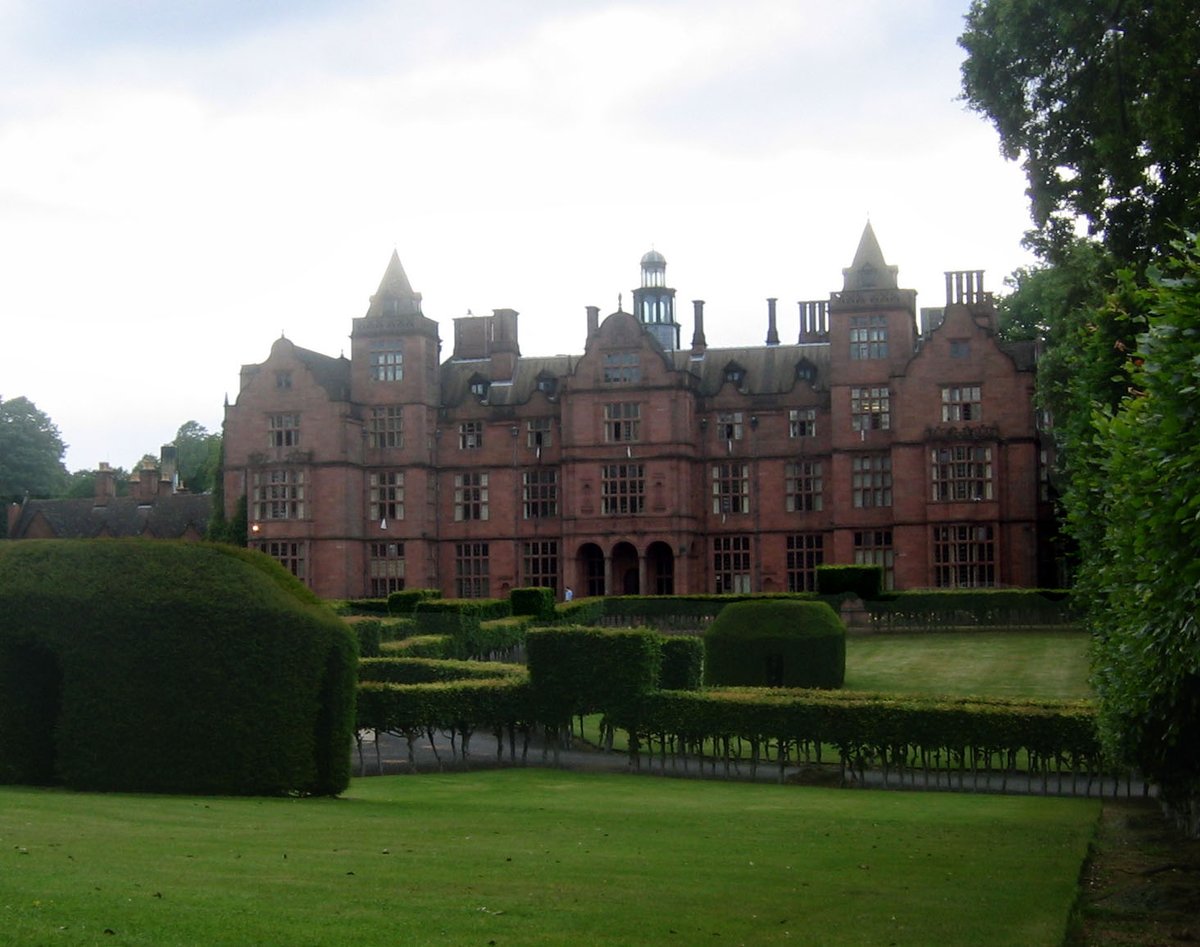
Hewell Grange, nestled in the picturesque village of Tardebigge, Worcestershire, England, conceals a secret within its lush grounds. The historic house was built between 1884 and 1891 for Robert Windsor-Clive, who later became the first Earl of Plymouth. hewell Grange was a Victorian prodigy house, one of the most important late 19th century country houses in England. The mansion was built in the Jacobethan style by George Frederick Bodley and Thomas Garner.
Known as an impressive work of architecture, the house served as the stage for soirees attended by notable figures, such as Ferdinand de Rothschild, who was reportedly envious of the grand manorhouse. However, not all stories about Hewell Grange revolve around lavish parties and high society. After the Second World War, the third earl sold the Hewell estate to the Crown, and it was repurposed as a prison. The mansion was used to house young offenders, and later low-risk prisoners, while adult prisons were built on the grounds.
The site was subsequently consolidated as HM Prison Hewell. The HM Prison Hewell closed in 2019, leaving the grand manorhouse an empty relic of a bygone era. The surrounding estate was landscaped by Capability Brown and Humphry Repton, whose work is still visible today. The ruins of an earlier hall stand near the lake, a testament to the history that once was. The Windsor-Clives moved away from Hewell Grange after less than 50 years, consolidating their estates in Shropshire in the mid-20th century.
Sources: Wikipedia, OpenStreetMap, Wikidata, Wikimedia Commons
Written by Nicolo Ciampini
Discuss this with the author and others
No comments yet. Be the first to start the conversation.