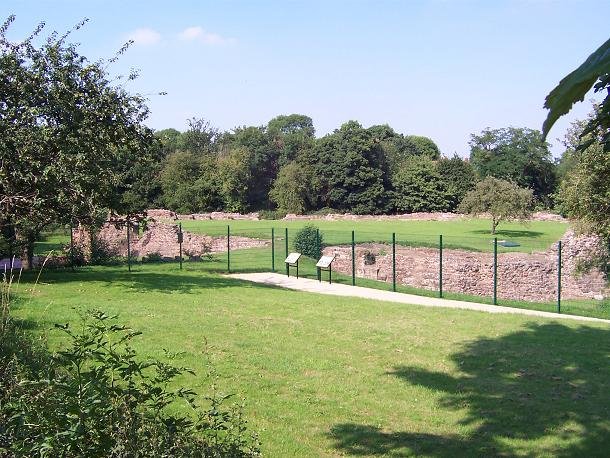

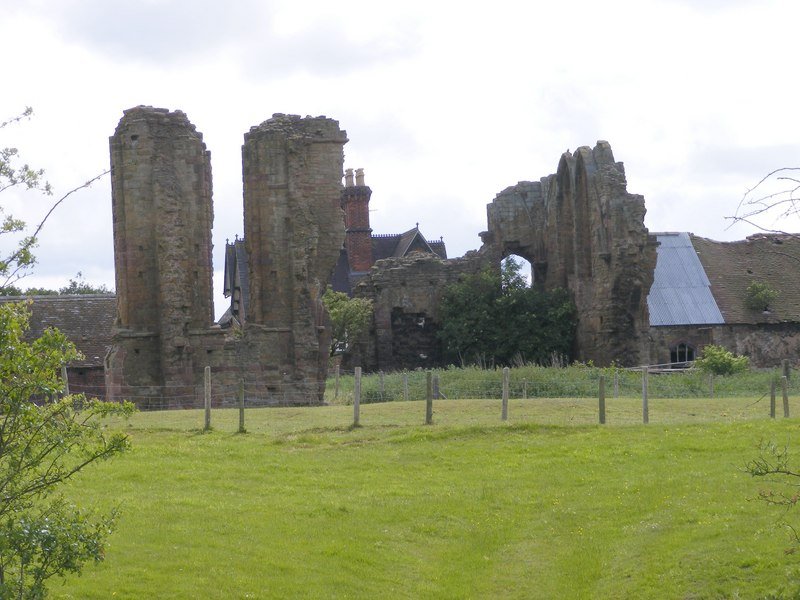
Weoley Castle, known historically as the Manor of Welegh, is a Grade II listed building and a Scheduled monument. Initially erected over Anglo-Saxon soil in 1000, it was occupied by families such as the de Somerys. In its prime, the castle was a substantial timber hall, standing tall between 1200 and 1260, with a kitchen appended to the south during those same years. By 1380, it had been rebuilt using stone.
By the 17th century, the Jervoise family had abandoned the castle, leaving behind only the foundations of the building today as the moat has since been drained. During archaeological digs, a 14th-century chessman emerged from the site along with pottery and glassware from across Europe.
Today, the site is a community museum managed by Birmingham Museums Trust. While much of the stone was used to build canal bridges starting in 1798, the remains of the foundations of the wooden kitchen demolished in 1260 still survive due to waterlogging.
Sources: Wikipedia, OpenStreetMap, Wikidata, Wikimedia Commons
Written by Nicolo Ciampini
Discuss this with the author and others
No comments yet. Be the first to start the conversation.