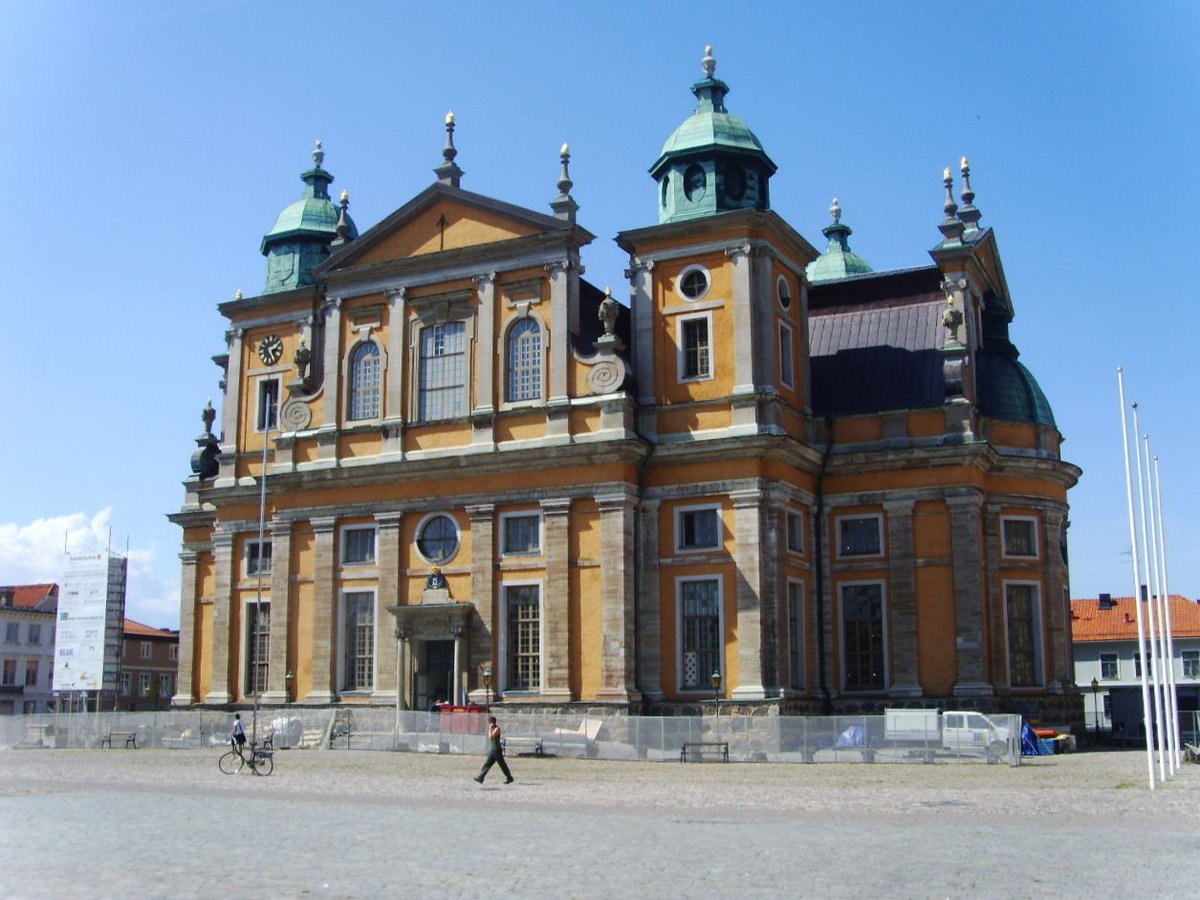

Kalmar Cathedral serves as a primary example of Swedish Baroque architecture. This structure illustrates a period of significant modernization where designers had to balance liturgical traditions with the physical limitations of a fortified city. Because of these defensive requirements, the building lacks a dome and instead features high window openings.
Architect Nicodemus Tessin the Elder initiated this project in 1660 following the town's move to Kvarnholmen island. Progress was steady but slow due to interruptions like the Scanian War from 1675 to 1679. The construction utilized limestone from Gotland for the masonry while the vaults and portals consisted of brick. The building reached completion in 1703.
Throughout the centuries, the structure underwent various transformations. Significant restorations were completed in 1783, 1831, and 1910. A more recent project between 2005 and 2011 refurbished the copper-plated roof and performed stone restoration on the facade.
Sources: Wikipedia, OpenStreetMap, Wikidata, Wikimedia Commons
Written by Nik Frost
Discuss this with the author and others
No comments yet. Be the first to start the conversation.