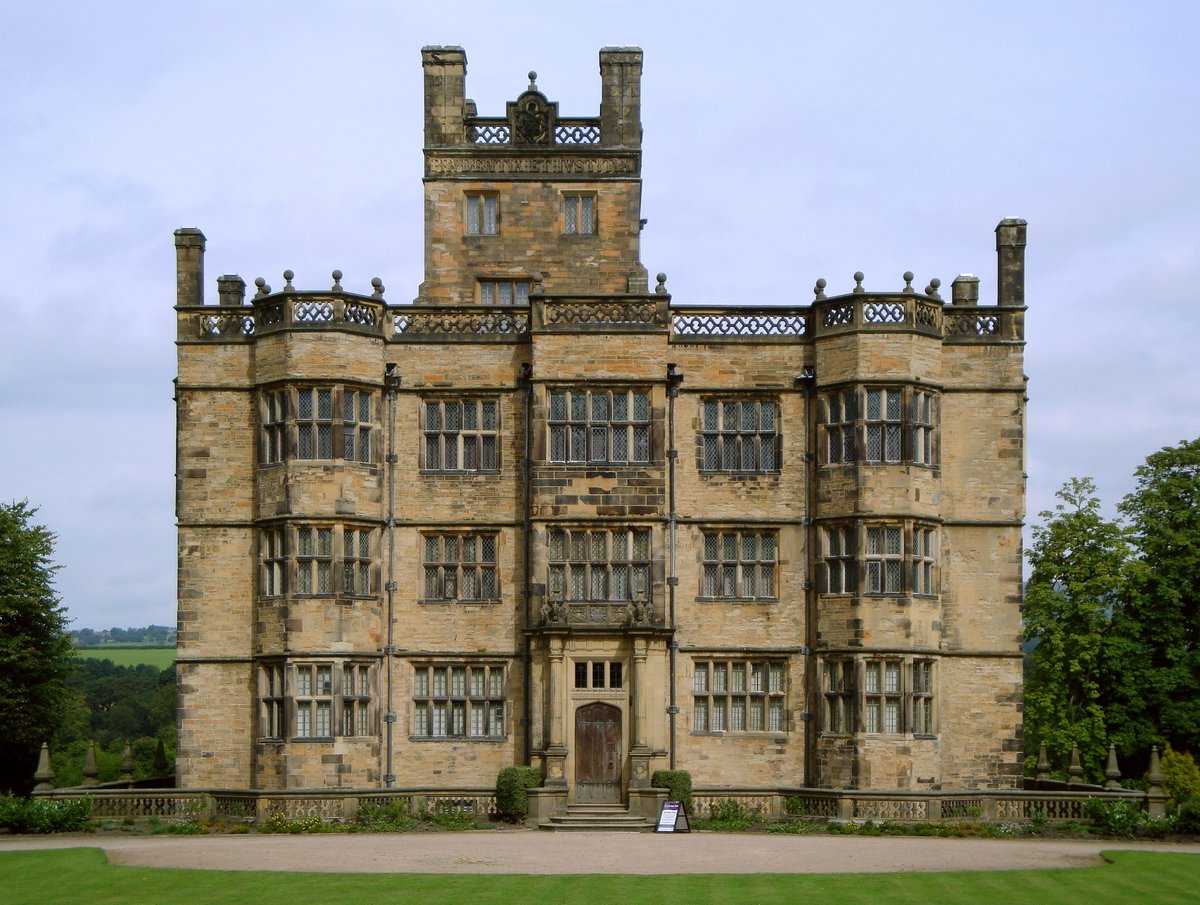

Gawthorpe Hall in Burnley began as a 14th-century pele tower built by the Shuttleworths as a defense against invading Scots. The family occupied a nearby hall from the 12th century, but these fortifications provided a sturdy foundation for what was to come.
In 1600, the family decided to build an Elizabethan mansion around those rugged old stones. They laid the foundation stone on 26 August 1600. While the house is traditionally attributed to Robert Smythson, experts suggest that if it was not designed by him, the design must have been influenced by his work. The old defense was tucked inside a new aesthetic, featuring decoration with the initials KS for Kay-Shuttleworth throughout the house.
By the mid-19th century, the house was near ruin. This prompted Sir James Phillips Kay-Shuttleworth to engage Charles Barry, the architect of the Houses of Parliament, to undertake an extensive rebuilding. Barry also designed a small ornamental garden on a terrace overlooking the River Calder. However, the river was eventually diverted away from the hall in the 19th century due to pollution and again in the 1960s to accommodate an open cast coal scheme.
During dry summer months, the layout of the old formal garden is still visible. This garden was eventually dug up after the Second World War because maintenance costs had become prohibitively expensive. Today, the National Trust and Lancashire County Council jointly administer the hall. The estate remains a significant piece of heritage, listed as a Grade I building.
Sources: Wikipedia, OpenStreetMap, Wikidata, Wikimedia Commons
Written by Nicolo Ciampini
Discuss this with the author and others
No comments yet. Be the first to start the conversation.