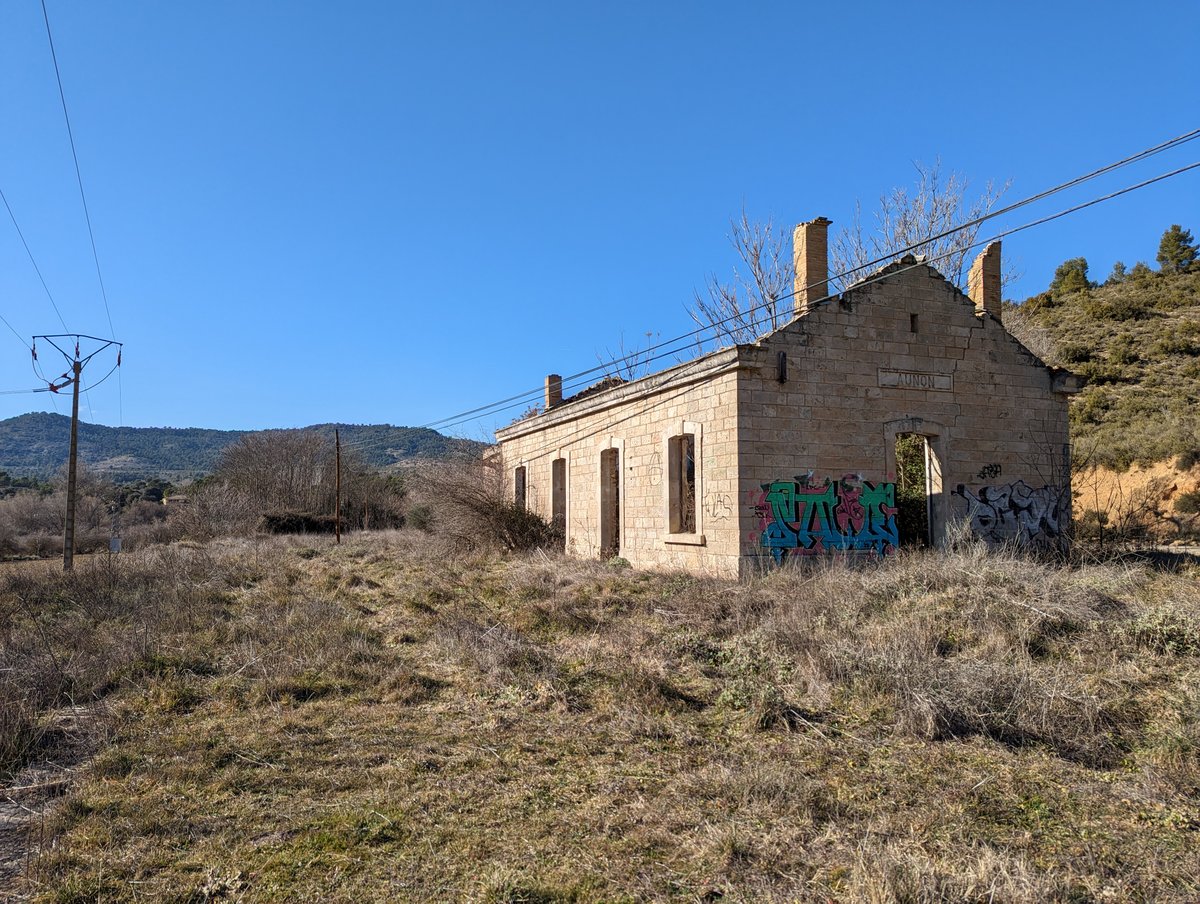

The rails were designed for a journey that reached a definitive conclusion at Auñón. When this line opened in 1919, it served as part of an initiative to link Madrid with Aragon. The grand design eventually stalled, transforming the site into a permanent destination.
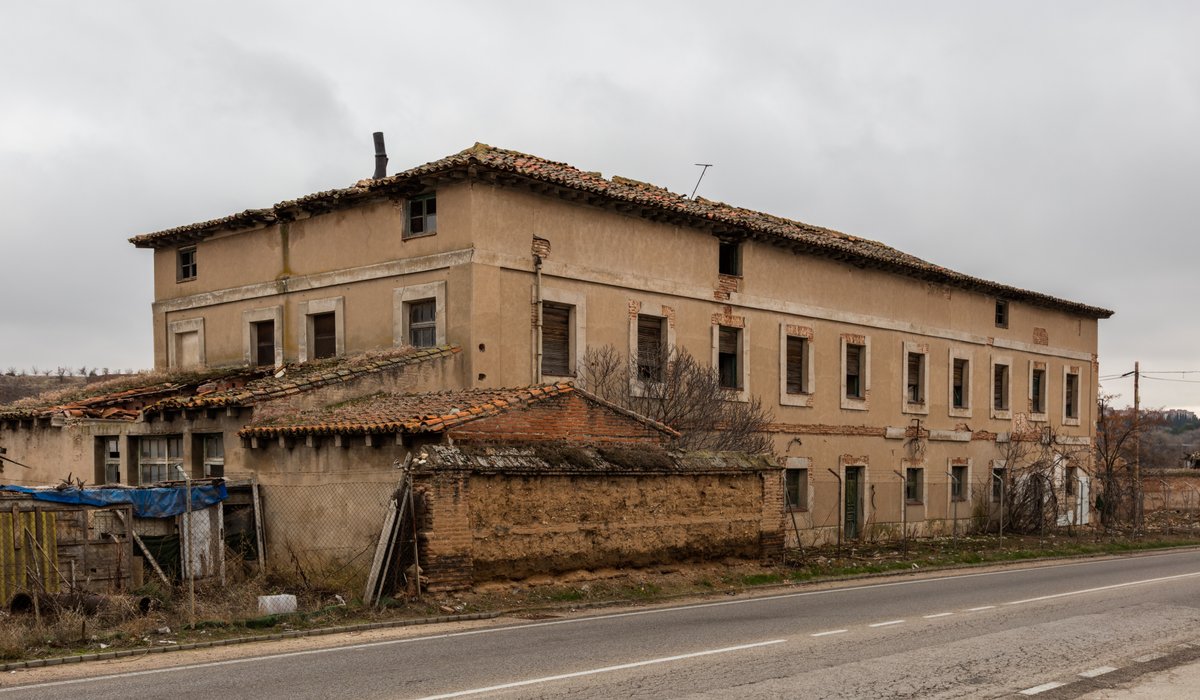
The Compañía del Ferrocarril de Madrid a Aragón maintained a dedicated passenger building and a warehouse for freight. These buildings functioned as hubs for the Tajuña line during the first half of the 20th century. They stood as centers for people and goods moving through the region until the traffic ceased.
Significant changes arrived in 1946 when the final planned section of the route was shut down. This shift cemented Auñón as the end of the line. By 1953, all traffic between Orusco and Auñón stopped completely, leaving the station abandoned. Years later, the tracks were eventually removed.
We invite you to observe the site today. Though the tracks are gone and only ruins remain, the infrastructure offers a window into the expansion of the Tajuña railway. It stands as a reminder of a journey that did not reach its planned conclusion.
Sources: Wikipedia, OpenStreetMap, Wikidata, Wikimedia Commons

Written by Nik Frost
Discuss this with the author and others
No comments yet. Be the first to start the conversation.