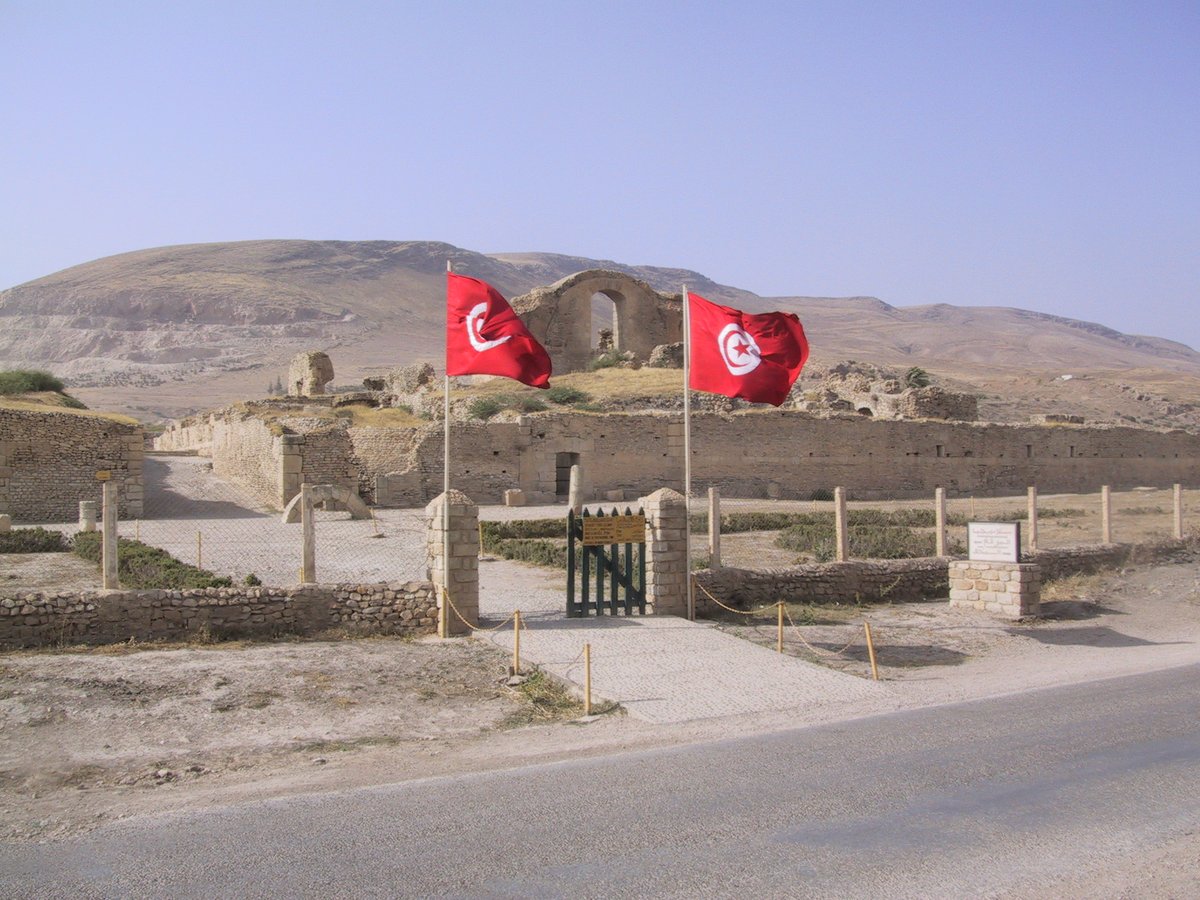

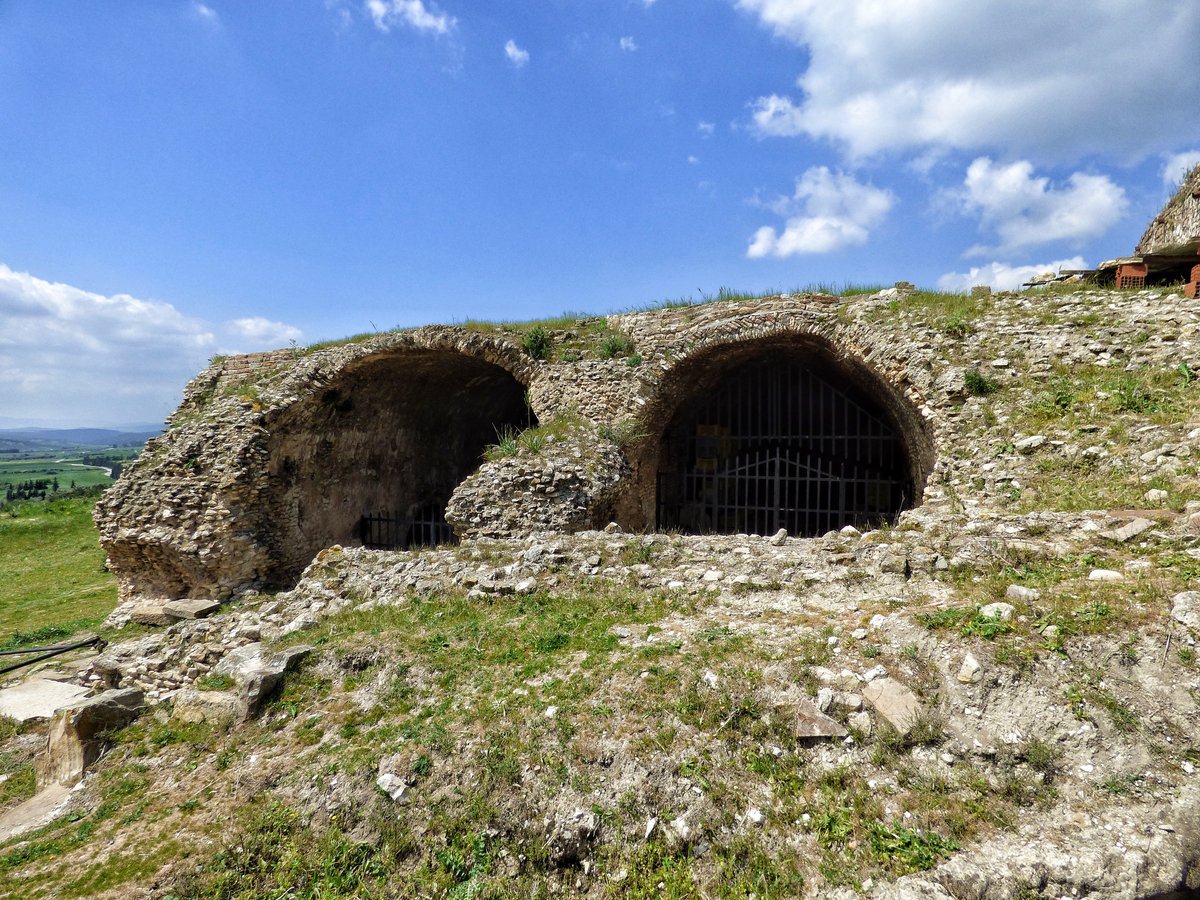
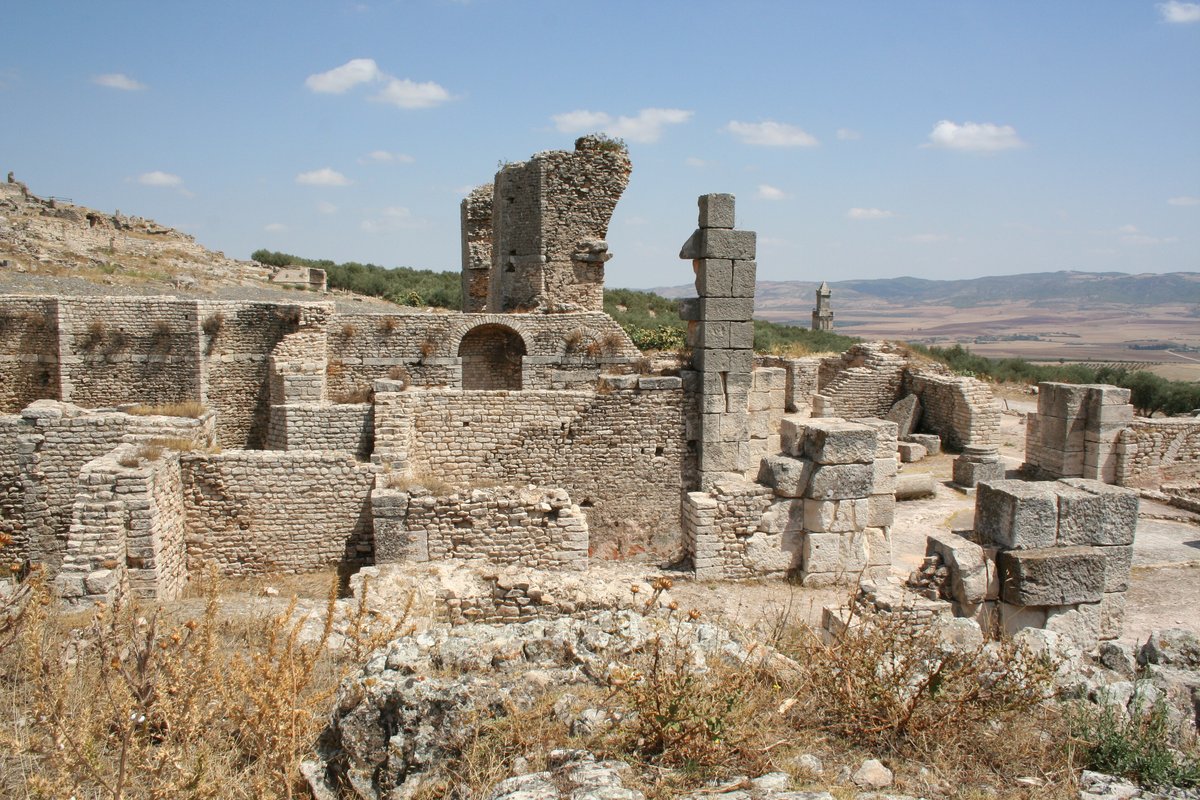
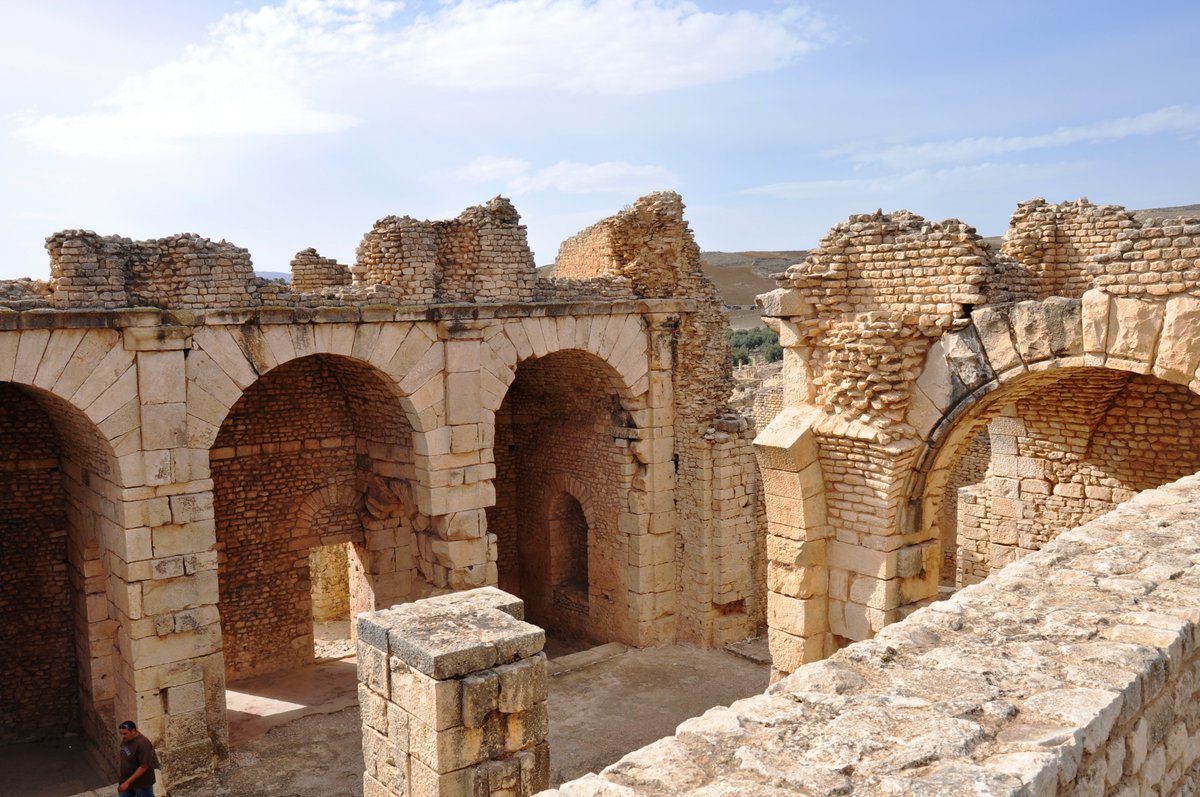
In North Africa, the sun is a powerful force. To protect against the heat and effects of the sun, the town of Bulla Regia featured Hadrianic-era semi-subterranean housing. These structures featured a ground-level storey, open to the winter sun, above a subterranean level built around a two-story atrium. Open-bottomed terracotta bottle-shapes were built into the vaulting of these rooms.
In the unique domus architecture developed in the city, water sprinkled on the floors brought the colors of the mosaics to life while they provided cooling by evaporation. These floors are among the finest in North Africa, boasting three-dimensional forms and subtle shading. The mosaic of a haloed Amphitrite in the House of Amphitrite is often illustrated in archaeological records.
Before the Romans arrived, the town served as a seat for kings. It was a royal seat for Masinissa, who imposed a regularized orthogonal grid of streets in the Hellenistic manner over the earlier irregular system. The Romans later transformed it into a colony for its people. Even as the empire withered away, the town endured until a great earthquake eventually destroyed Bulla Regia, collapsing its first floors into the subterranean floors.
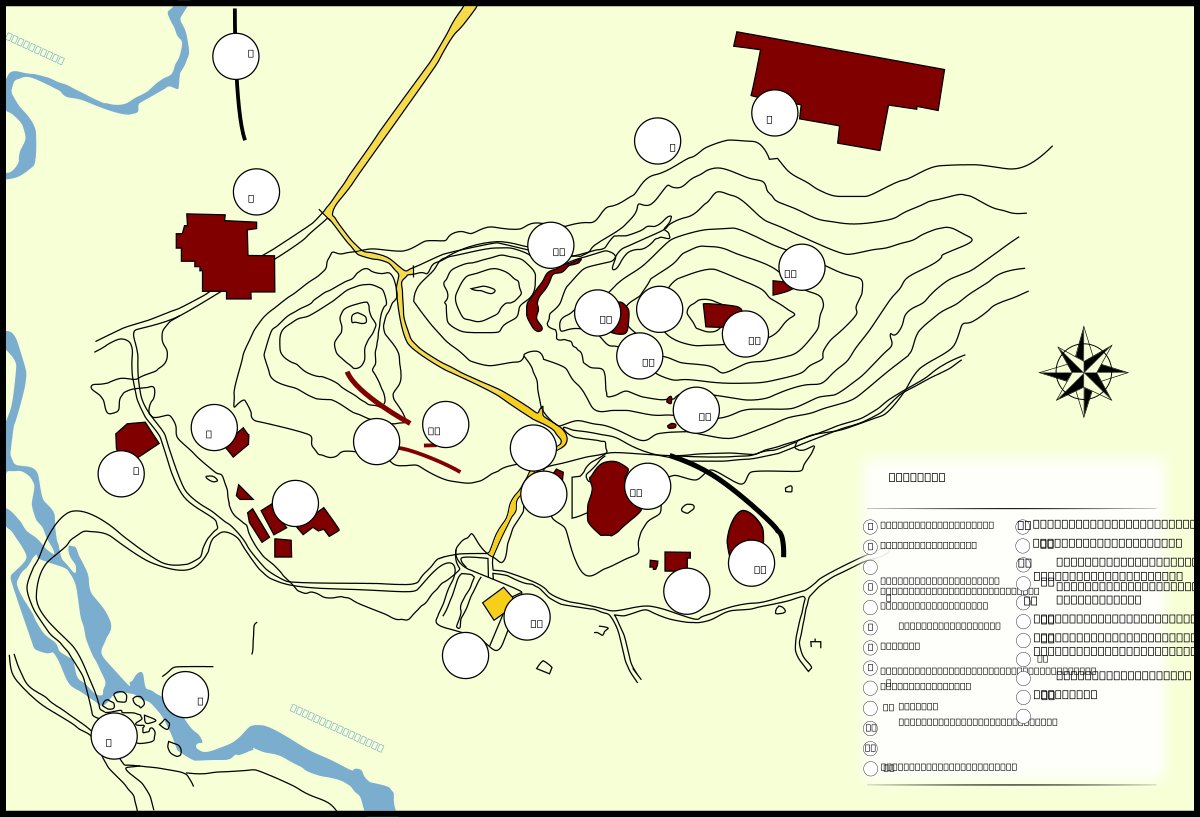
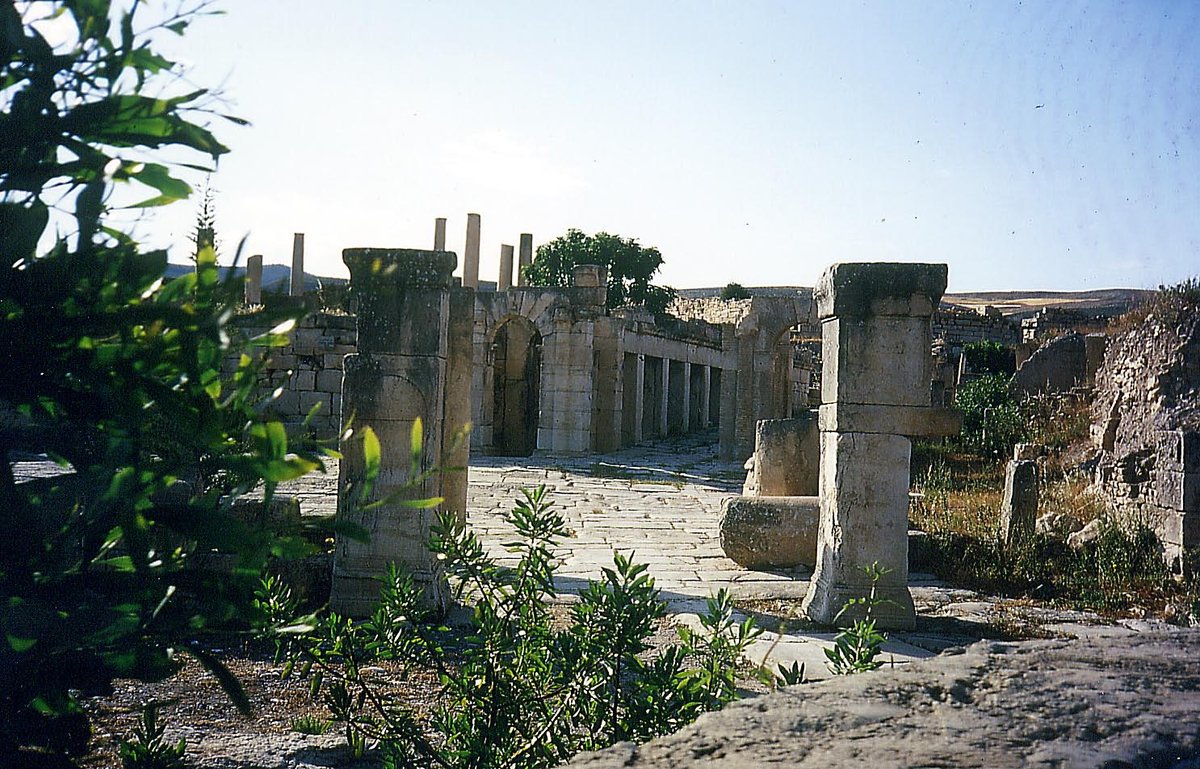
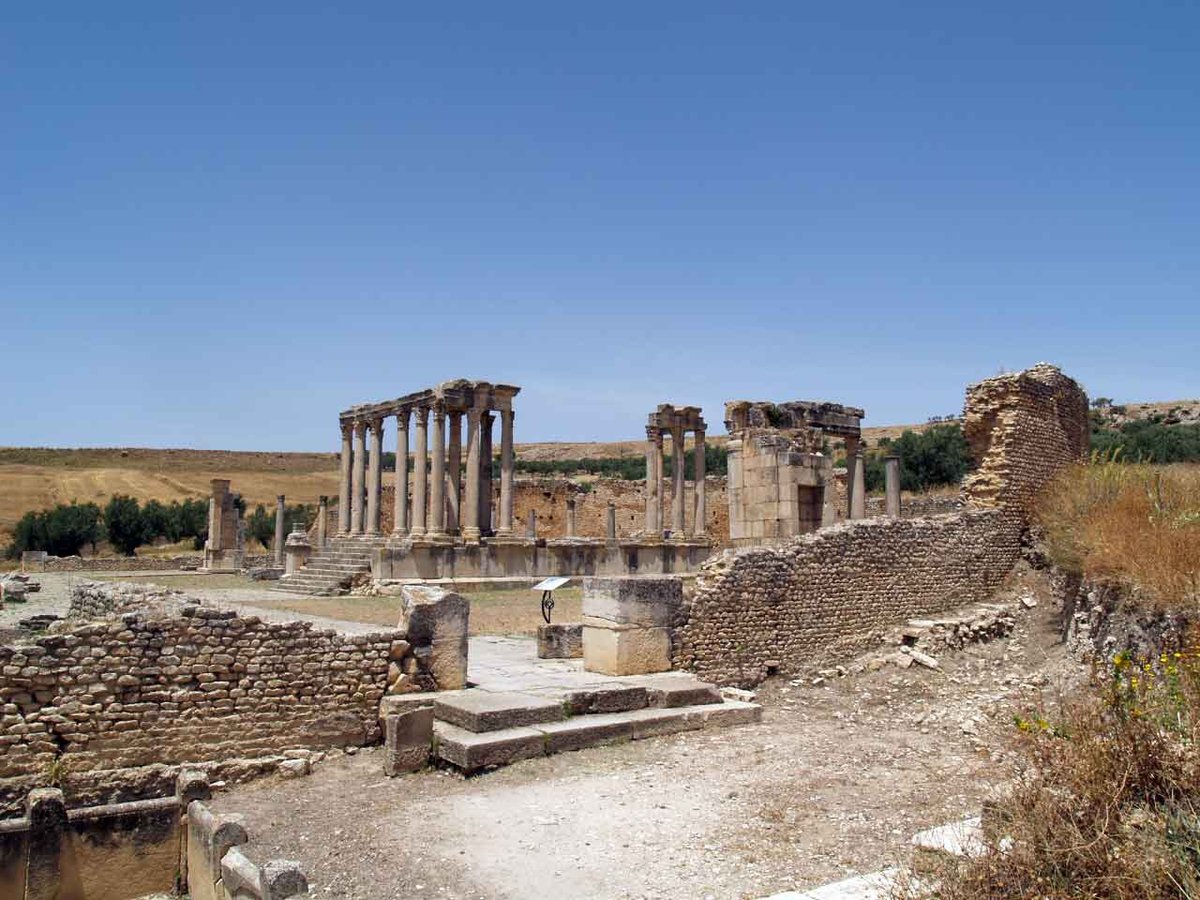
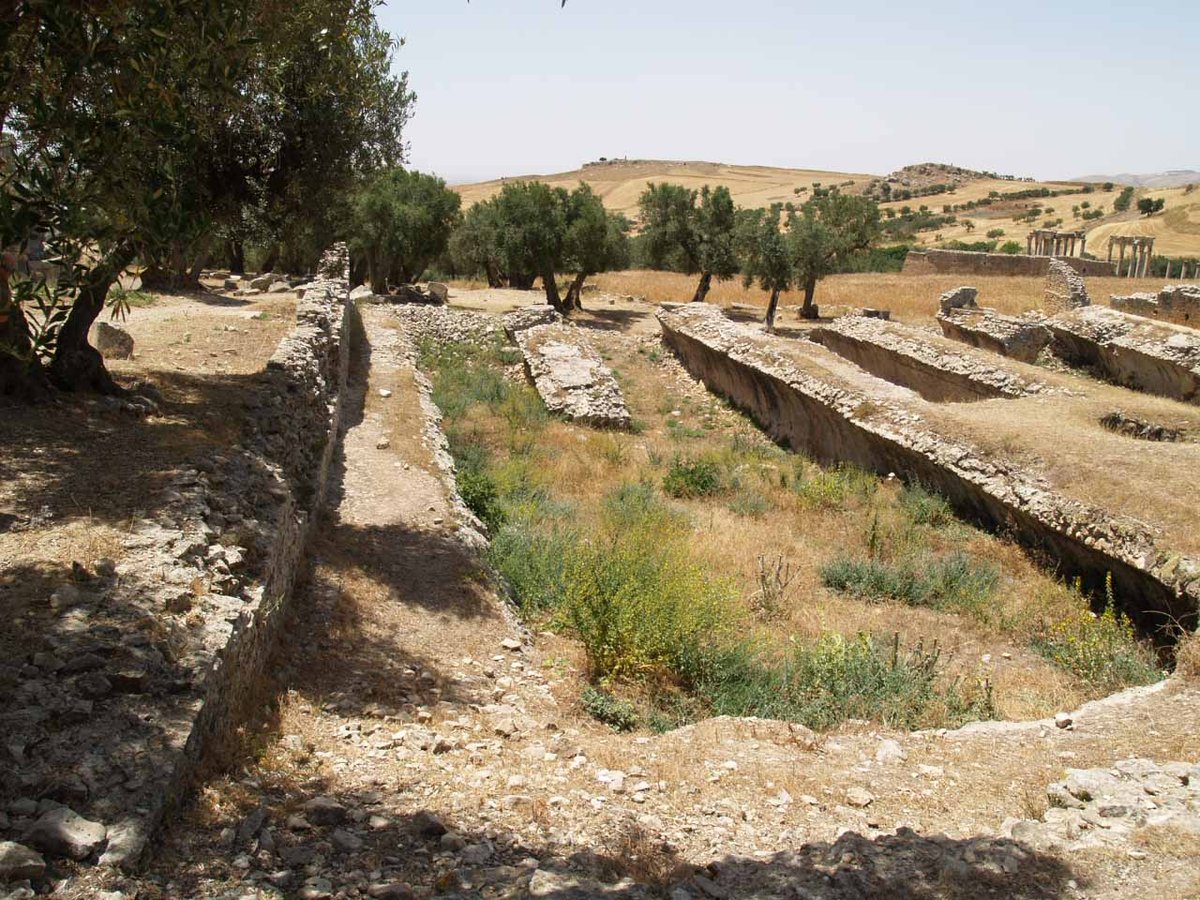
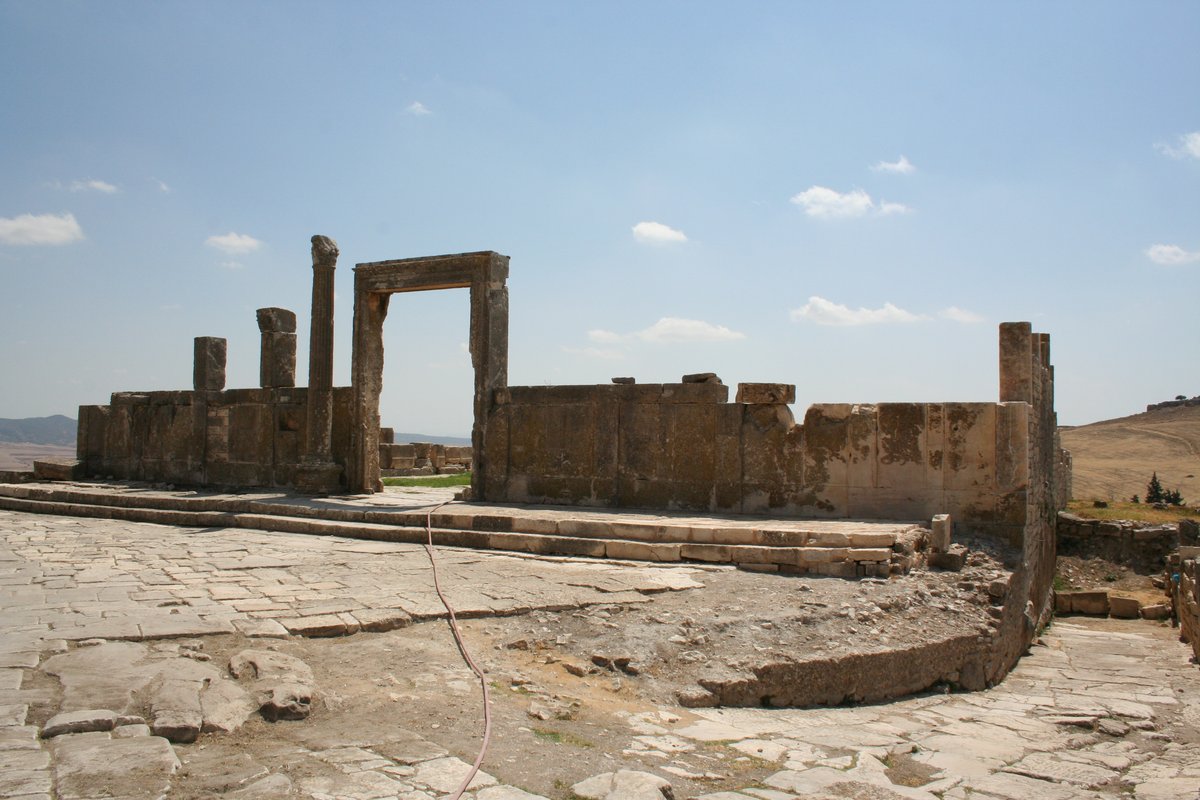
Today, the shifting sands have surrendered their secrets. One may walk through the forum to see the crisp edges of a small amphitheater that survived because it lay buried until the early 1960s. A small museum stands nearby. One can descend into the houses to see the mosaics exactly where they were laid, while the restored Roman drainage system keeps the water from rising into these sunken halls.
Sources: Wikipedia, OpenStreetMap, Wikidata, Wikimedia Commons
Written by Mutabor
Discuss this with the author and others
No comments yet. Be the first to start the conversation.