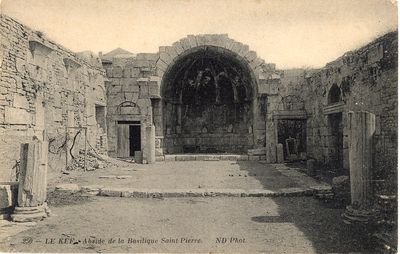

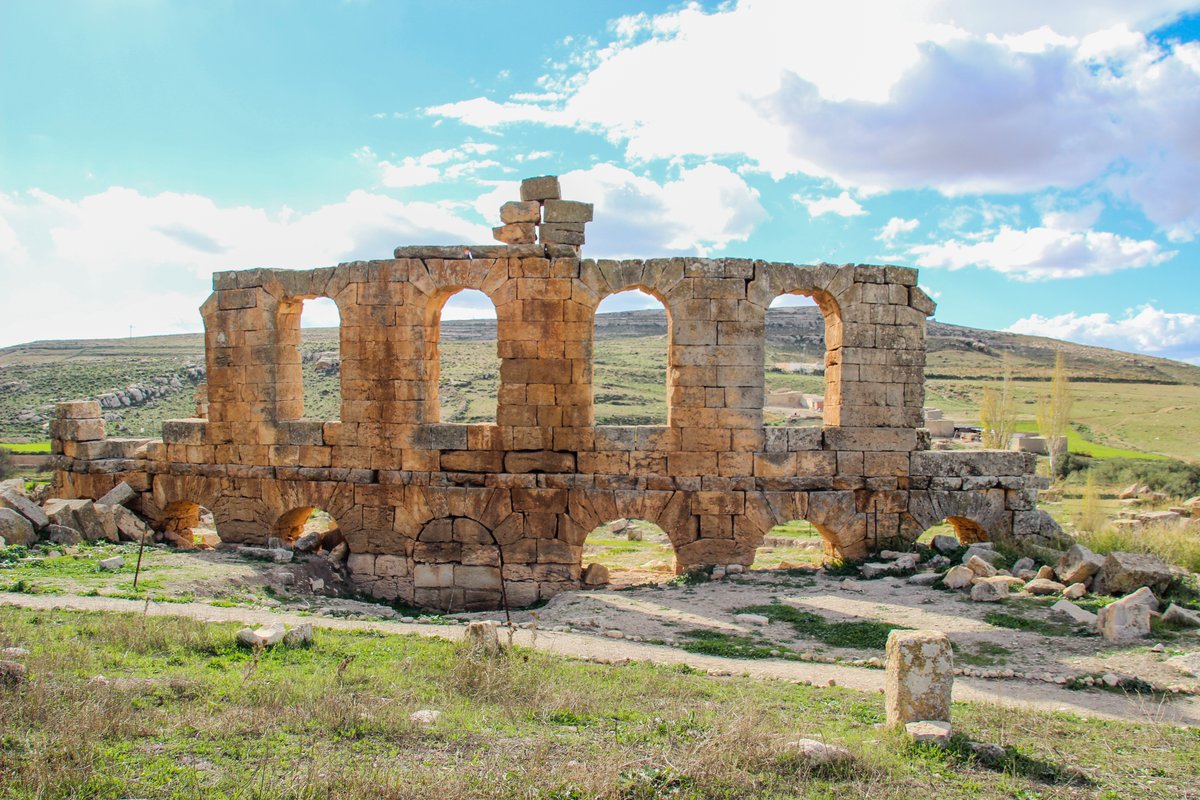
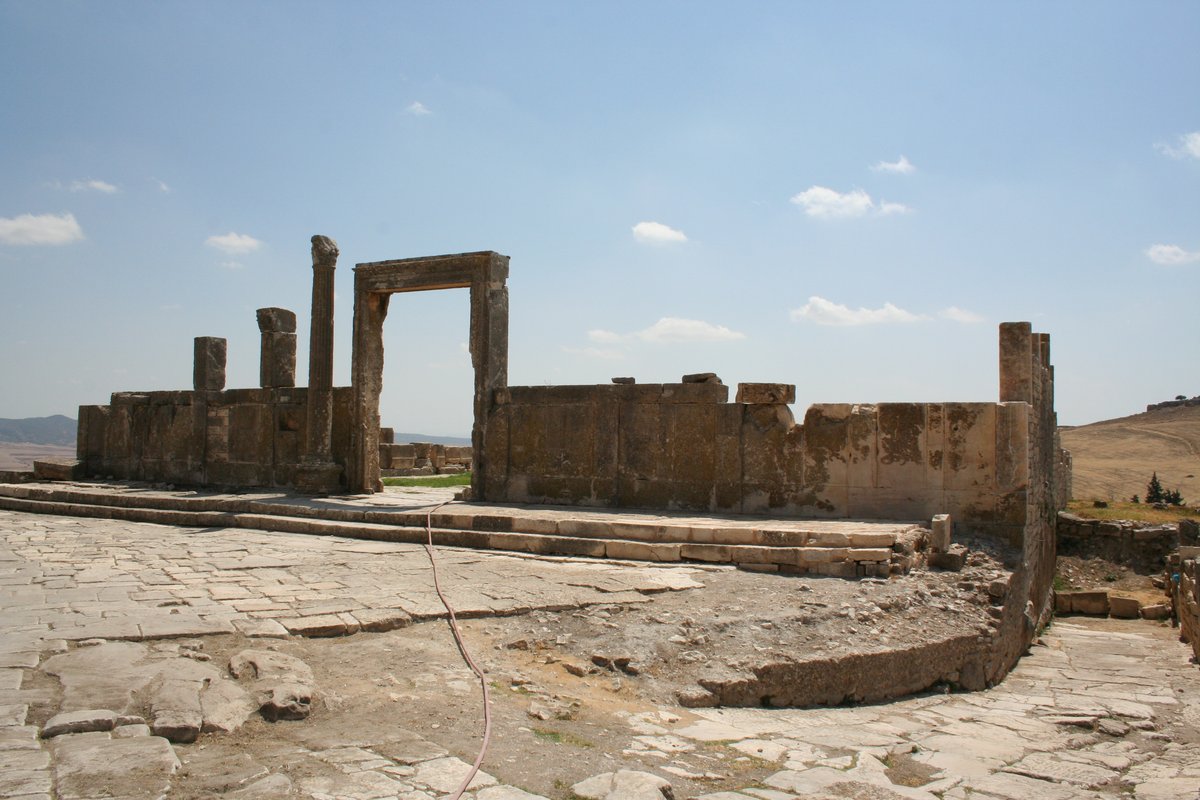
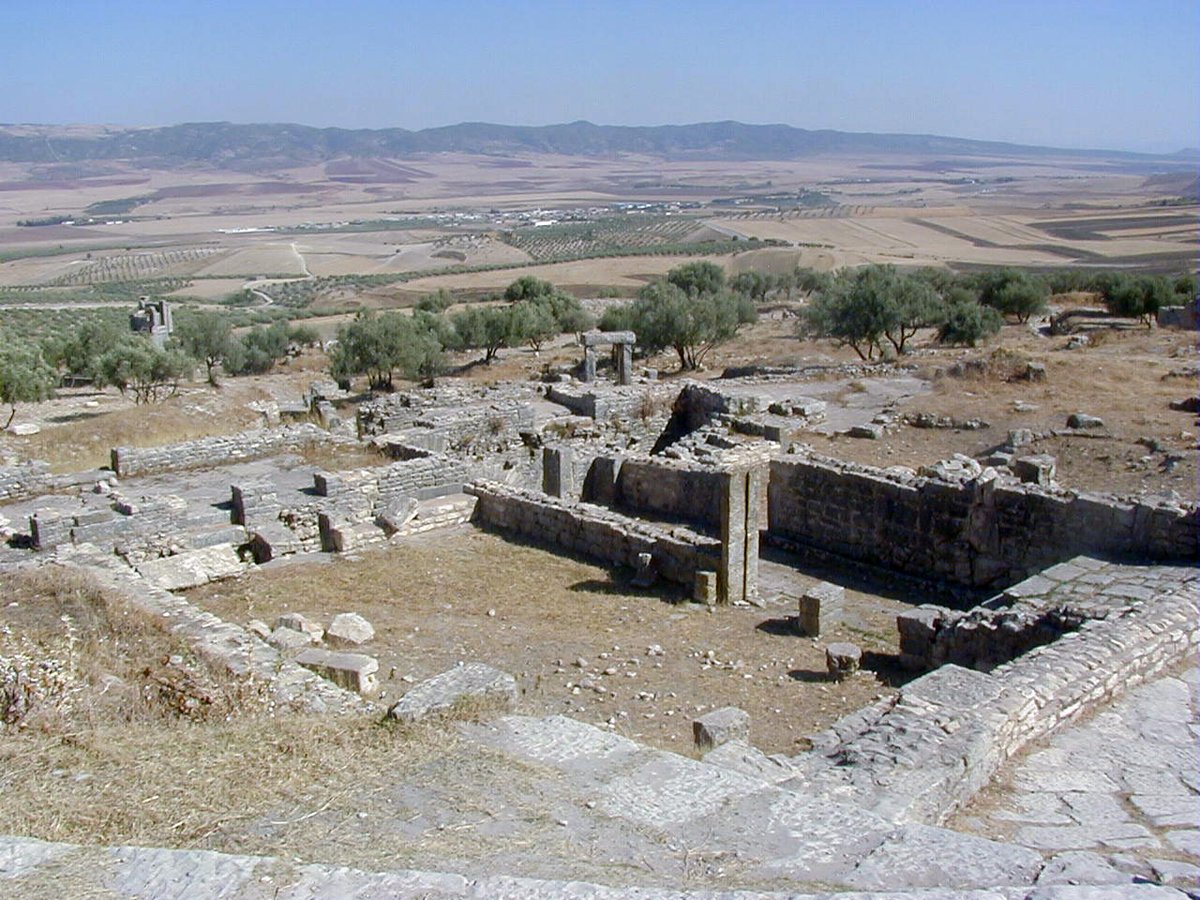
In the Tunisian city of El Kef, the Basilica of Saint-Pierre, also known as Dar El Kous, stands as a remarkable Christian monument dating back to the 5th century. Its remarkable state of preservation allowed it to be reused as a place of worship during the French protectorate. The building measures 39 meters by 15 meters and is composed of six parts: the narthex, the nave, the choir, the apse, and the north and south aisles.
Access to the basilica is gained through the narthex. The walls, constructed of ashlar stone, are pierced by seven doors: three access doors on the western facade, three leading to the nave and aisles, and one in the southern wall. This southern door, currently sealed, was originally intended to provide access to outbuildings. The doors facing the nave are larger than those leading to the aisles. The nave and aisles are at the same level, while the choir is raised by one step, and the apse is accessible from the choir by climbing two more steps.
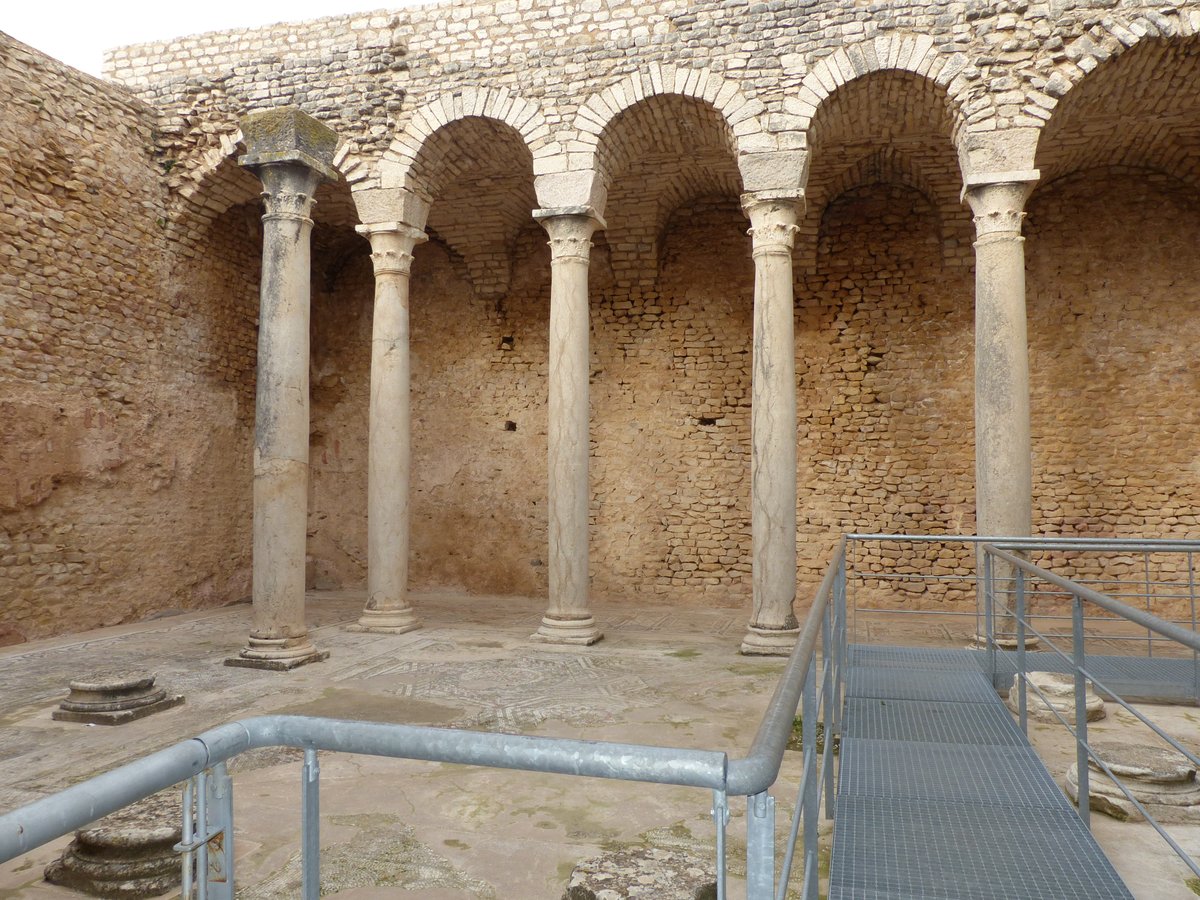
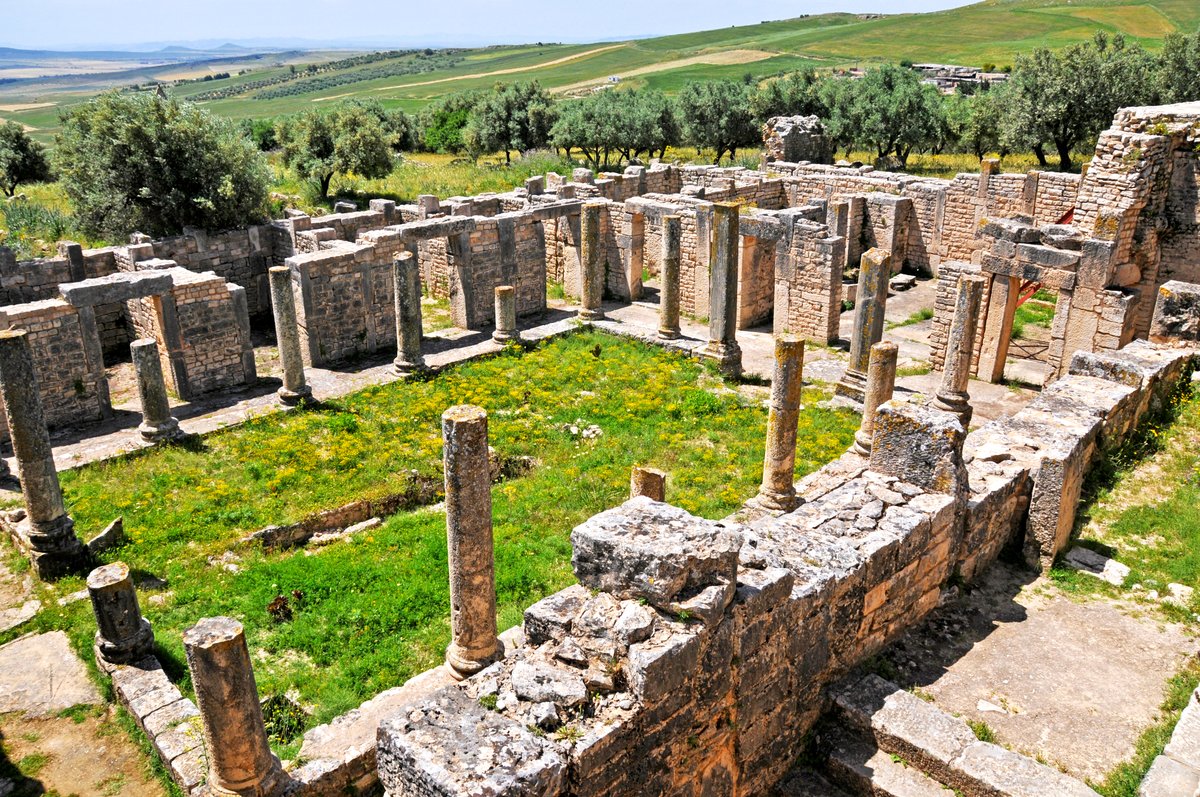
Excavations have revealed that the floor of the nave was decorated with mosaics representing geometric figures, specifically black, red, yellow, and white cubes. The floor of the aisles was covered with a different mosaic design, while the floor of the choir was decorated in the same way as the nave. All of these mosaics have since disappeared. The nave and choir are separated from the aisles by a double row of column bases resting on a line of slabs parallel to the main axis of the basilica.
The inner bases supported the columns that held the roof of the nave and choir, while the outer bases supported the vault of the aisles alongside stone pillars embedded in the opposing walls. The tops of these pillars still show the start of the aisle vaults. Fourteen of the column bases are made of marble, while the others are made of stone and of less refined workmanship. Two Corinthian columns support the apse, which features five semicircular niches. A key stone found during 1894 excavations reveals an inscription for Sanctus Petrus, and fragments of the columns remain visible today.
Sources: Wikipedia, OpenStreetMap, Wikidata, Wikimedia Commons
Written by Mutabor
Discuss this with the author and others
No comments yet. Be the first to start the conversation.