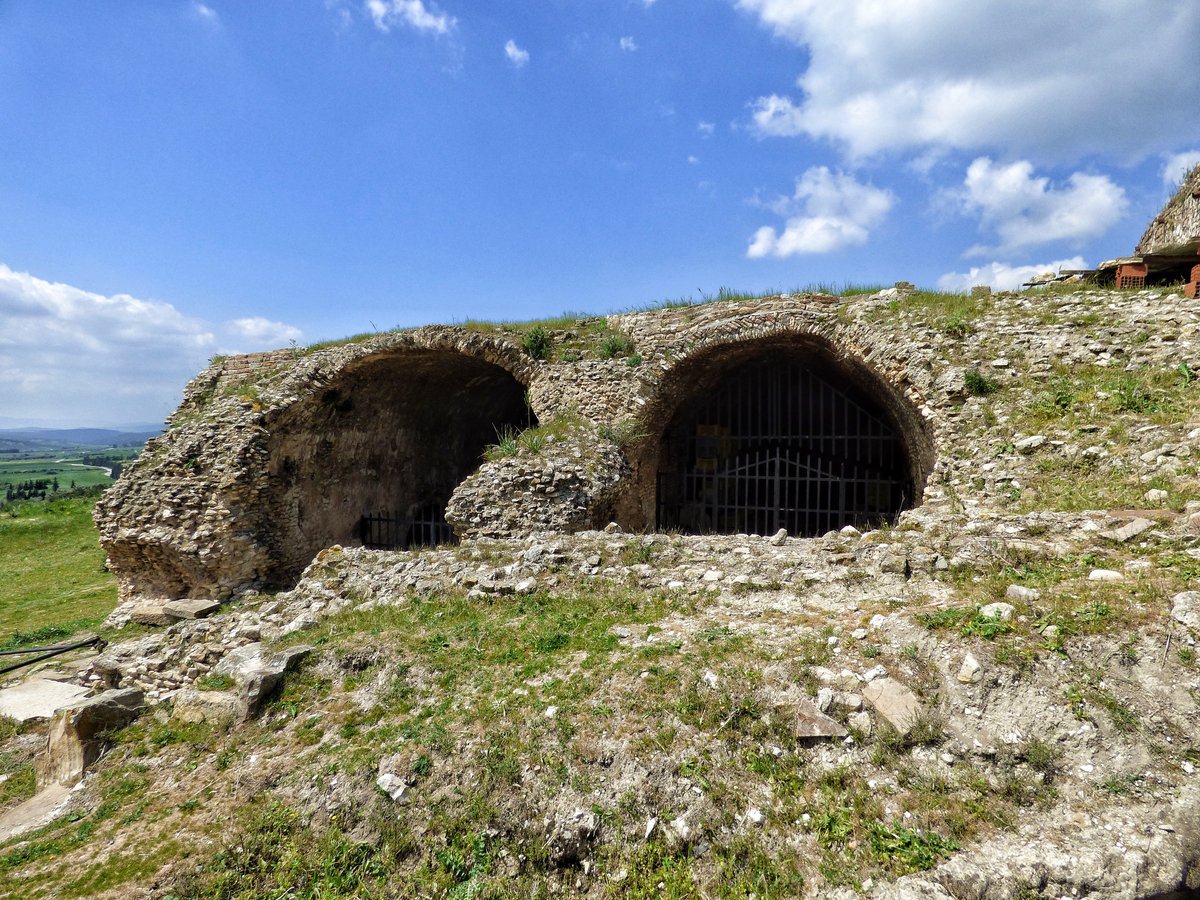

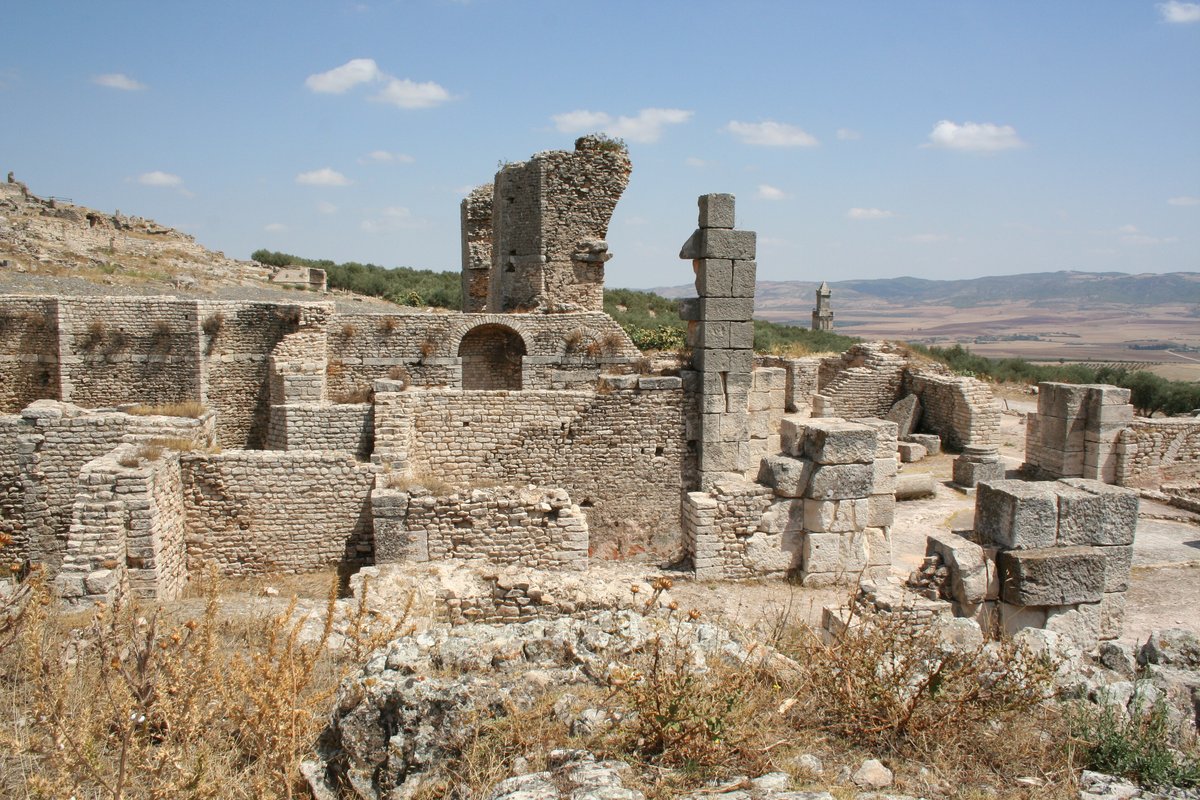
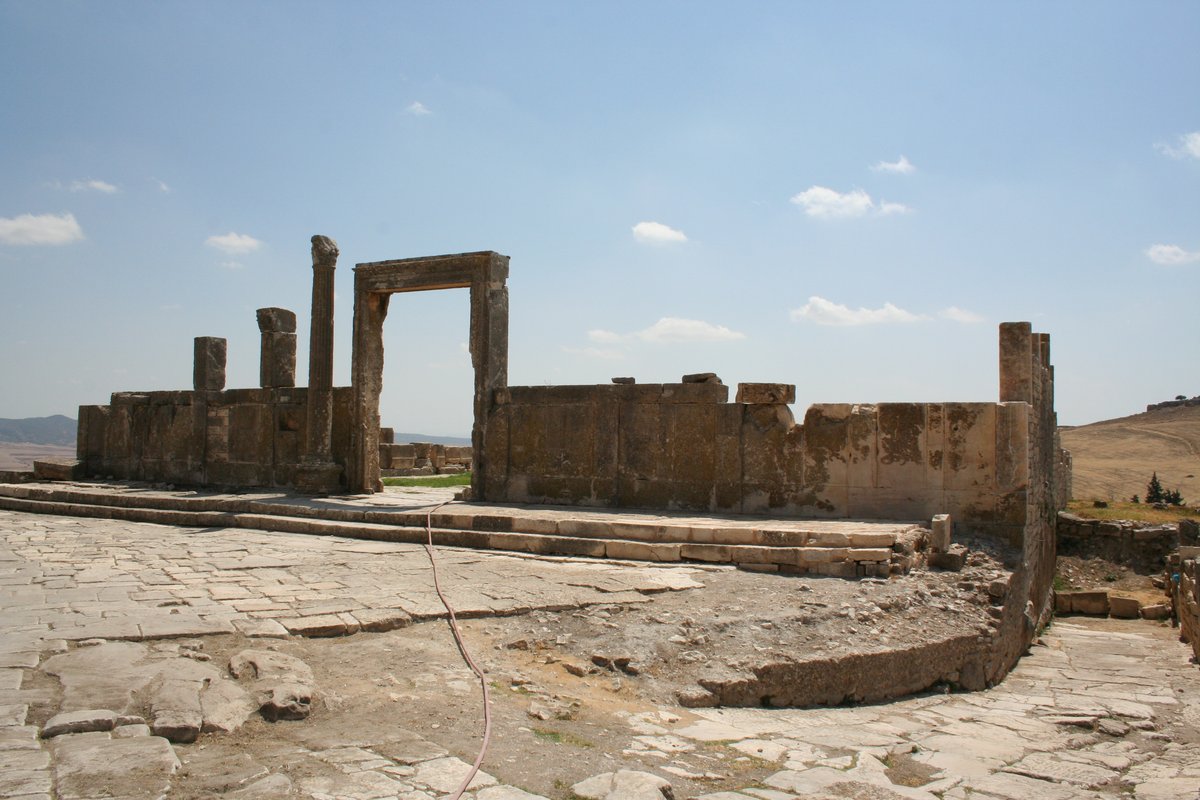
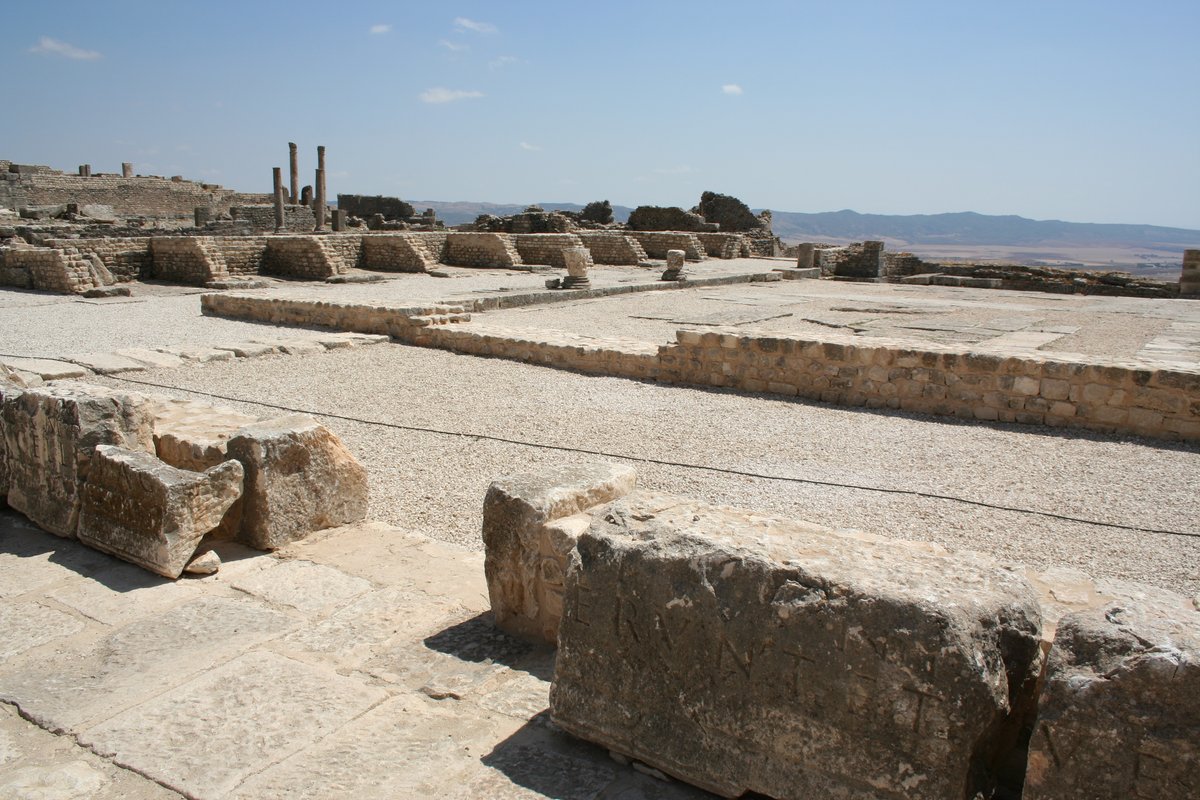
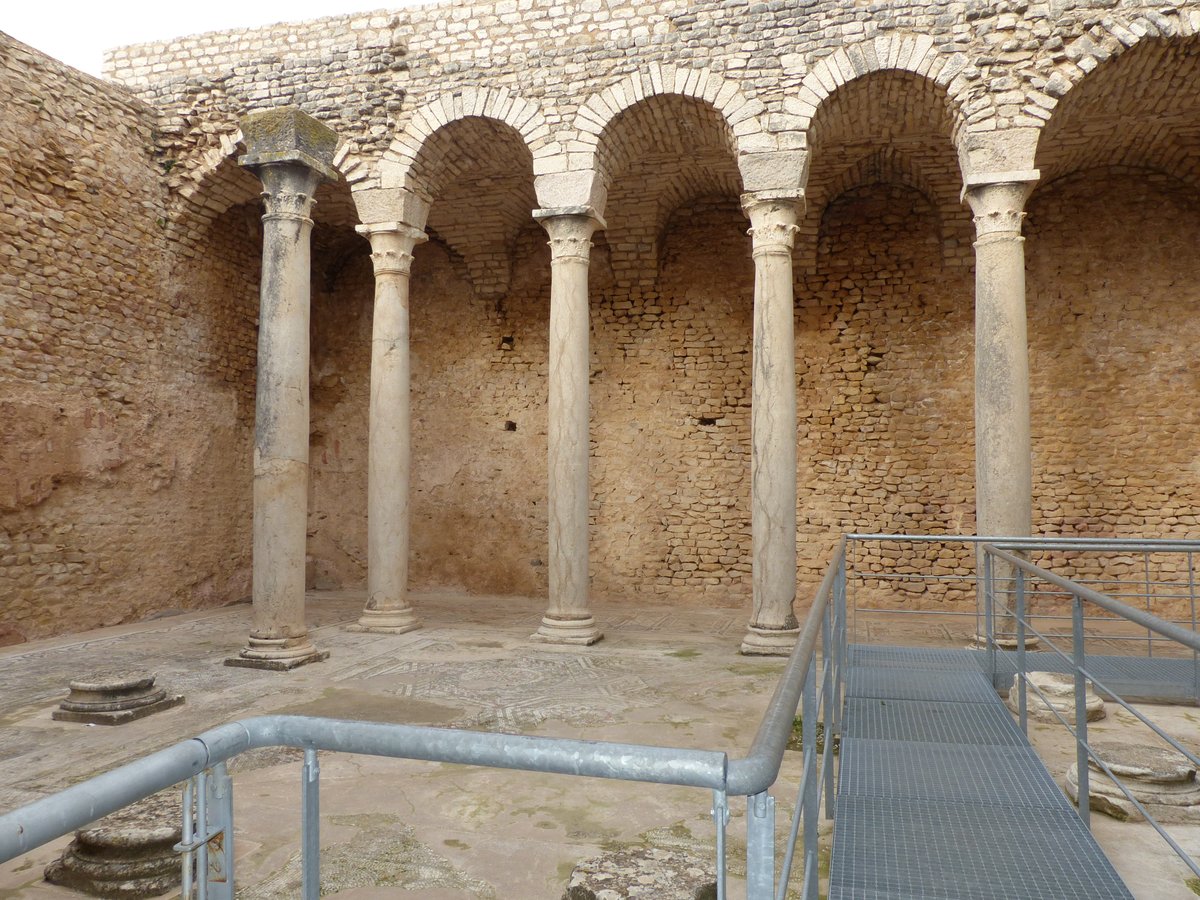
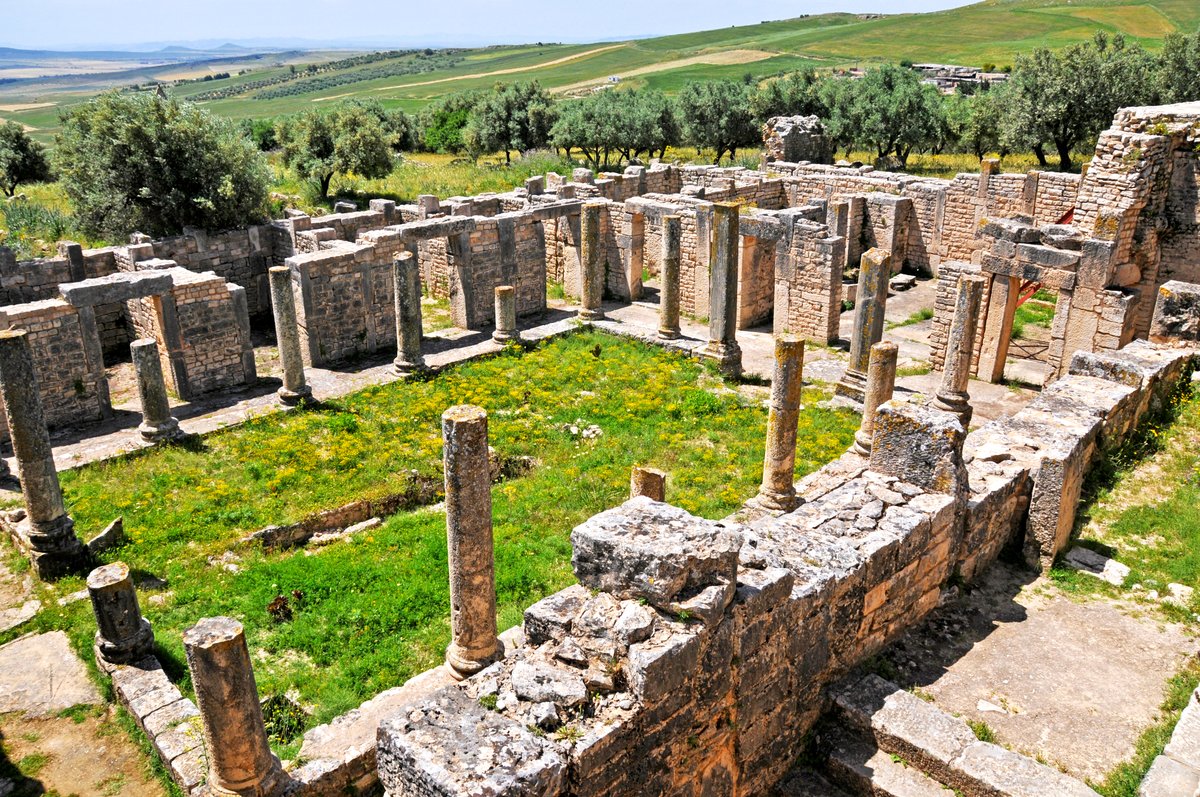
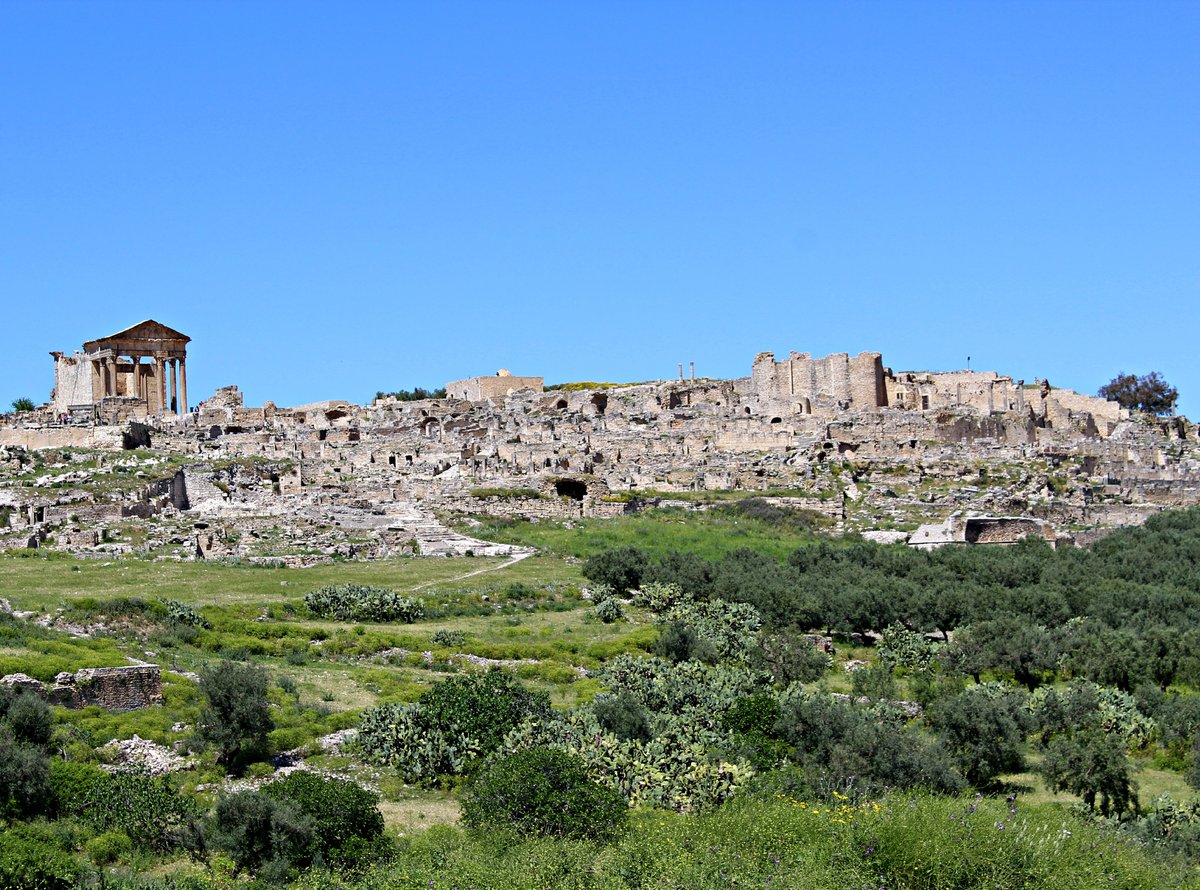
Uchi Maius, known as Uchi Maius, is an archaeological site located in Tunisia, 120 kilometers southwest of Tunis in the governorate of Béja, at the location called Henchir Douamis. The site was identified in 1882 and studied for the first time by Charles Tissot, followed by René Cagnat in 1885. After being neglected in favor of the nearby site of Dougga, work was relaunched in 1994 through an agreement between the National Heritage Institute and the University of Sassari.
The city was a Numidian foundation in the 5th century BC. Following the defeat of Jugurtha in 103 BC, the city saw the installation of veterans from Caius Marius. In 230, Severus Alexander granted the city the title of colony. The city remained active during the Vandal and Byzantine periods and became the seat of a bishopric in the 5th century.
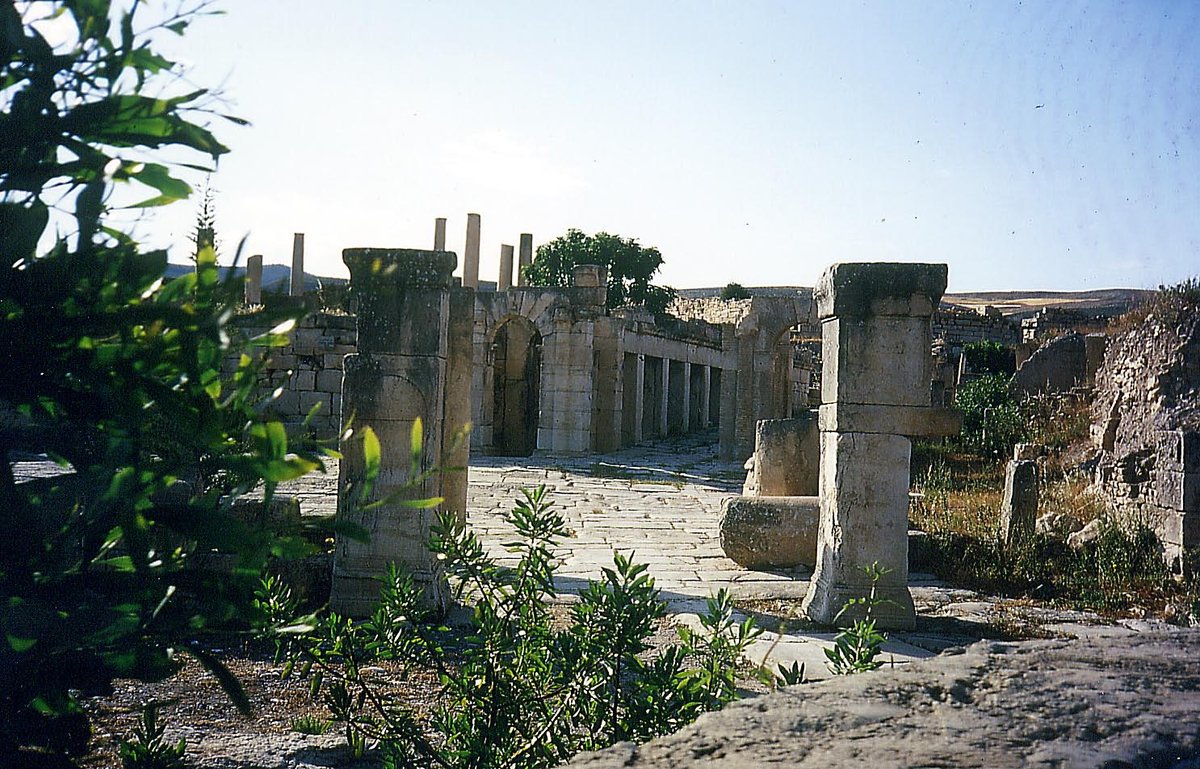
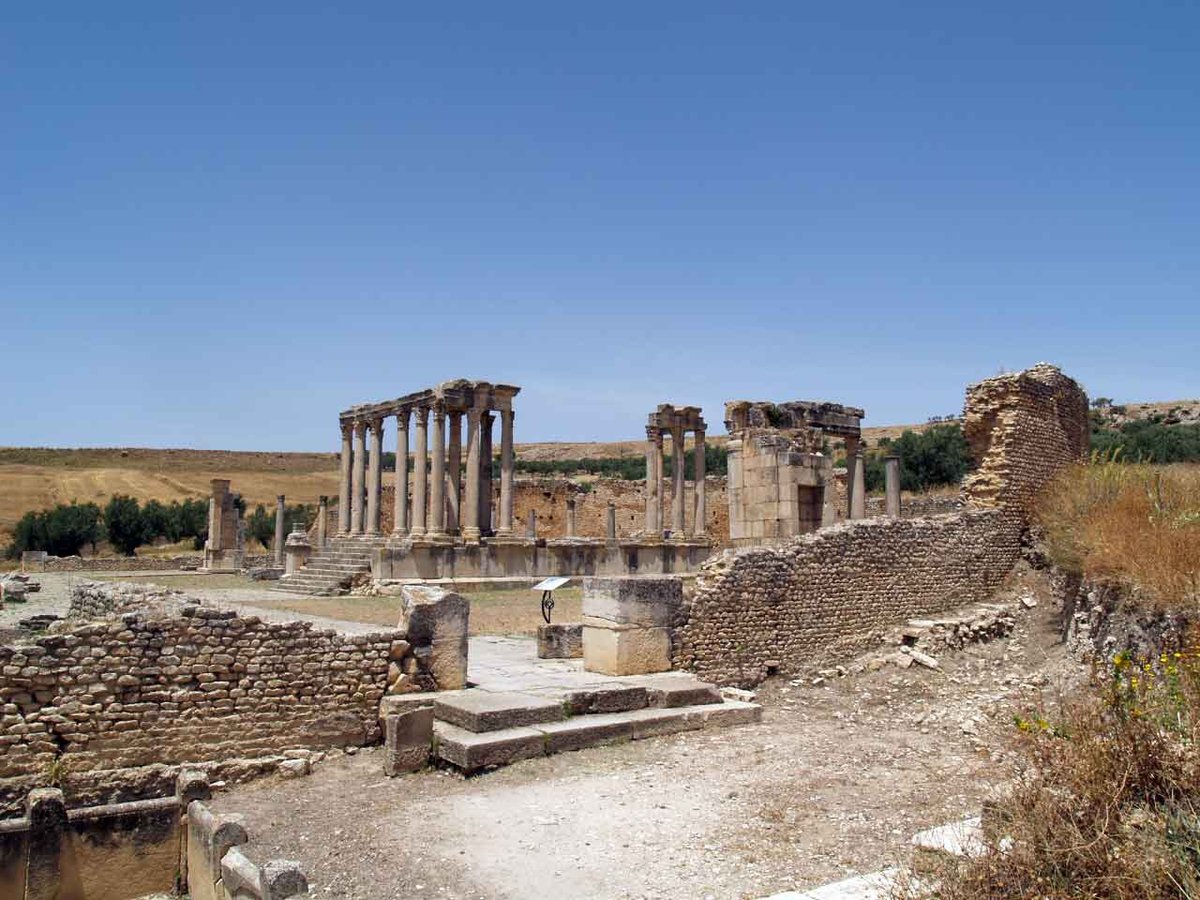
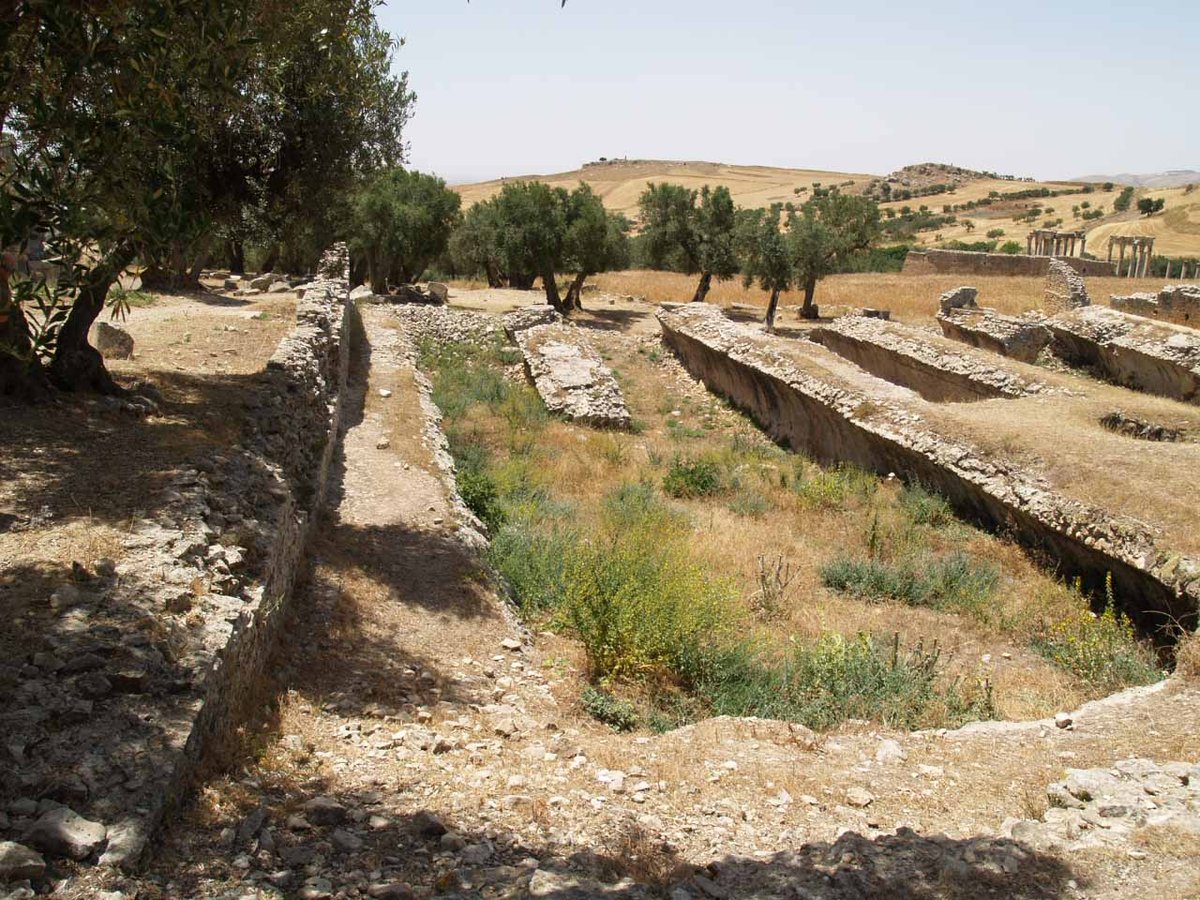
Excavations have revealed a forum, a temple dedicated to the Capitoline Triad, and a paleo-Christian basilica. The site also contains an amphitheater traditionally dated to the 3rd century and thermes dated to the first half of the 4th century. Additionally, the site features an arc of Severus Alexander from 239 and an arc of Gordian III from 241. Research has also focused on the water supply system.
Sources: Wikipedia, OpenStreetMap, Wikimedia Commons
Written by Mutabor
Discuss this with the author and others
No comments yet. Be the first to start the conversation.