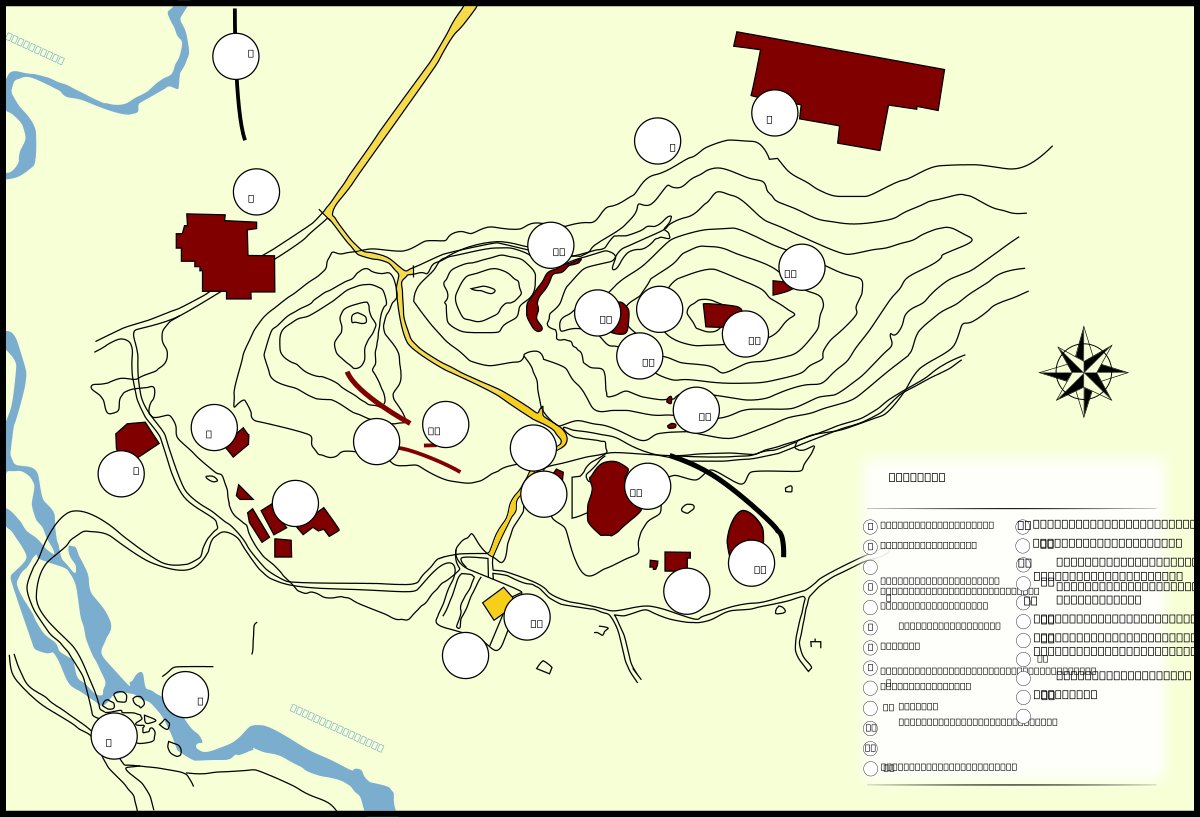

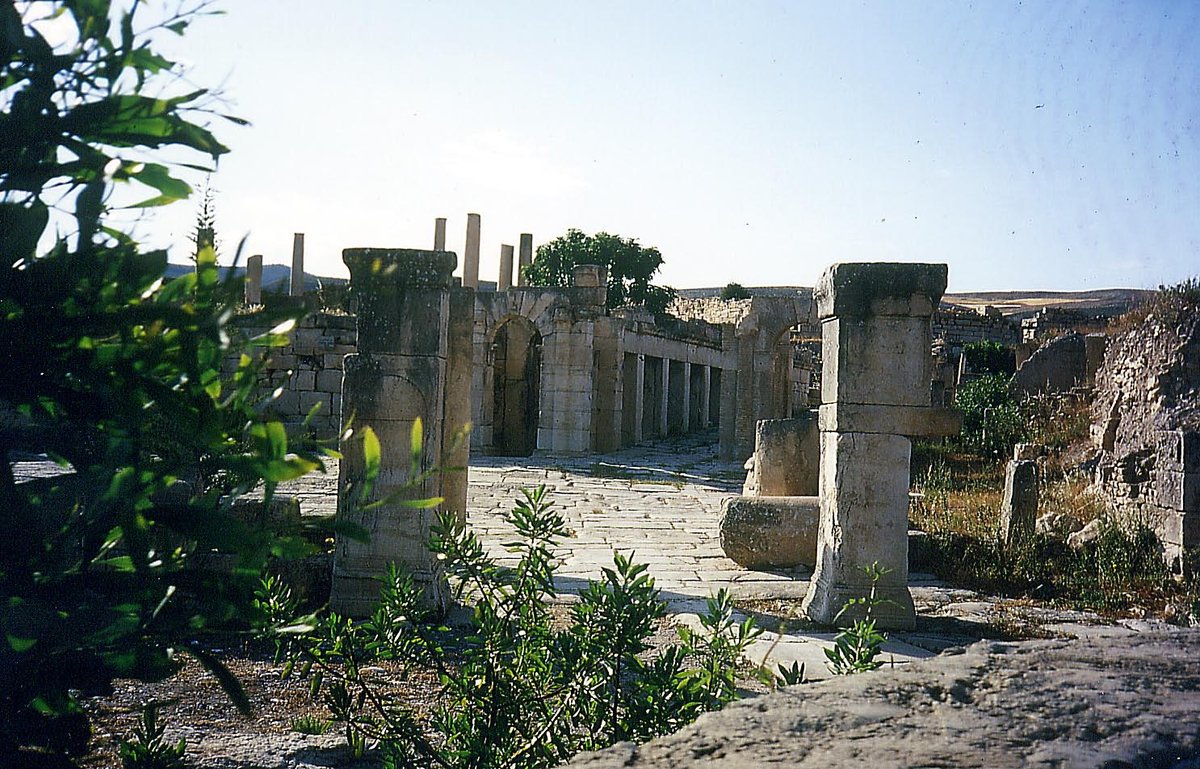
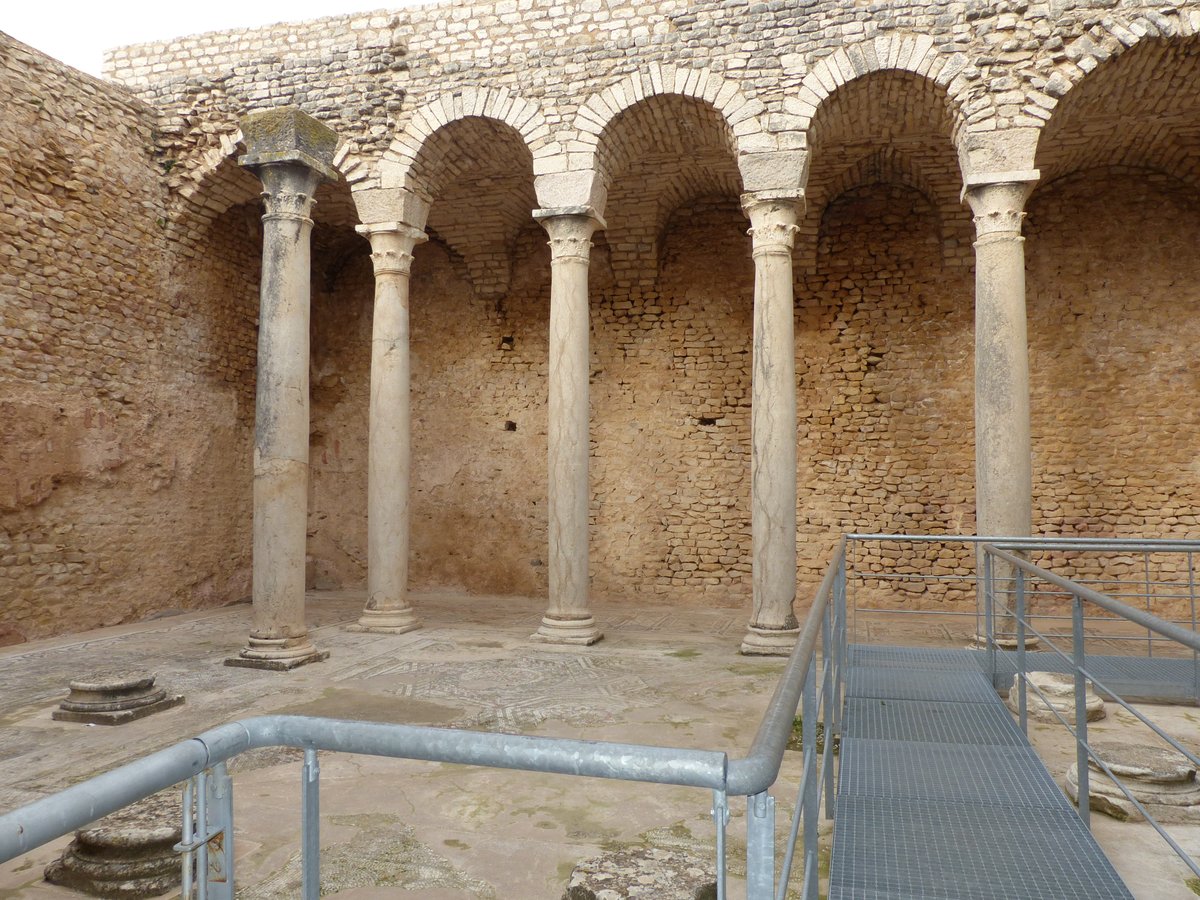
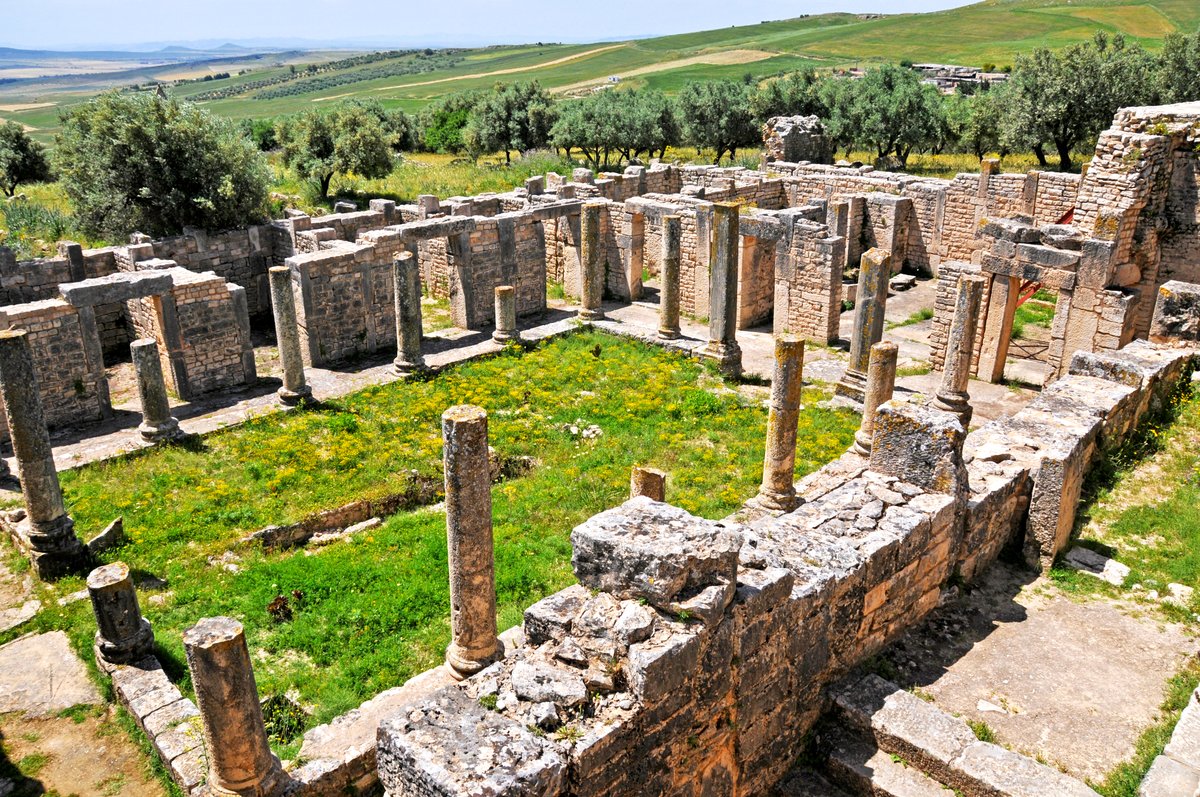
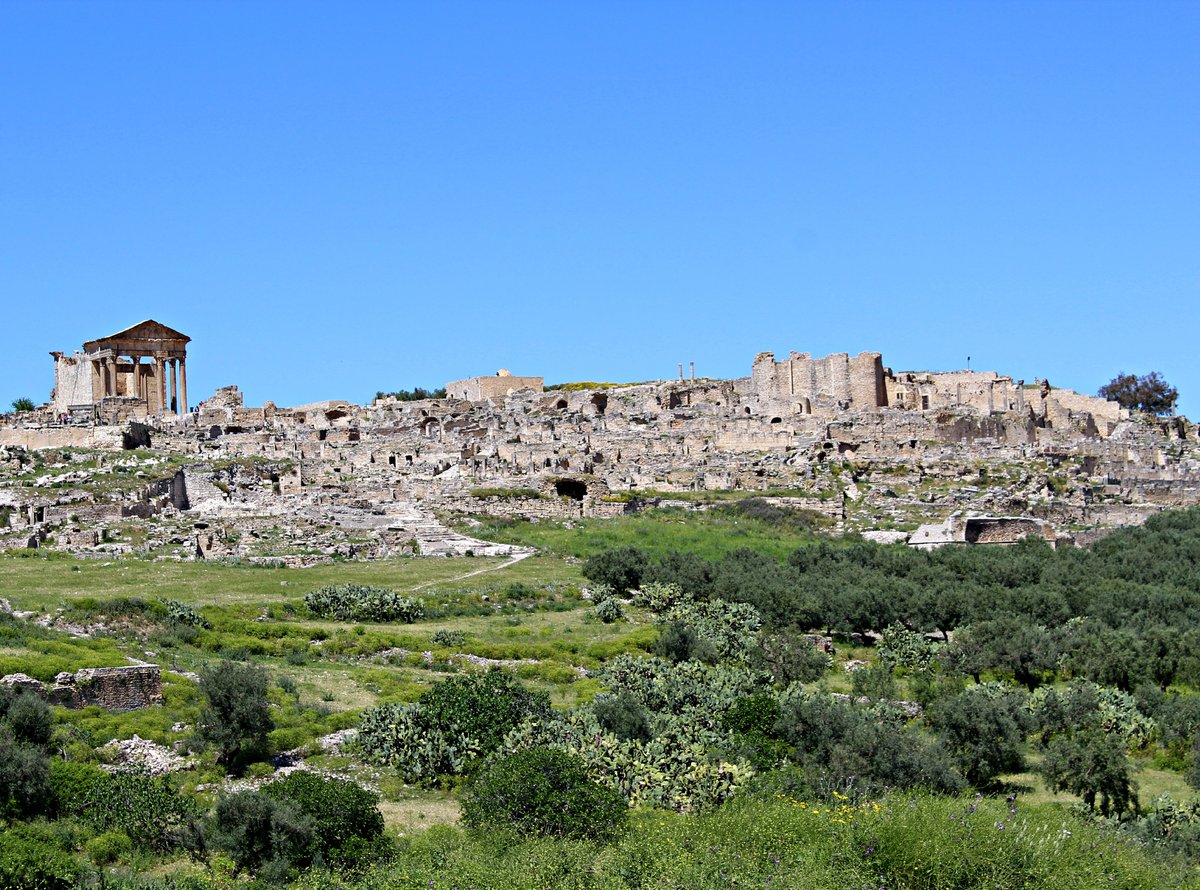
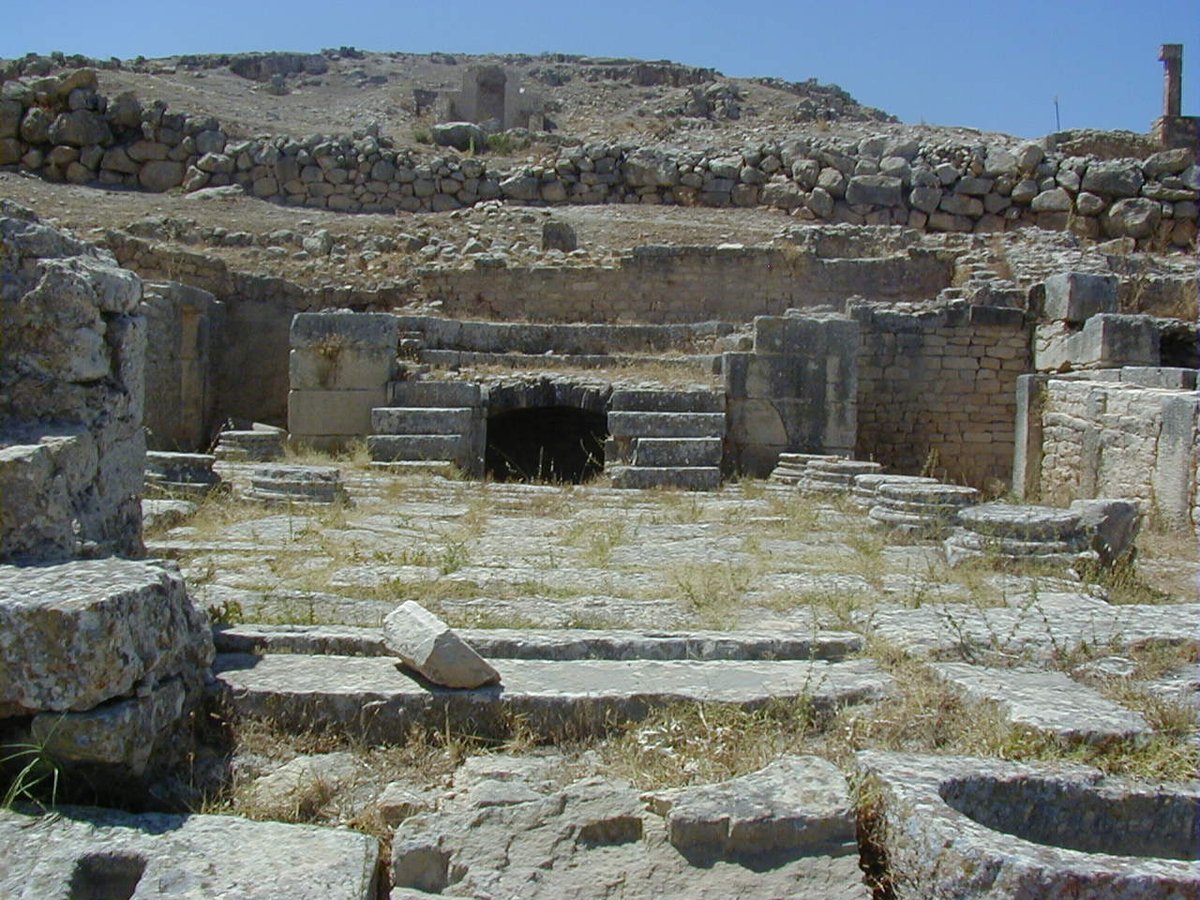
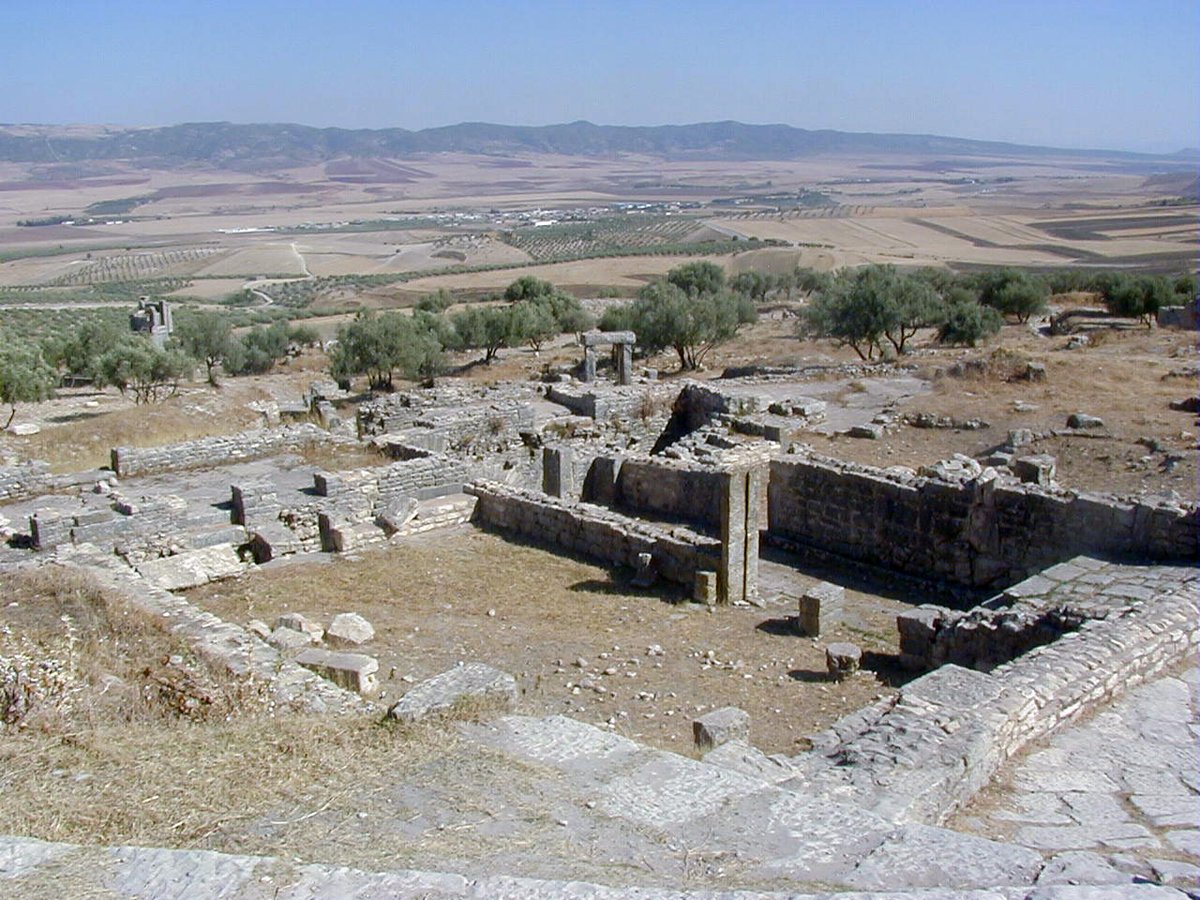
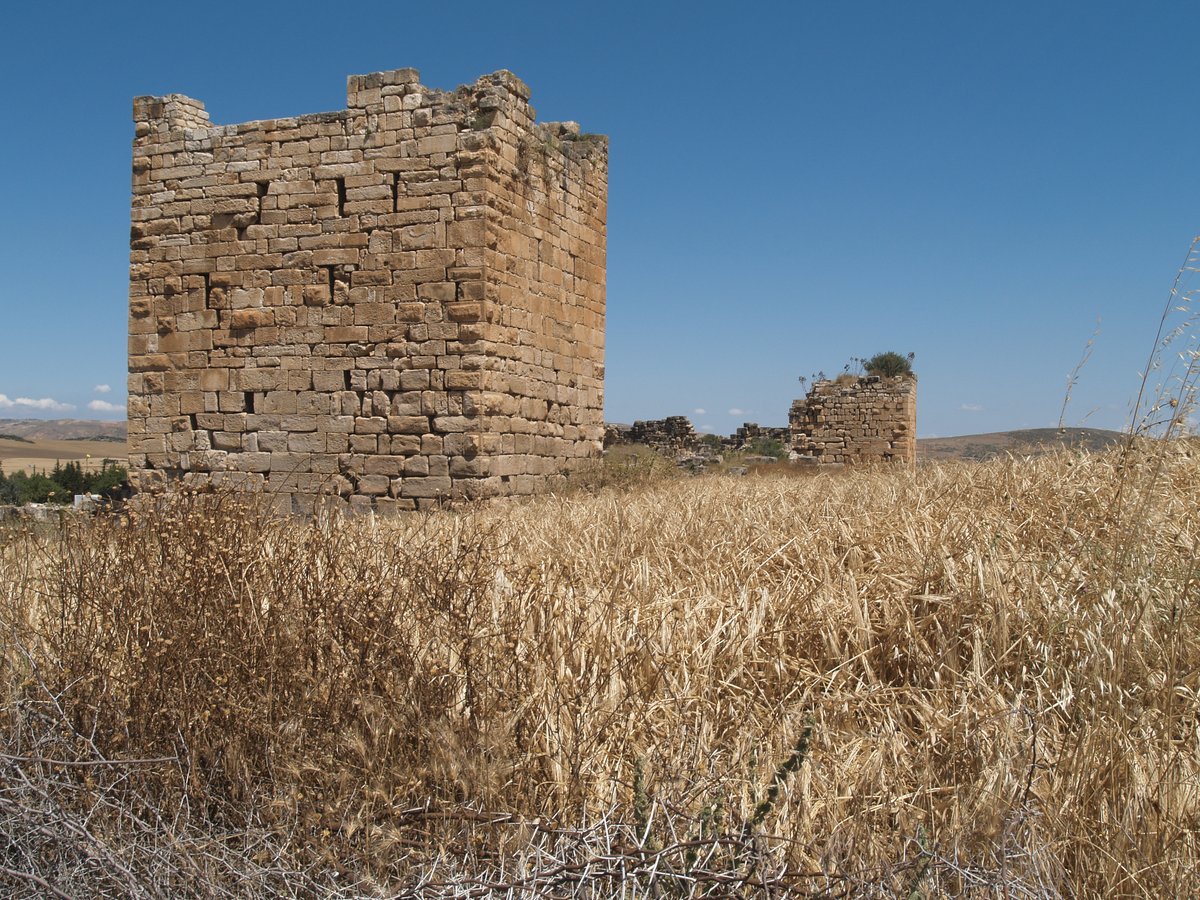
Founded in the 4th to 5th century BC as a colony of the Berber kingdom of Numidia, Chemtou became an important Roman town in the province of Africa. Located at a major crossroads, the city was renowned for its quarries, where a precious type of marble known as marmor numidicum, or giallo antico, was exploited. The site covers over 80 hectares and contains typical Roman features including an amphitheater, a theater, a forum with a basilica and fountain, and at least three thermal baths.
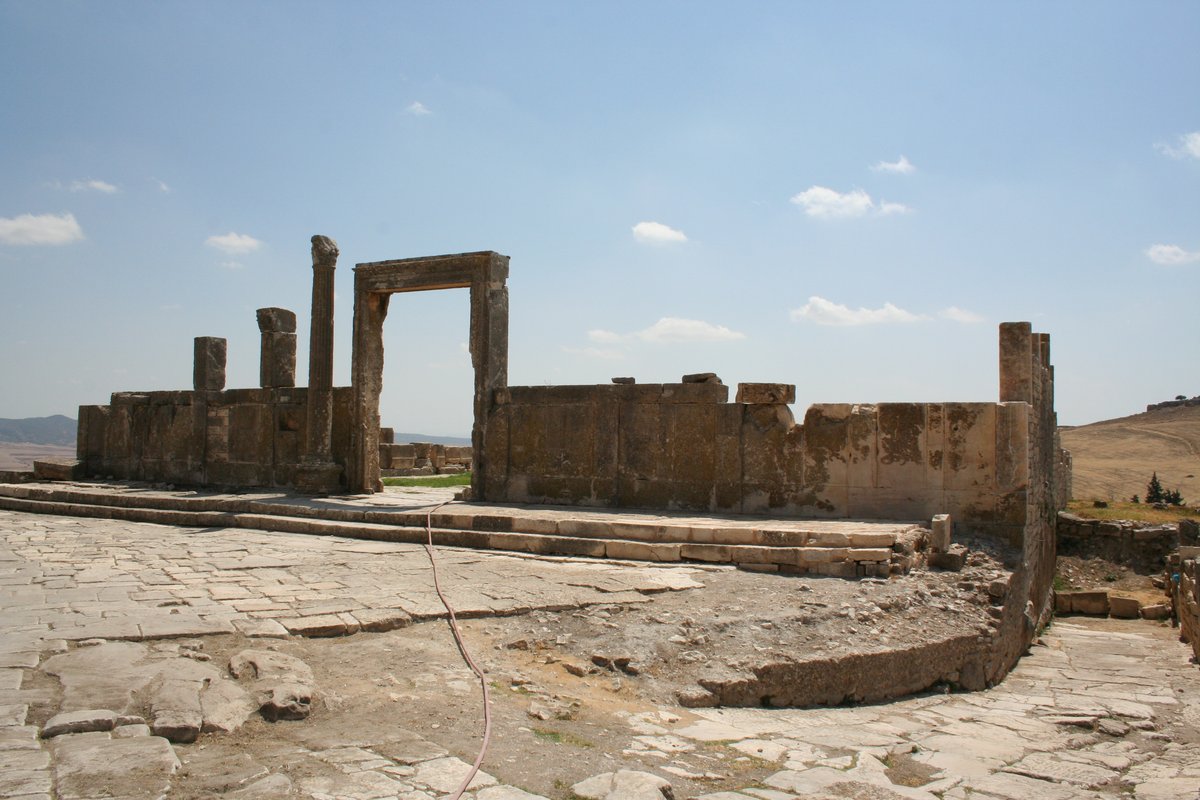
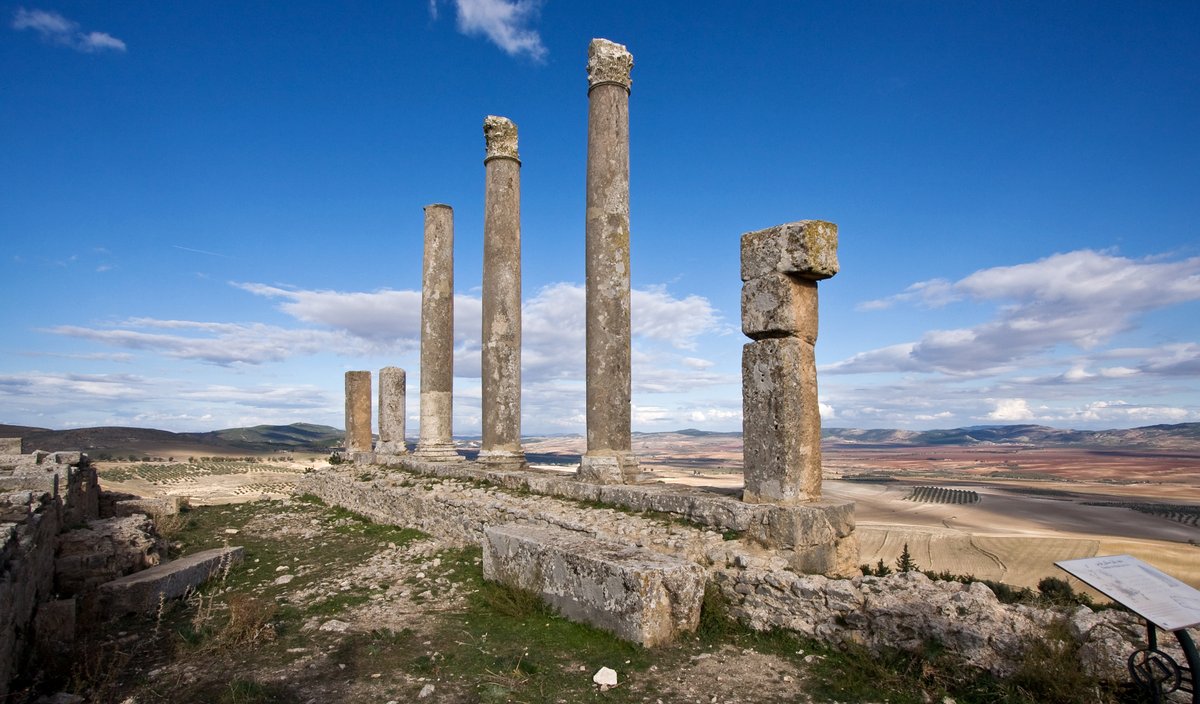
On the summit of the Temple Mount, also known as Djebel Chimtou, stands a monumental shrine attributed to the Numidian King Micipsa. Founded in the late 2nd century BC, this rectangular sanctuary was constructed of solid marble squares connected with dowels. During Roman times, it served as a temple dedicated to the god Saturn. The building was expanded in the late 2nd century AD and was eventually replaced in the 4th century AD by a small, three-aisled church using the architectural parts of the destroyed sanctuary.
Other notable structures in the area include the temple districts of Dii Mauri on the eastern slope and the Caelestis on the western slope at Djebel Bou Rfifa. The city also featured an unusually complex aqueduct system, which transported water over 30 kilometers to supply both the residential areas and the marble quarries. A huge domed seven-aisled water storage system, capable of holding more than 10,000 cubic meters of water, was located nearly 2 kilometers outside the city walls. The Bishopric of Chemtou survived through the Vandal and Byzantine empires before ceasing to function with the Muslim conquest.
Sources: Wikipedia, OpenStreetMap, Wikidata, Wikimedia Commons
Written by Mutabor
Discuss this with the author and others
No comments yet. Be the first to start the conversation.