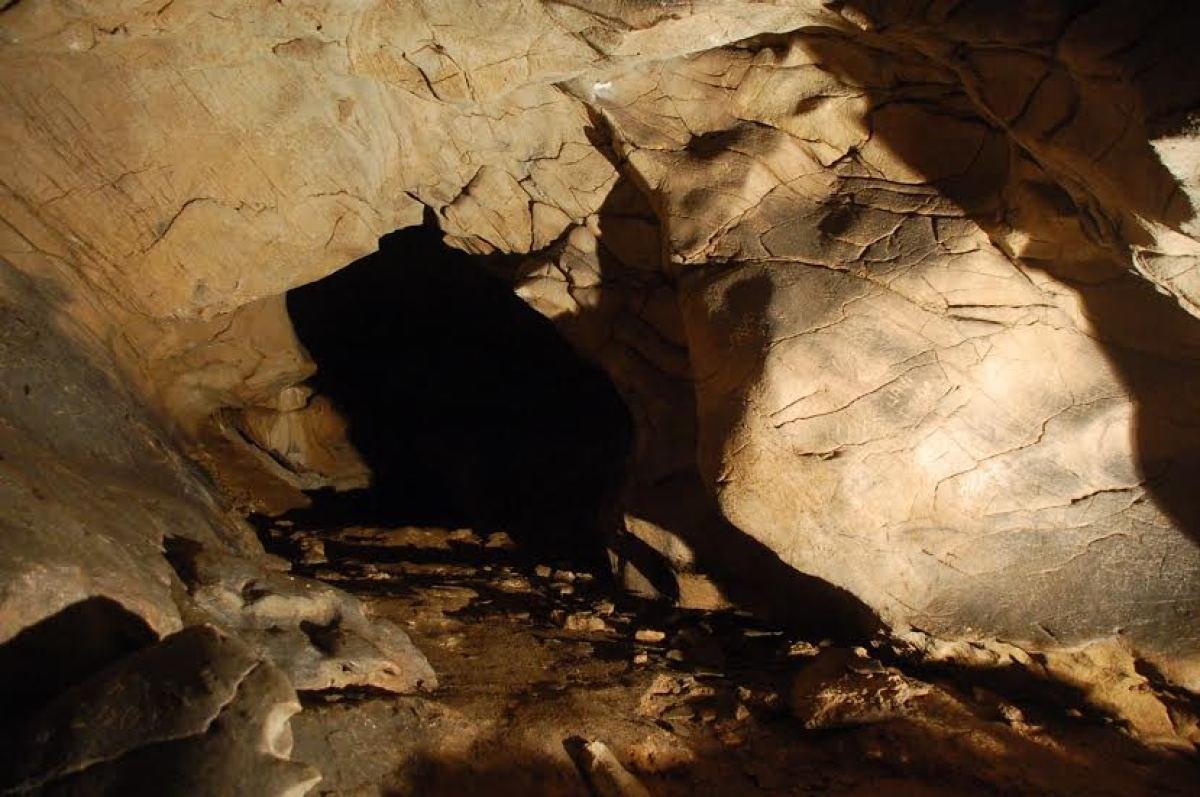

At Eirós Cave, researchers unearthed lithic materials and bone instruments belonging to the Middle Paleolithic. These tools were worked using the Levallois technique, primarily using quartz as a base material. These findings allow for a better understanding of the environmental surroundings of the Neandertals in the Oribio mountains and facilitate comparisons with other contemporary settlements in the Iberian Peninsula.
The cave sits on a large slope in Triacastela where the limestone provides a basic pH level. This chemistry allowed for the preservation of organic remains such as plants and faunal remains, which would have dissolved in the acidic soil that dominates much of Galicia. The site has yielded remains of several species including deer, cattle, and bears.
In the 1990s, excavations revealed remains of more than 40 cave bears, marking the western expansion limit of the species. In 2008, archaeologists confirmed the presence of Neandertal activity from approximately 35,000 years ago. In 2012, the discovery of black paintings and engravings of zoomorphic figures and signs, dated to 30,000 years ago, provided the first evidence of rock art found in Galicia, leading to the cave being declared a site of cultural interest.
Sources: Wikipedia, OpenStreetMap, Wikidata, Wikimedia Commons
Written by Nicolo Ciampini
Discuss this with the author and others
No comments yet. Be the first to start the conversation.