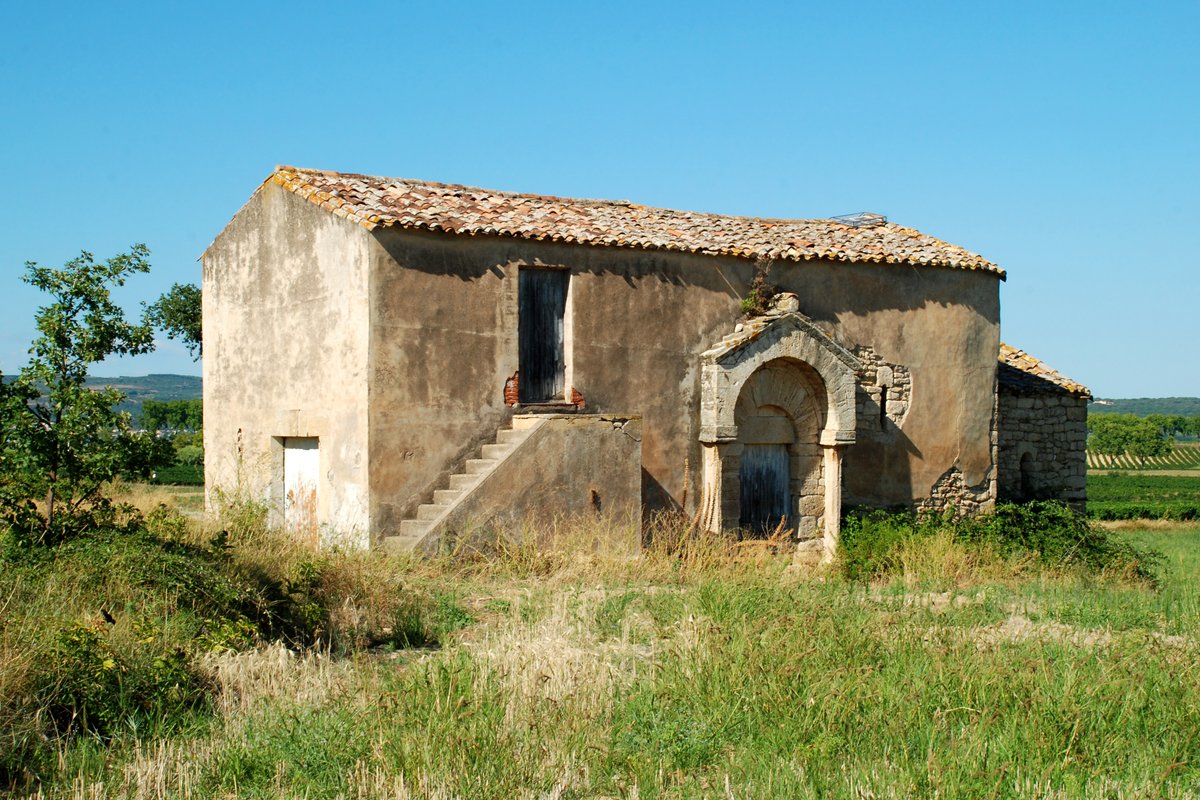

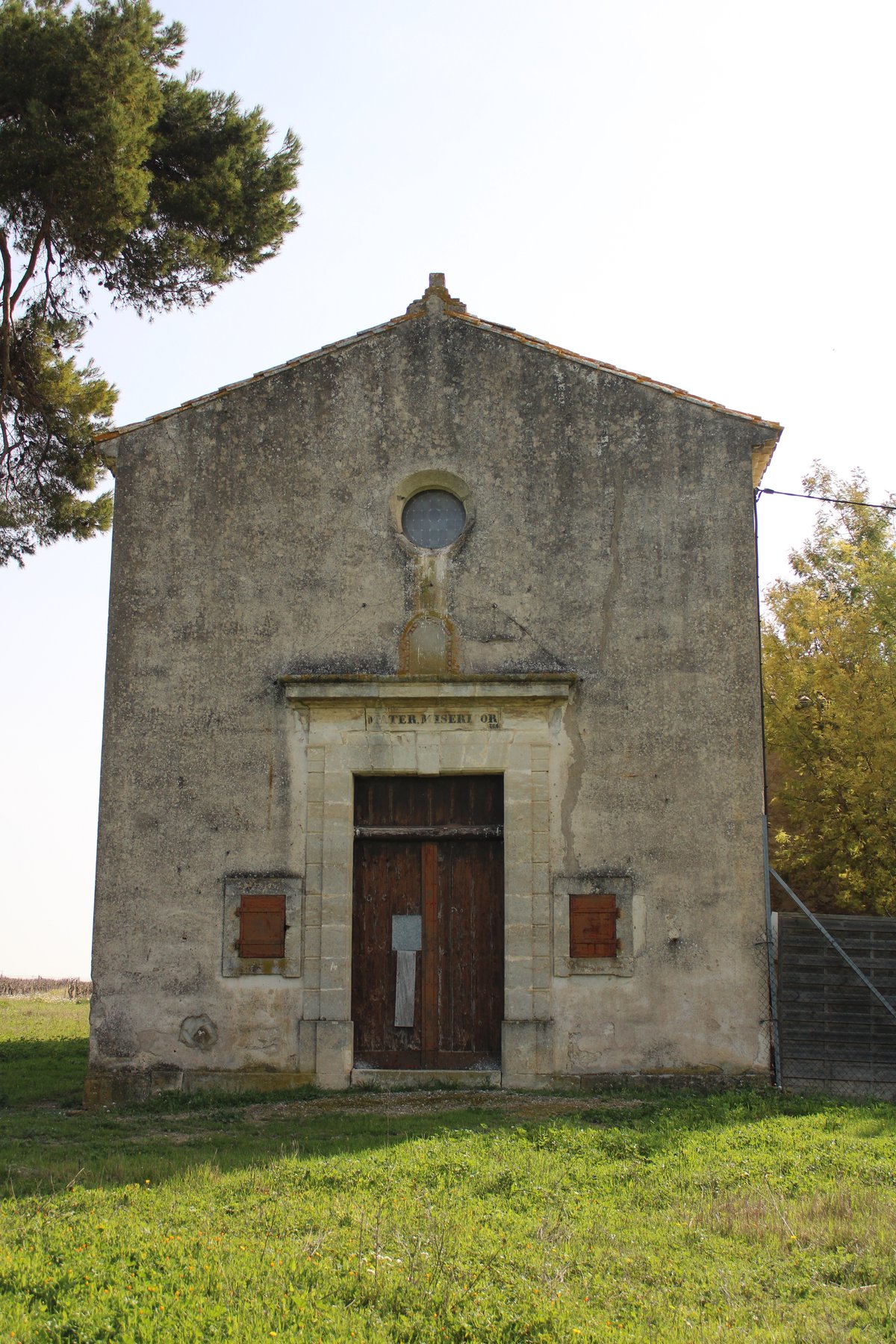
Located in Roujan among fields and vineyards along the Chemin des Abournières, the Chapel of Saint-Nazaire de Roujan is a pre-Romanesque chapel that has stood witness to centuries of regional history. Constructed during the 9th and 10th centuries, this chapel, previously known as 'Église Saint-Nazaire d’Auberte', is one of several chapels scattered throughout the region, each a testament to the pre-Romanesque architecture of the region of Septimanie.
The earliest record of this chapel dates back to 1086. Its names have changed over time, and local tradition holds that it served the disappeared hamlet of Saint-Geniès. Classified as a historic monument since 1981, the Chapel of Saint-Nazaire de Roujan today stands - although in poor condition - as a surviving witness to centuries of regional history.
The chapel's design is typical of pre-Romanesque architecture: a single nave ending to the east with a square choir (characteristic of Wisigothic tradition, known as a 'closed choir', where the opening of the triumphal arch is narrower than the width of the nave). The nave was originally covered by a timber frame, replaced probably in the 17th century by a barrel vault.
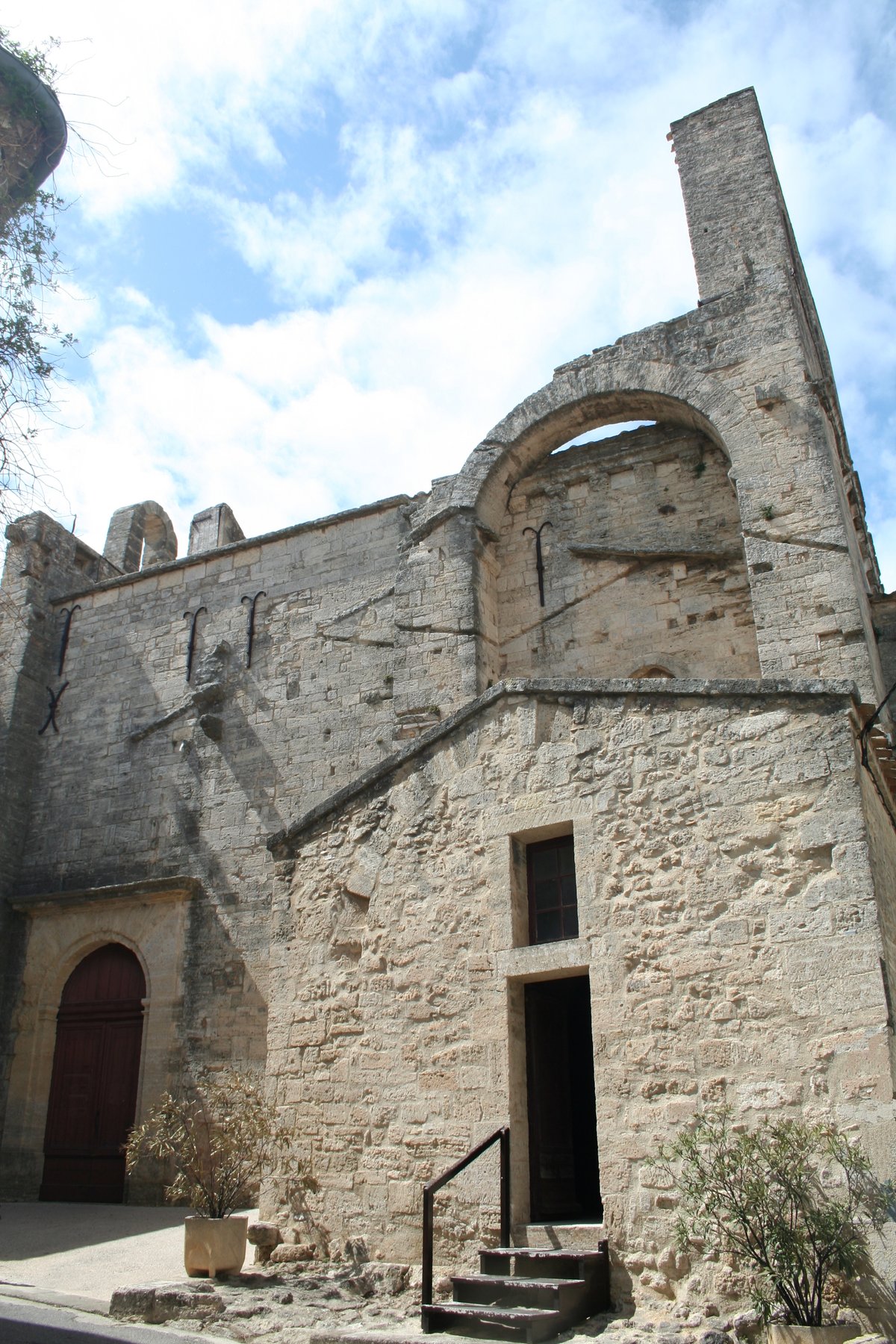
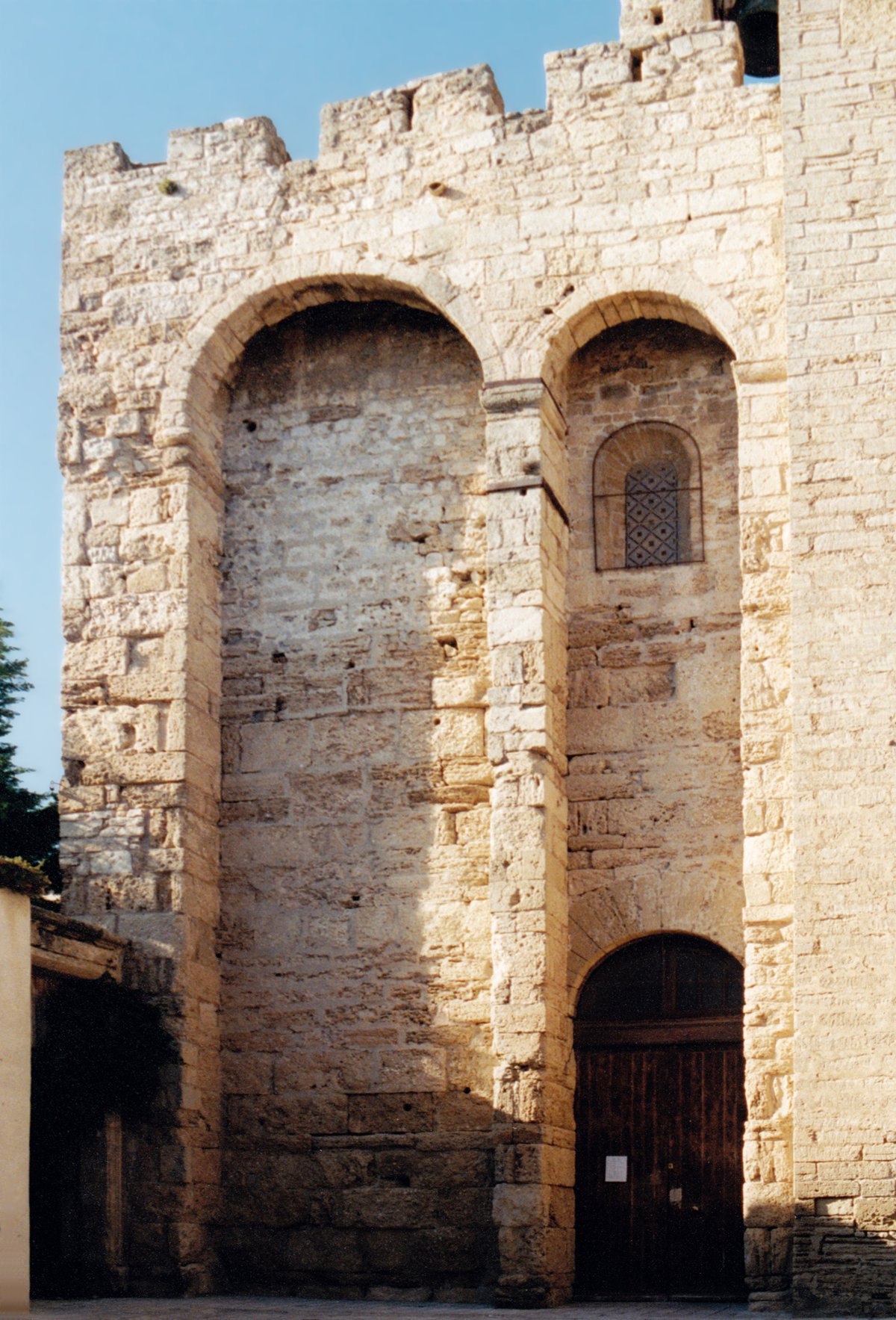
The eastern wall features a bay with flared jambs and a monolithic arch, while the southern façade showcases a Roman portal added well after the construction of the building. This portal consists of a door with jambs composed of massive ashlar blocks, supporting a monumental lintel and a semicircular arch whose voussoirs are narrower at the base than at the top. This portal is protected by a massive protruding outpassed arch, which betrays the influence of the Wisigothic style. The southern façade also features a meurtrière-shaped window with pronounced flares to the right of the portal.
Sources: Wikipedia, OpenStreetMap, Wikidata, Wikimedia Commons
Written by Nicolo Ciampini
Discuss this with the author and others
No comments yet. Be the first to start the conversation.