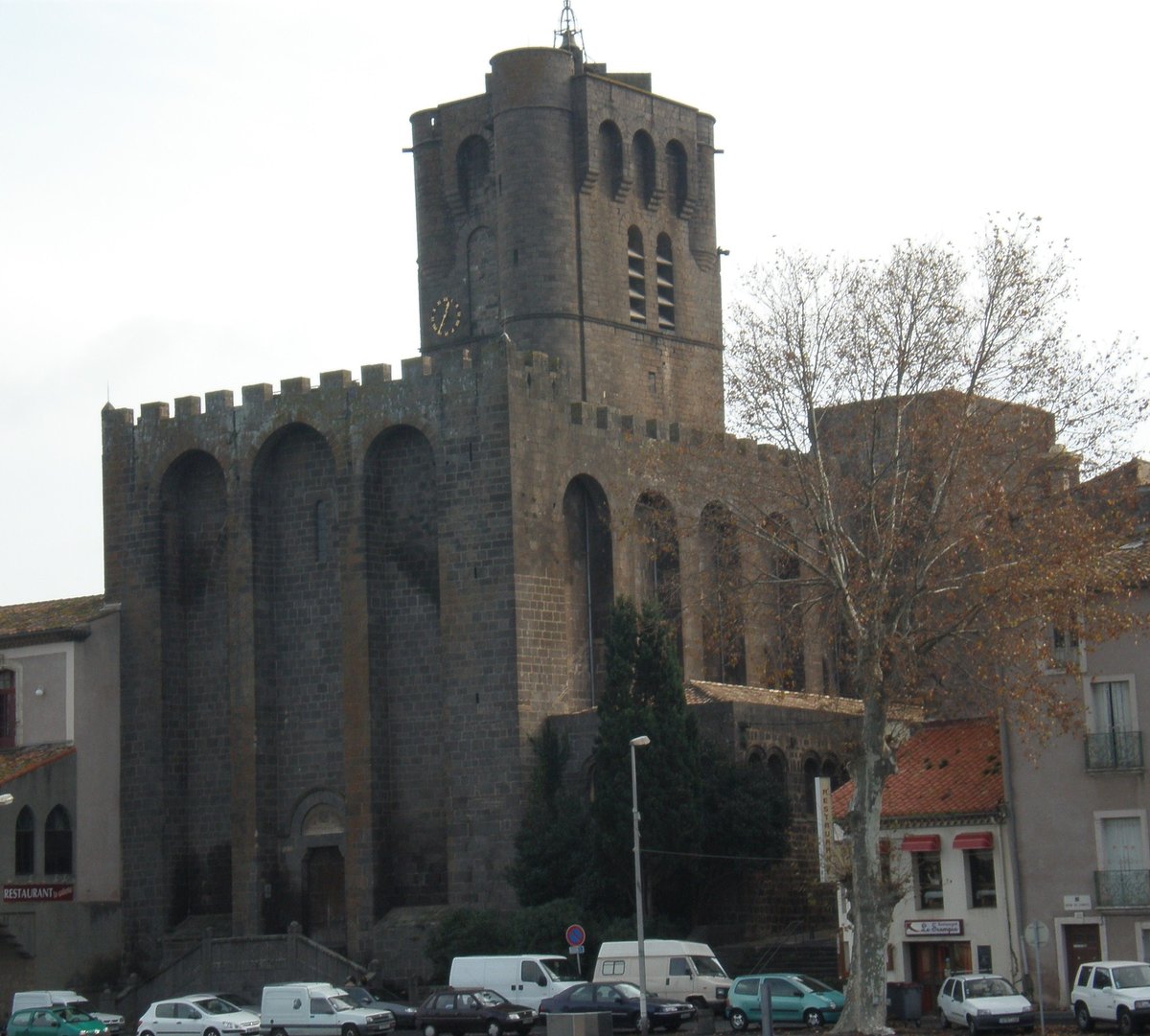

The Cathedral Saint-Étienne in Agde, France, a Roman Catholic church on the bank of the River Hérault, serves as a testament to four centuries of architectural and religious history. Originally, the site hosted a temple of Diana, followed by a 5th-century Roman church, a 9th-century Carolingian church, and the current cathedral built in the 12th century. The cathedral was constructed of black basalt from Mont St. Loup quarries, and its walls are 2 to 3 meters thick.
The square tower, at 35 meters high, could function as a keep. Declared a monument historique in 1840, the Romanesque cloister that once adjoined the cathedral was demolished in 1857. The 17th-century high altar, made of polychromatic marble, and the organ with its Baroque architectural style contrast with the cathedral's austere interior. Four of the cathedral's five bells were cast by Burdin-Aîné of Lyon in 1894 and 1895, while the fifth, cast in 1665 by Damiac Fulcrand at Béziers, is the cathedral's oldest bell and was declared a monument historique in 1959.
Sources: Wikipedia, OpenStreetMap, Wikidata, Wikimedia Commons
Written by Nicolo Ciampini
Discuss this with the author and others
No comments yet. Be the first to start the conversation.