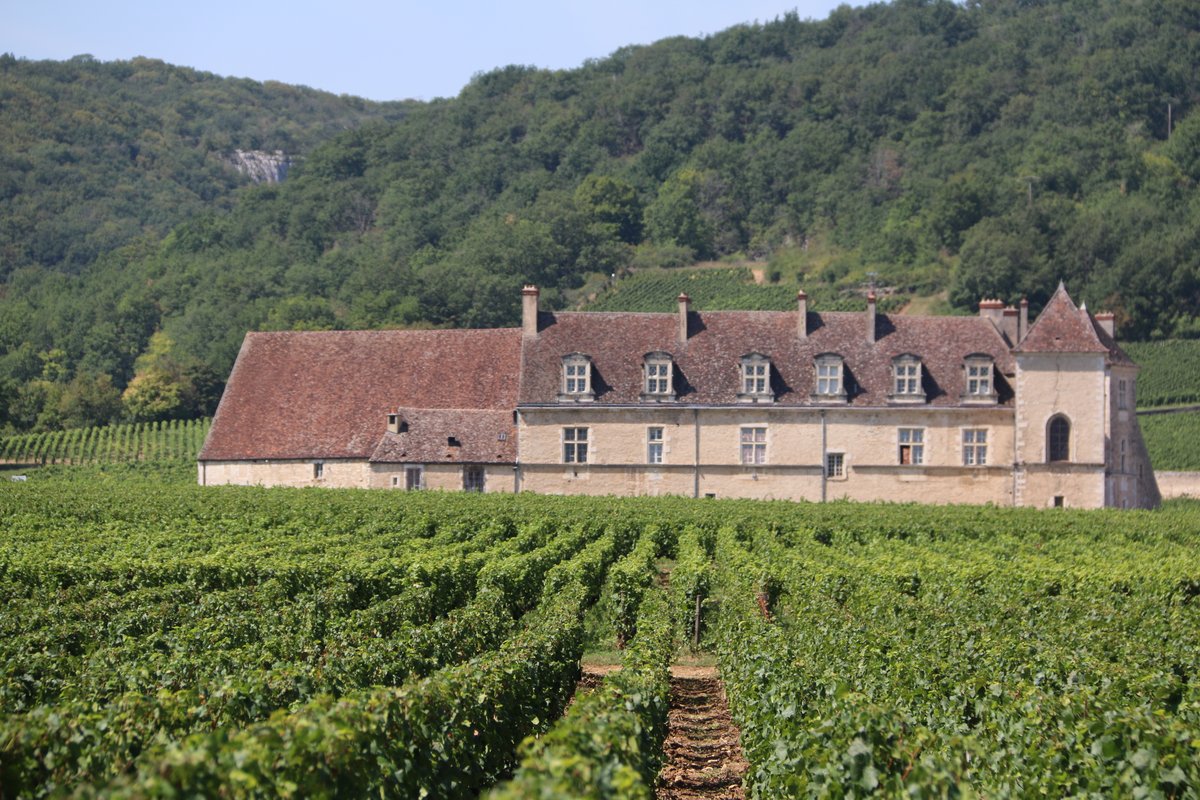

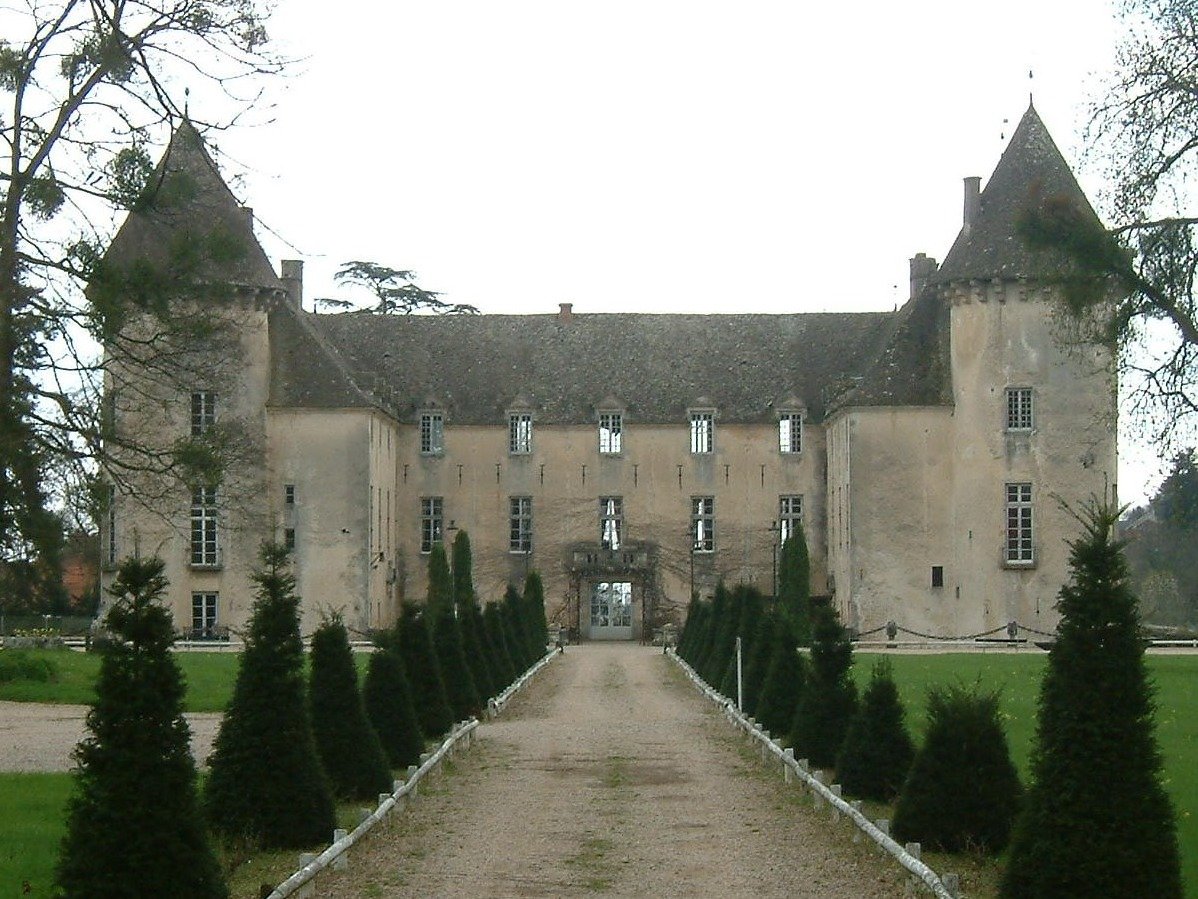
In the village of Vougeot, the Château de Clos-Vougeot stands as a historic building constructed between the 12th and 16th centuries. Its architecture blends Cistercian and Renaissance styles, and it has been classified as a historical monument since 1948. The site is currently managed by the Confrérie des chevaliers du Tastevin, an organization that promotes the region's wines and gastronomy.
In the 12th century, Cistercian monks began cultivating vines and acquiring land around the abbey of Cîteaux. Between 1109 and 1115, they formed the vignoble of Clos-Vougeot, eventually surrounding it with walls. To manage the production, the monks built a cuverie in the 15th century, featuring a cloister-like shape and four monumental oak wine presses capable of pressing four tons of grapes each. They also constructed a large semi-underground cellar supported by eight stone pillars and a vast attic that served as a dormitory for the brothers convers.
The castle reached its current form in 1551 when Dom Jean XI Loisier, the 48th abbot of the abbey of Cîteaux, added a Renaissance-style manor house to the existing agricultural buildings. This manor featured mullioned windows and was designed to serve as a residence. Today, the castle remains an emblematic site for the region's viticulture and serves as a seat for the climats of Burgundy.
Sources: Wikipedia, OpenStreetMap, Wikidata, Wikimedia Commons
Written by Nicolo Ciampini
Discuss this with the author and others
No comments yet. Be the first to start the conversation.