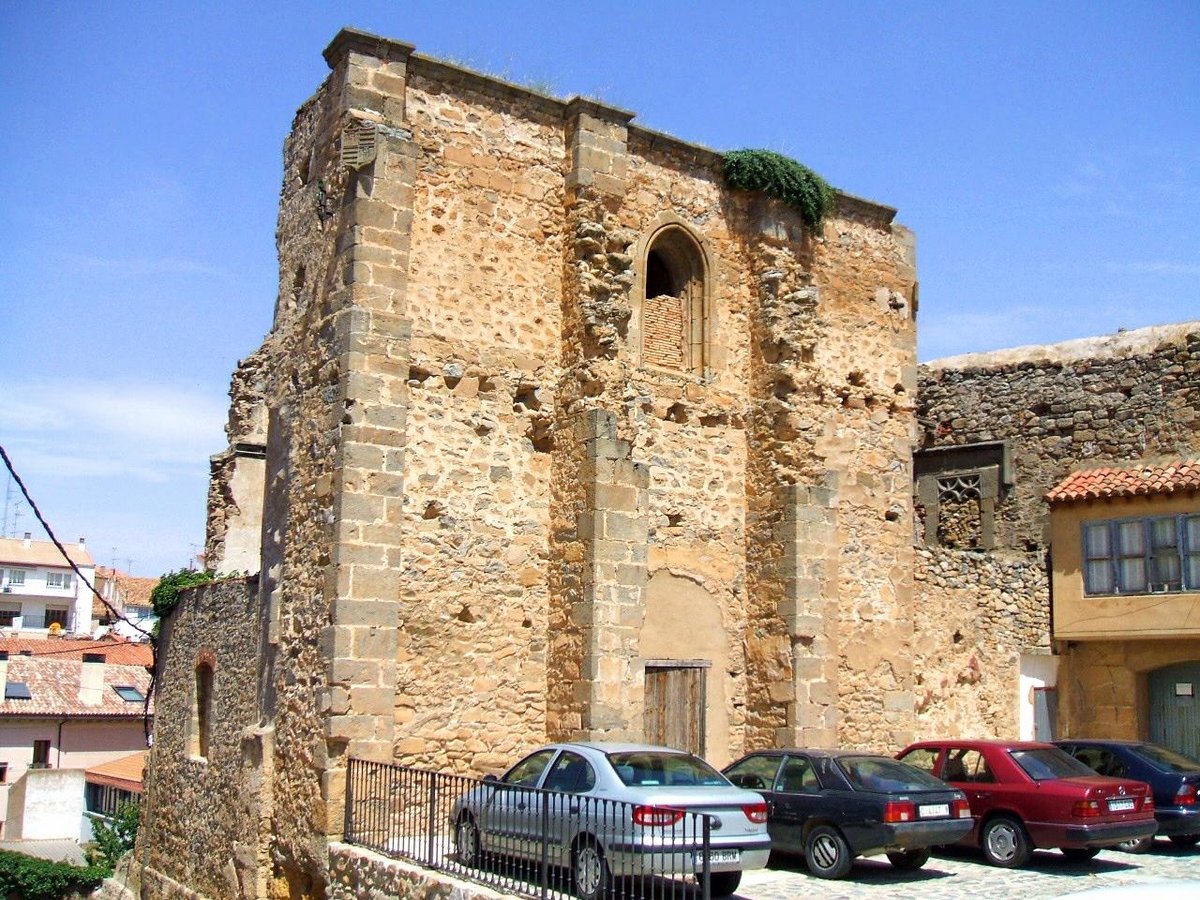

Standing prominently in the Plaza de Castejón in the heart of Agreda, Spain, is the ruined church of Nuestra Señora de Yanguas. Built in the late 16th century, it once served as a testament to the power and influence of the Castejón family who patronized it. Originally dedicated to Saint Martin, the church's advocacy was later changed to Nuestra Señora de Yanguas, a name that has endured to this day. The village of Yanguas repopulated the surrounding area, earning the church its colloquial name, la Virgen Vieja or Nuestra Señora del Río.
Upon entering the church, visitors are greeted by the Capilla Mayor, the only surviving remnant of the original structure after a major renovation in the mid-19th century. The Gothic-style church features walls divided into tracts by semicolumns with adossed baquetones. Its ornate facade and windows with celosías in the dintel are remnants of the artistic and architectural mastery of the 16th century. The surrounding area once held a cemetery that dated back to the late 16th century to the last decades of the 18th century.
Sources: Wikipedia, OpenStreetMap, Wikidata, Wikimedia Commons
Written by Nik Frost
Discuss this with the author and others
No comments yet. Be the first to start the conversation.