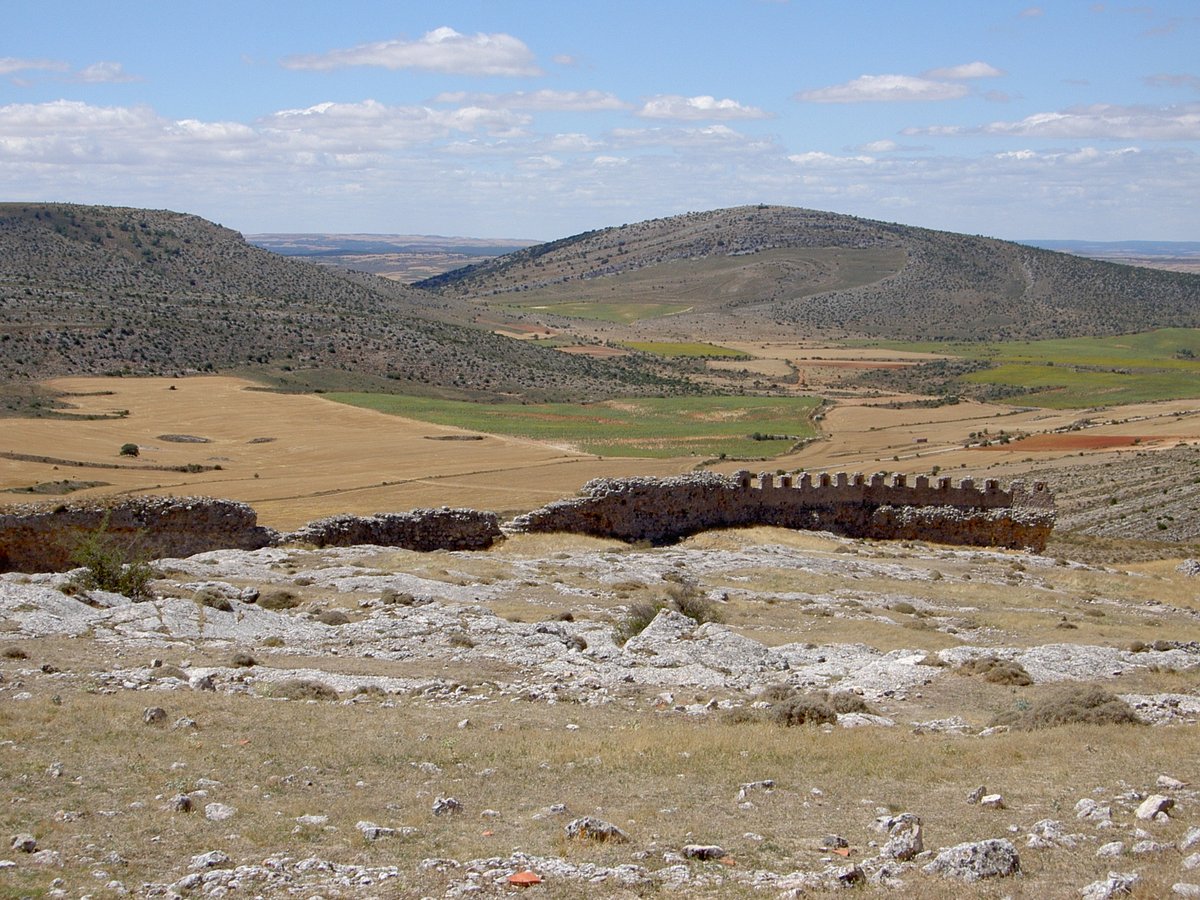

Deep within the desolate Spanish village of La Quiñonería lies Peñalcázar, a hill town that has born witness to the shifting sands of time. Its legacy can be traced back to the Celtiberian, Roman, and Arab eras, with the Arab rule and the Middle Ages penning further chapters in its story. Serving as a critical fortress and even a tribute point for El Cid, Peñalcázar presents a unique exploration into the intricate cultural history of the Iberian Peninsula.
Only two segments of its original wall and relics of the castle and gate remain, offering tangible connections to its storied past. Evidence of Celtiberian, Roman, and Arab architectural styles is clearly visible, making for a captivating study of eras. Accessible by foot, horseback, or donkey, the adventure of reaching Peñalcázar adds an exciting layer to the experience. Protected by the Declaration genérica del Decreto de 22 de abril de 1949 and the Ley 16/1985 sobre el Patrimonio Histórico Español, Peñalcázar stands tall as a testament to the rich and varied cultural tapestry of ancient Spain.
Sources: Wikipedia, OpenStreetMap, Wikidata, Wikimedia Commons
Written by Nik Frost
Discuss this with the author and others
No comments yet. Be the first to start the conversation.