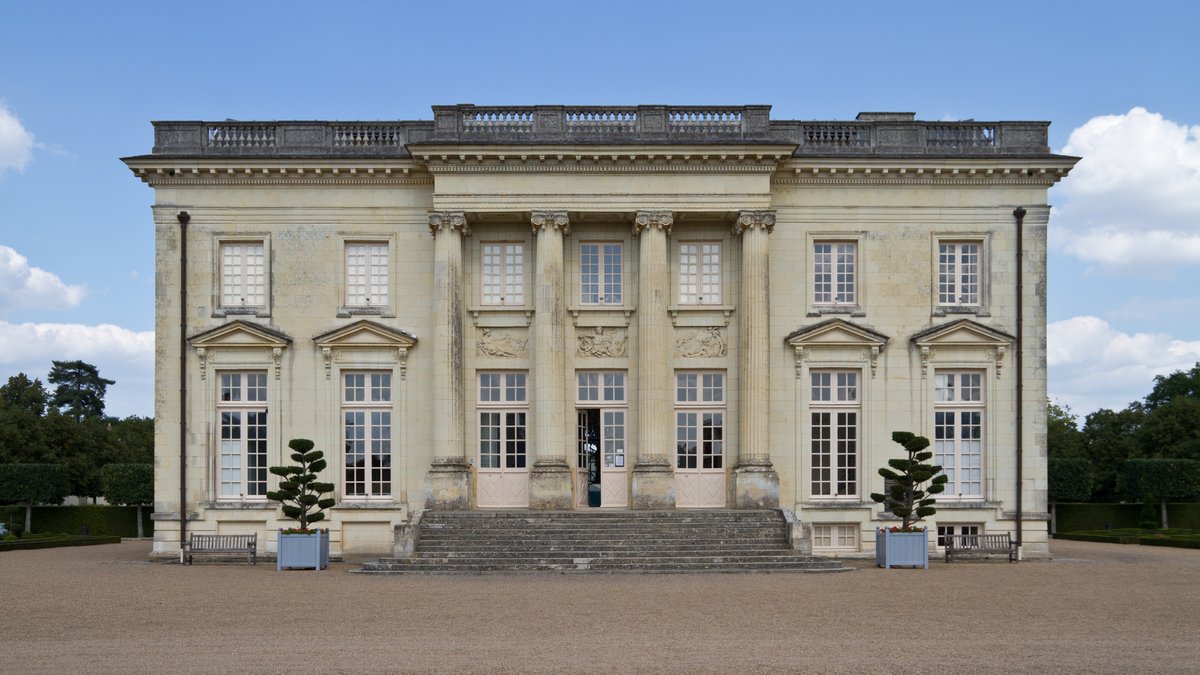

The Chateau de Pignerolle stands as a remarkable example of neoclassical architecture nestled in the commune of Saint-Barthélemy-d’Anjou, France. Constructed in the late 18th century, this château has witnessed a rich tapestry of historical events, from aristocratic leisure pursuits to pivotal roles in 20th-century military history. Its evolution reflects the broader social and political transformations of France, making it a site of both architectural beauty and profound historical significance.
Initially built for the Avril family, it was later seized by the French state during the French Revolution and used as a prison. In the 20th century, it was requisitioned by the Polish government-in-exile during World War II from 1939 to 1940. Władysław Raczkiewicz, the Polish President in Exile, stayed there from 2 December 1939. To continue breaking Enigma-enciphered messages, the Polish cryptologists were evacuated to France and set up at Pignerolle.
However, in June 1940, the château was captured and requisitioned by the German Wehrmacht. From 1942 to 1944, it was used as a command center for U-boats, chosen for its safety, good radio communication, and flat land. Construction of a command bunker began in April 1942, completing in May 1943. The main command bunker housed teletype communications and aerial masts to transmit and receive enigma coded messages with submarines in the Atlantic. After World War II, the barracks were used by US troops from an unspecified date until 1946, housing 1,000 displaced people.
In 1961, the barracks were listed as a national monument. The bunker was taken over by the French government as a reserve nuclear fallout center for President Charles de Gaulle during the Cold War era, and was later acquired by Angers in 1971 for restoration over the next 20 years. From 1992 until 2015, the Chateau was a museum dedicated to European communications.
Sources: Wikipedia, OpenStreetMap, Wikidata, Wikimedia Commons
Written by Nicolo Ciampini
Discuss this with the author and others
No comments yet. Be the first to start the conversation.