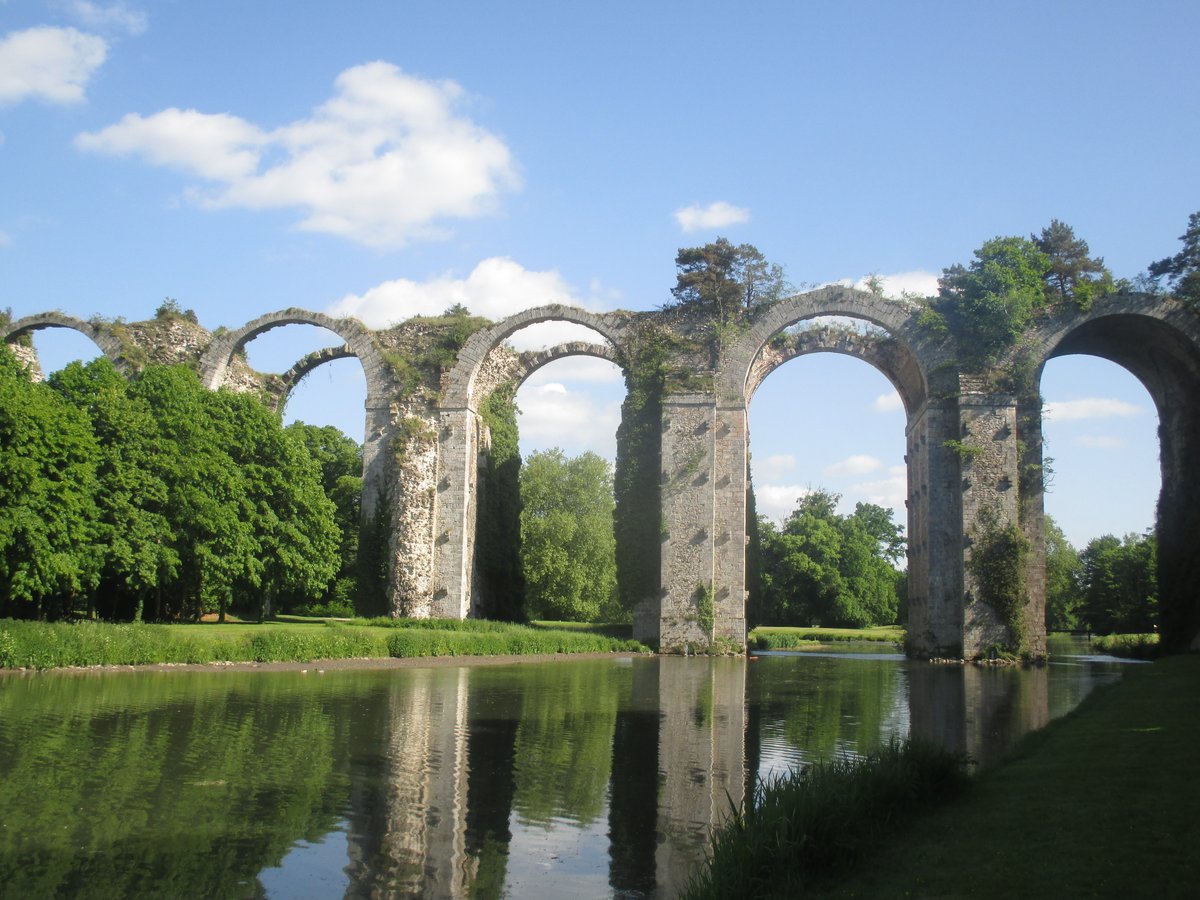

The transformation of the château de Versailles began in 1662. By 1682, the royal court had grown so large that the existing sources and streams could no longer supply the increasing demand for the fountains and jets. To solve this, the Canal de l'Eure was planned to carry water from Pontgouin to Versailles, as the Eure river was found to be high enough to reach the château at a height of approximately 80 feet.
The project involved a degradation in reports between Louvois and the engineer Vauban. While Vauban proposed an underground canal and an 'aqueduc rampant' - a low-profile siphon - to cross the valley of the Eure for cost reasons, Louvois wished for an alternation of canalization and aqueducts. The King decided the project should be an ouvrage of about 18 km long. Vauban criticized this design as too massive and lacking the width necessary for correct water flow, but the project proceeded as ordered by the sovereign.
Construction on the aqueduct began in 1686, two years after the initial digging of the canal. However, the work was abandoned in 1688 and the aqueduct remained unfinished, with only the first row of arches constructed. Today, the ruin sits on the domain of the château de Maintenon. The structure has been listed as a historic monument since 1875.
Sources: Wikipedia, OpenStreetMap, Wikidata, Wikimedia Commons
Written by Nicolo Ciampini
Discuss this with the author and others
No comments yet. Be the first to start the conversation.