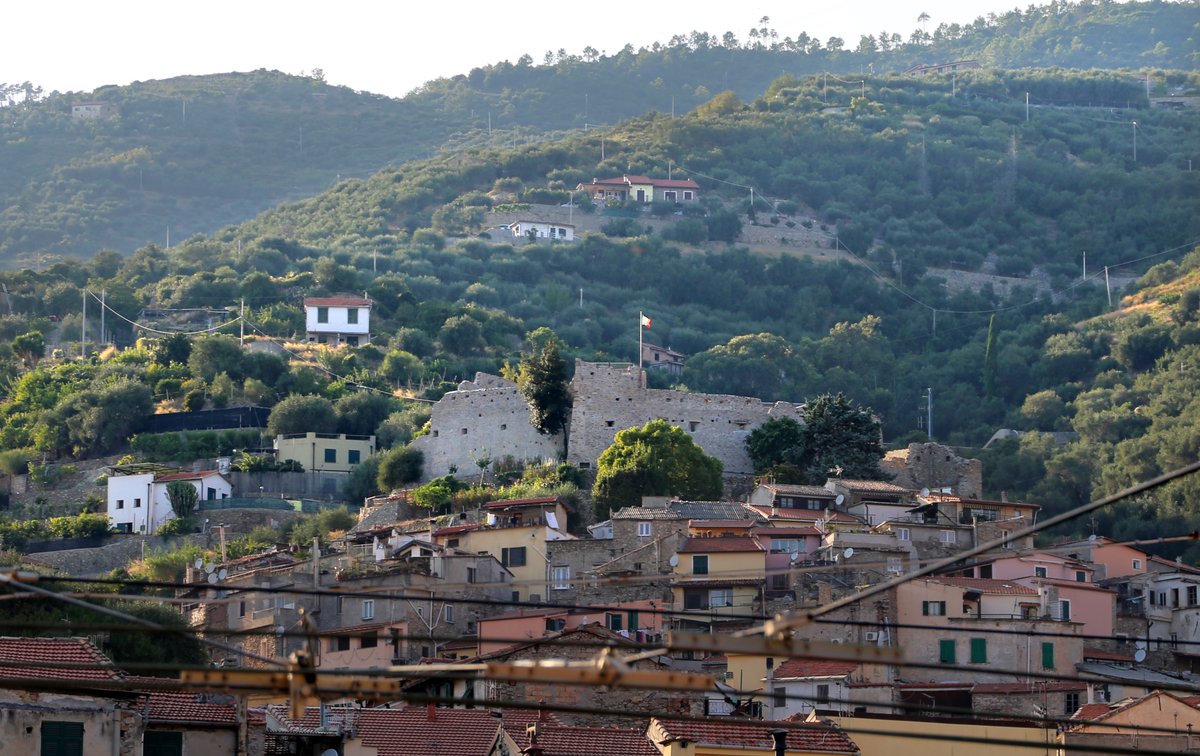

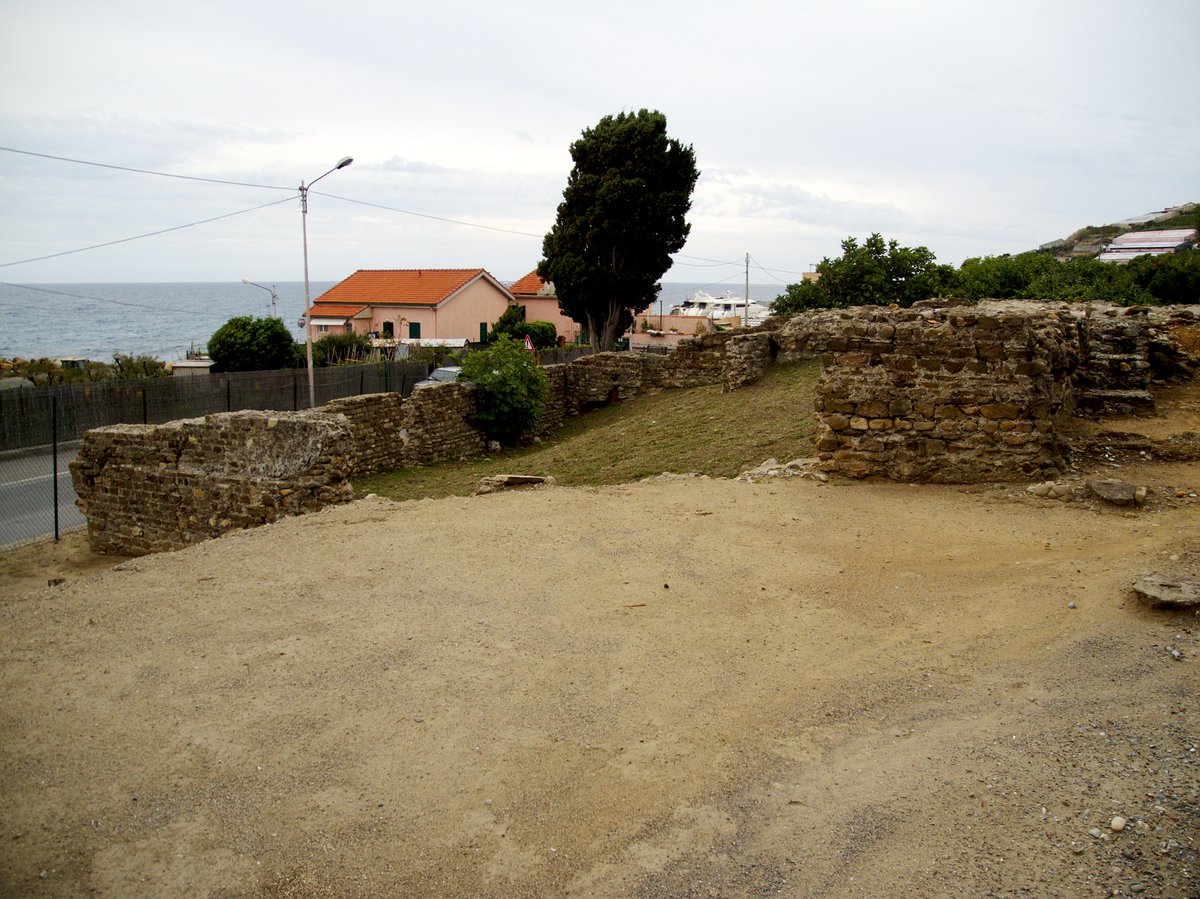
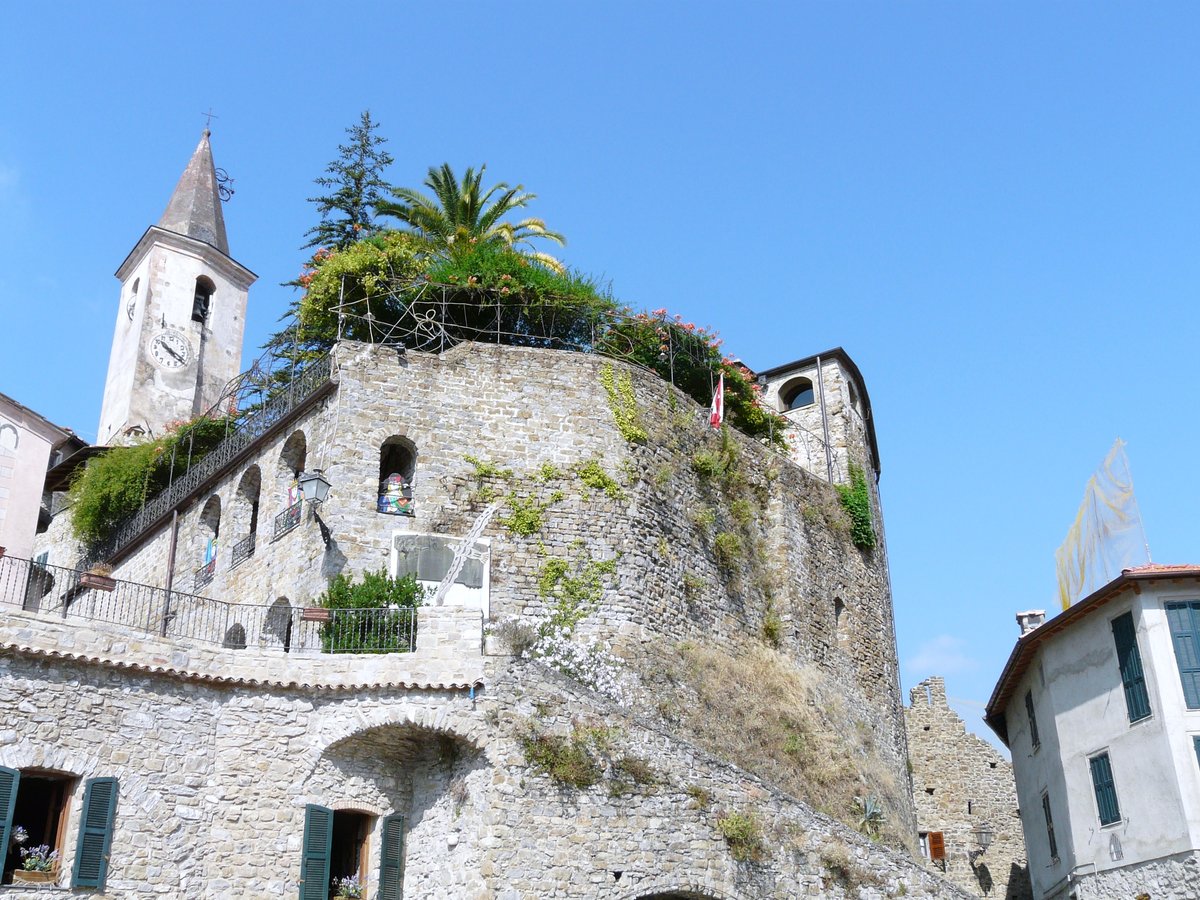
Standing on a hill in the Taggia village, in the province of Imperia, the defensive building of Taggia is a structure in ruins. The site may have hosted a defensive or control post as early as the Roman or pre-Roman periods due to its elevated position. Archaeological digs have unearthed various remains dating from pre-Roman to medieval times, which are currently preserved in the Sanremo archaeological museum's storage.
It is probable that the lords of Clavesana, feudal lords of the Tabia village, built the current structure around the medieval period. At this time, the settlement of Taggia began to expand eastward and southward from the fortification. Following the transition of Taggia into the domains of the Republic of Genova starting in 1228, the manor suffered damage from the Genoese. This period is associated with the damage to the tower of the Clavesana, located along the summit of the fortification, which appears truncated.
The same Republic, together with the local community, carried out successful expansions and modifications of the primary, dilapidated fortification during the XVI and XVII centuries. A painting in the Town Hall and a map by Matteo Vinzoni represent the fortification in its entirety as it remained until the XVIII century. While the original structure included eight gates and eight bastions, only the bastions of the Orso and the Ciazzo remain visible today.
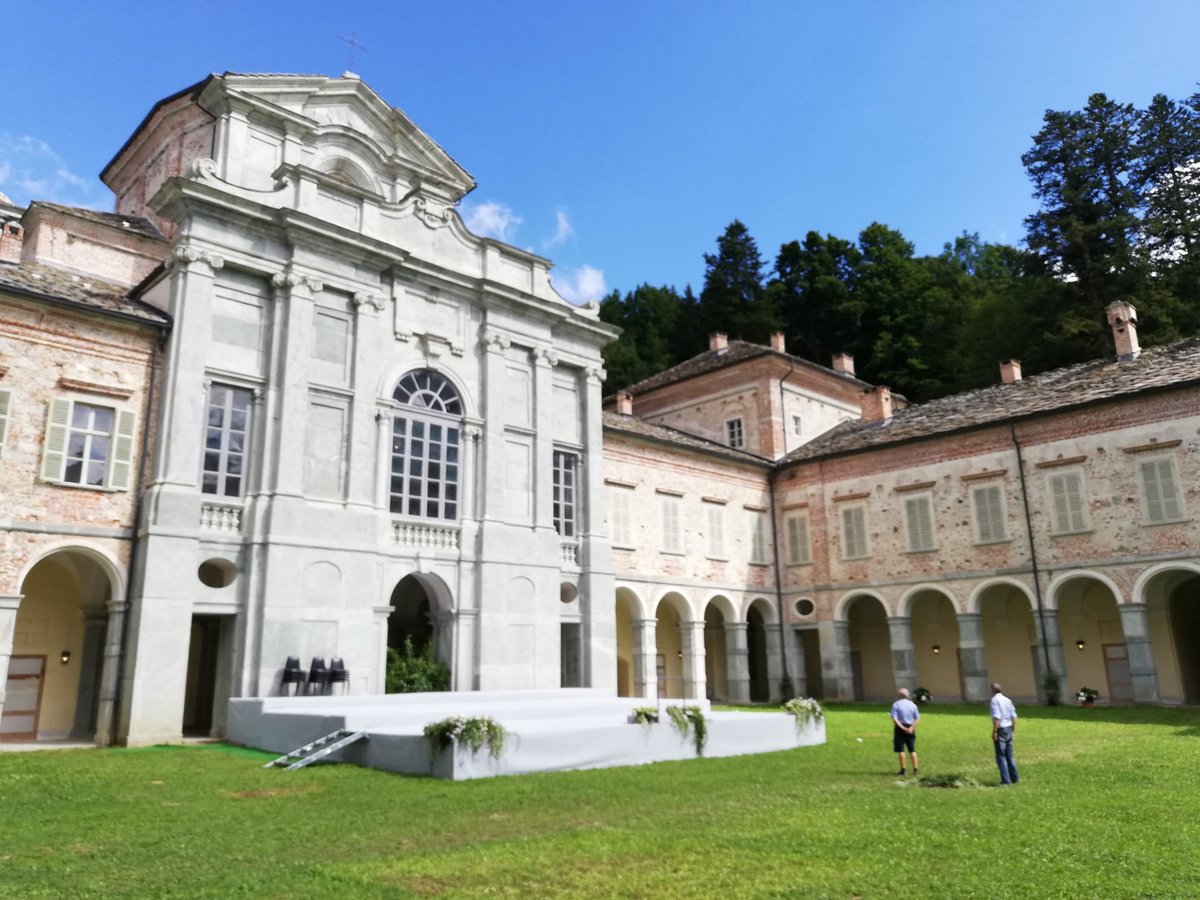
The fortification underwent various uses over the years, including serving as water tanks for the municipal aqueduct in the 1960s. After a period of decay, recent conservation and restoration work allowed for a revaluation of the entire medieval complex. In 2016, a theater was also built to host events and cultural manifestations.
Sources: Wikipedia, OpenStreetMap, Wikidata, Wikimedia Commons


Written by Nicolo Ciampini
Discuss this with the author and others
No comments yet. Be the first to start the conversation.