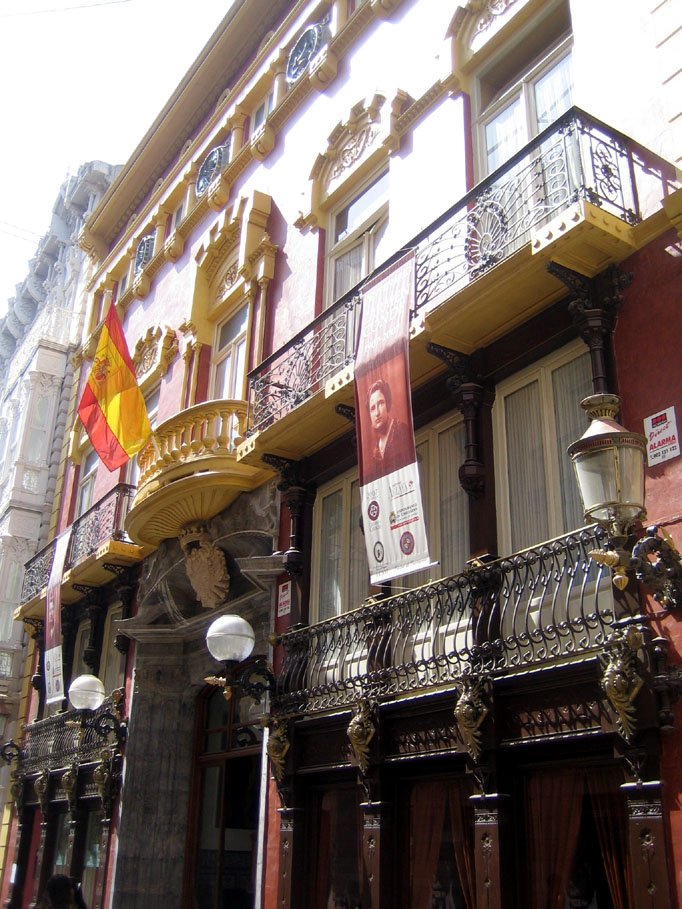

Above the main lintel of the entrance door sits the 'piedra armera' of the first Marquis of Casa Tilly. He was a naval captain who purchased several houses and a warehouse in the 1700s to construct a grand mansion on Calle Mayor, hiring a company of local artisans to complete the work. The building was designed to be in consonance with the high social class to which he belonged.
After the death of the Marquis' widow in 1830, the palace was occupied by her only granddaughter, the Marquisa de Camachos, until the late 1830s. In 1853, the Casino de Cartagena established itself there as a rental agreement under the name Casino Círculo Cartagenero. It was later acquired by the institution as an owner in 1890. Today, it serves as a cultural hub featuring a reading room, a fencing hall, and various other facilities.
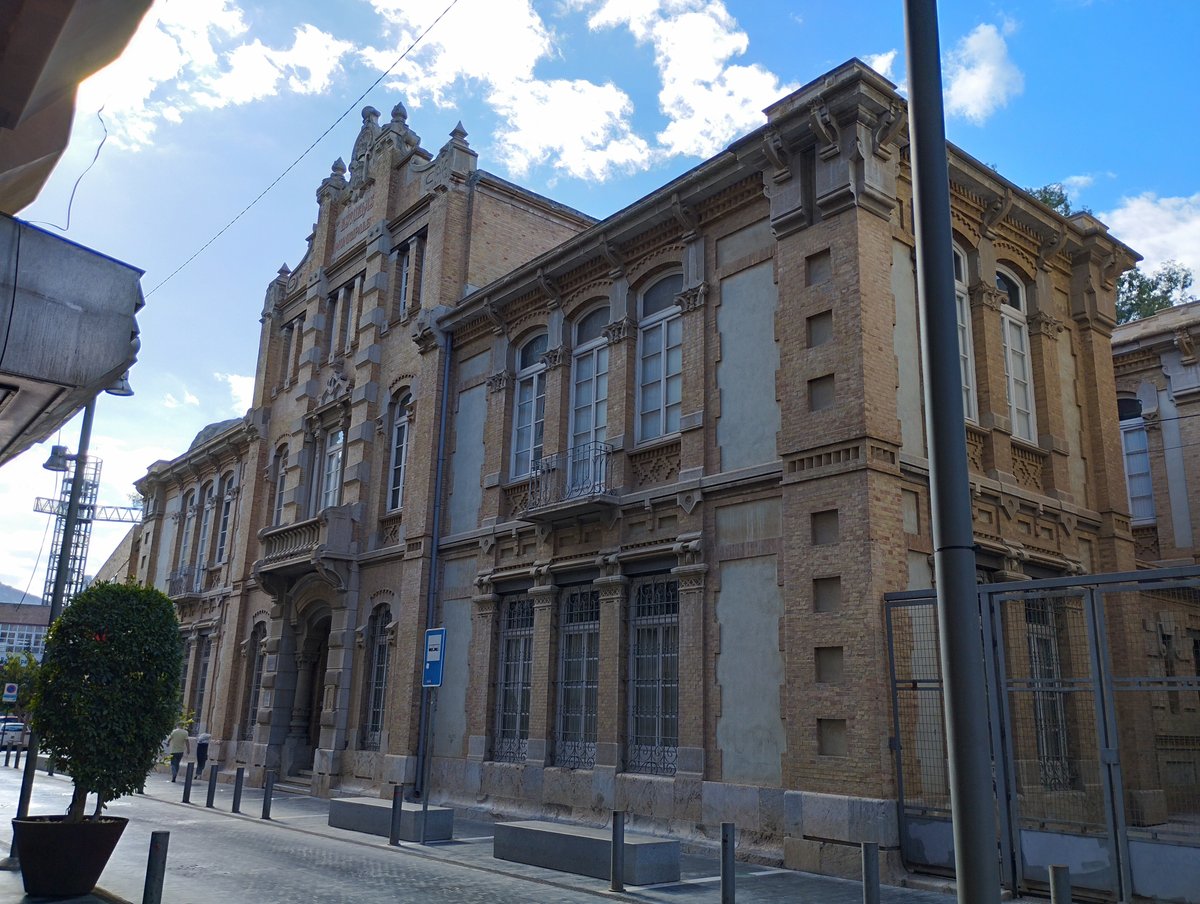
The building retains its 18th-century layout, visible in the central courtyard and the imperial staircase. However, the facade was renovated in the early 20th century by architect Víctor Beltrí, who used iron structures, wood cladding on the lower floor, and zinc ornaments on the upper levels. The interior features Sevillian tiles with 16th-century figures, marble columns, and various themed rooms, including the Salón de Dragones, named for its ceiling decor.
Visitors can explore a library and a reading room popularly known as 'la pecera.' The building is declared a Bien de Interés Cultural by the Region of Murcia, with the category of monument. While some areas are for members, the cafe and restaurant are accessible to the general public, allowing visitors to experience the historic atmosphere of this multi-layered site.
Sources: Wikipedia, OpenStreetMap, Wikidata, Wikimedia Commons
Written by Nicolo Ciampini
Discuss this with the author and others
No comments yet. Be the first to start the conversation.