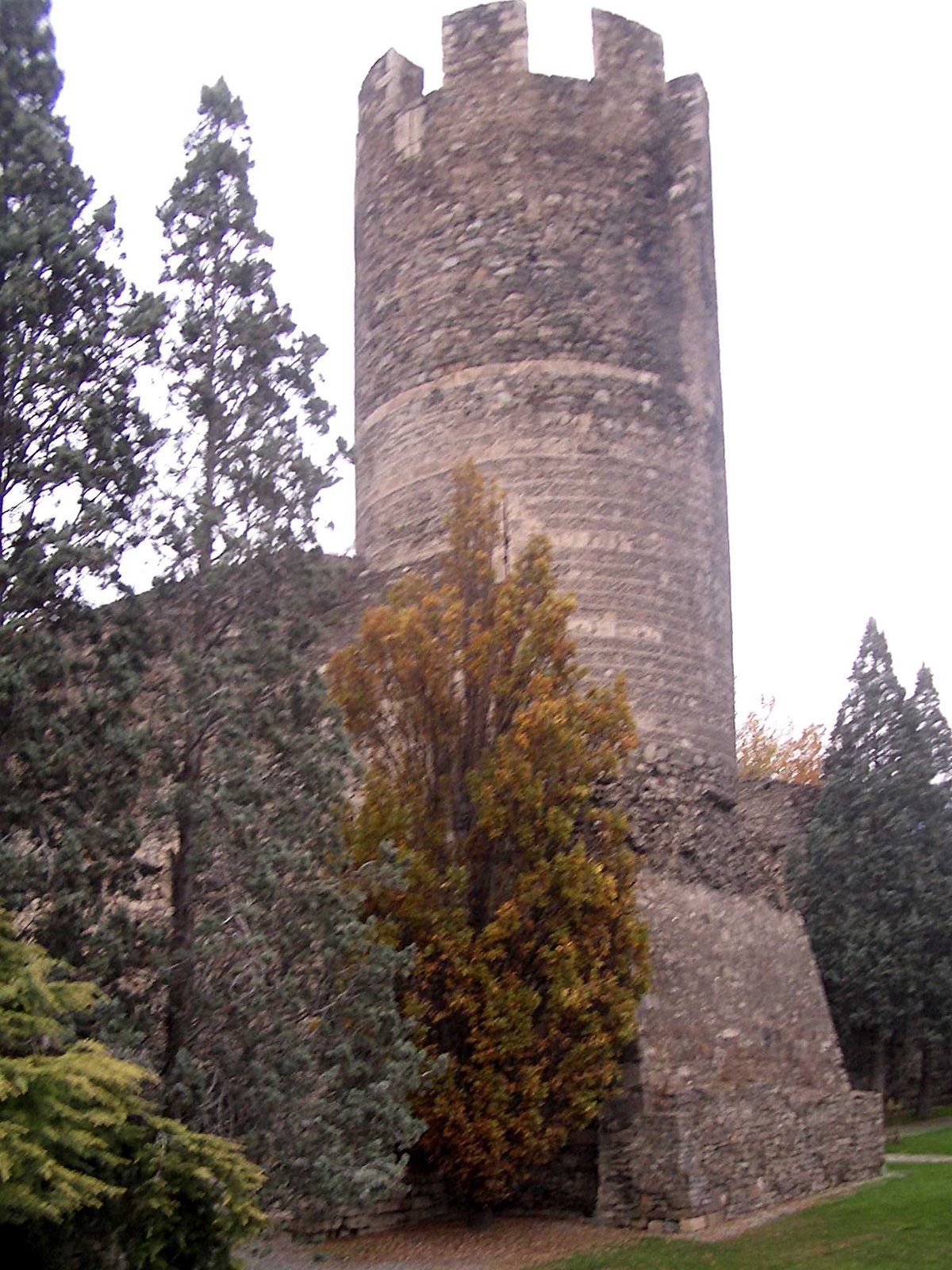

The name Bramafam stems from the local patois, bramé la fam, which translates to shouting for hunger. Local legends whisper that a member of the Challant family locked his own wife inside and let her waste away because of his jealousy. Alternatively, some suggest that during a severe famine, the population huddled in front of the tower to beg for food, giving the site its name.
The ruins of the castle date to roughly the second half of the 13th century, though a tower existed on the site even earlier. Built into the Roman city walls, the structure shows original Roman masonry at its base and medieval sloping walls on the southern side. The Challant family adapted the site into a castle in the medieval period, but by the 16th century, the building was already in a state of ruin.
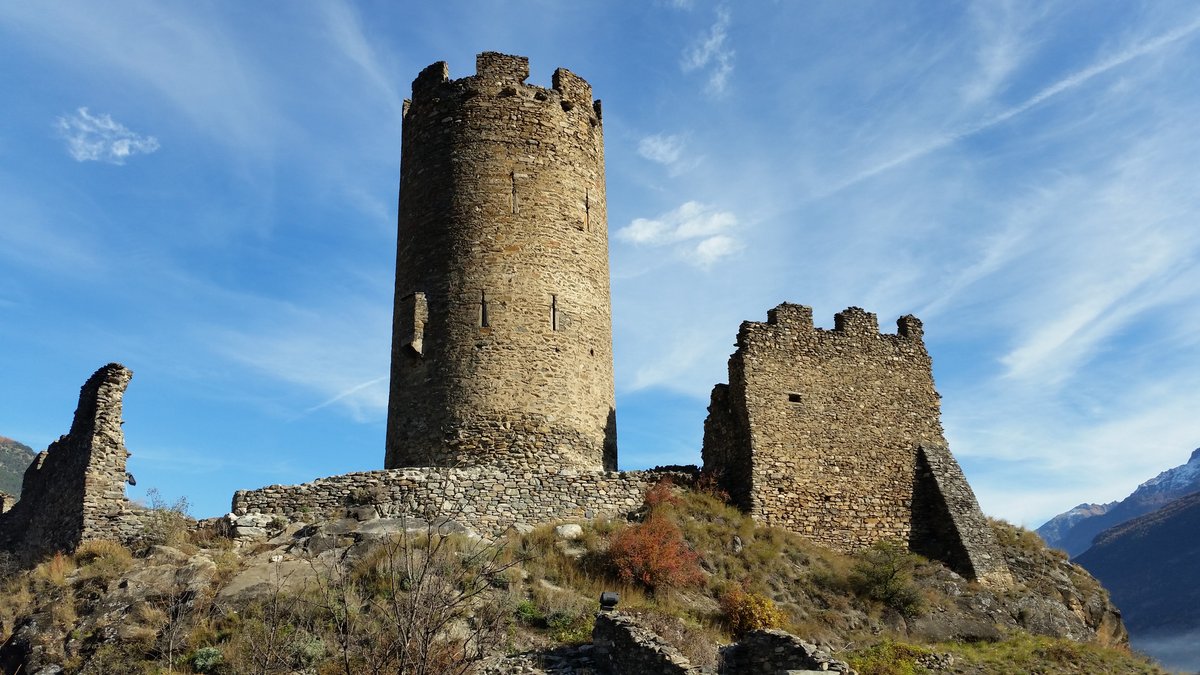
The architecture features a large rectangular building with windows resembling those at the castle of Ussel and an adjacent cylindrical tower with Guelph battlements. A notable feature of the castle is the water cistern, which is attached to the south side of the main building rather than being buried underground like those in other castles in the valley.
Today, the site remains a ruin in the city of Aosta at the corner of via Bramafam and viale Carducci. The remaining structure preserves the transition from the Roman wall to the medieval fortress, standing as a remnant of the city's long history.
Sources: Wikipedia, OpenStreetMap, Wikidata, Wikimedia Commons
Written by Nicolo Ciampini
Discuss this with the author and others
No comments yet. Be the first to start the conversation.