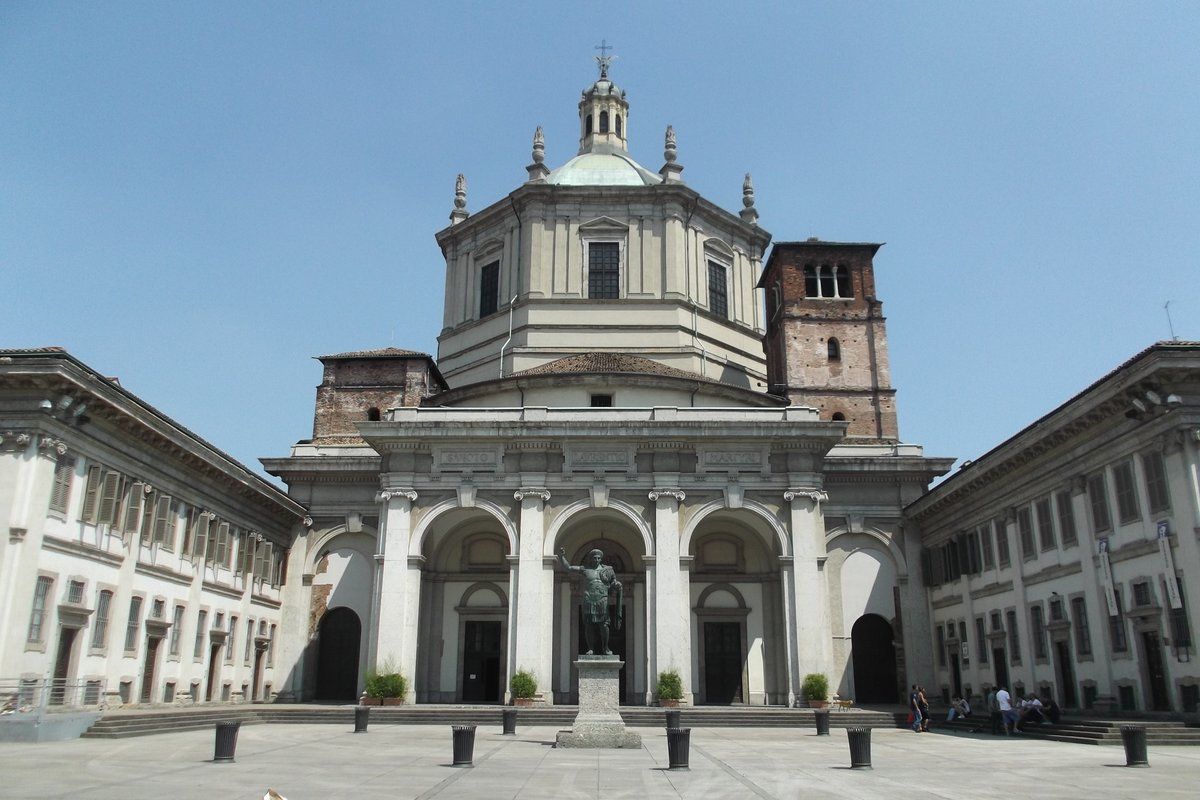

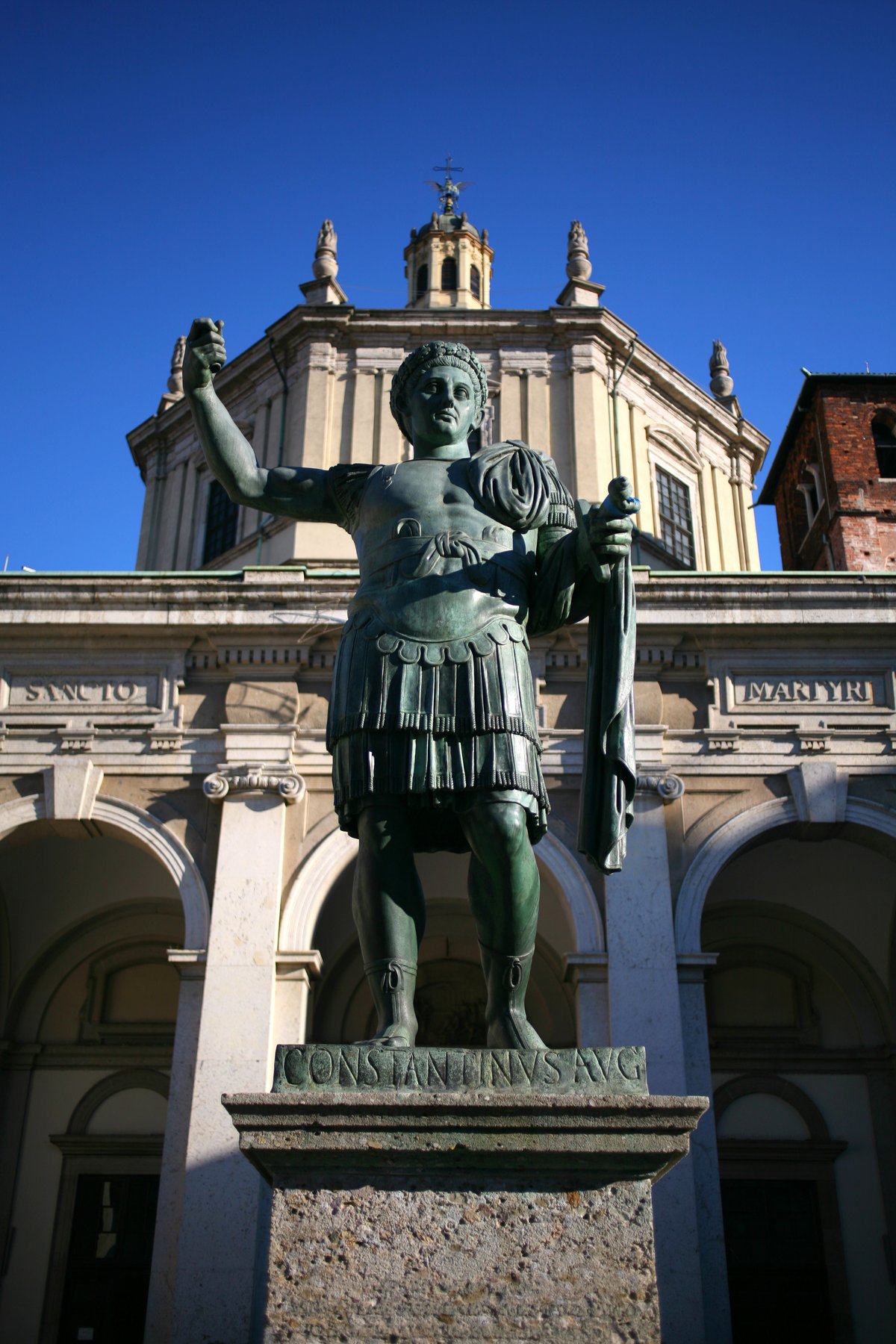
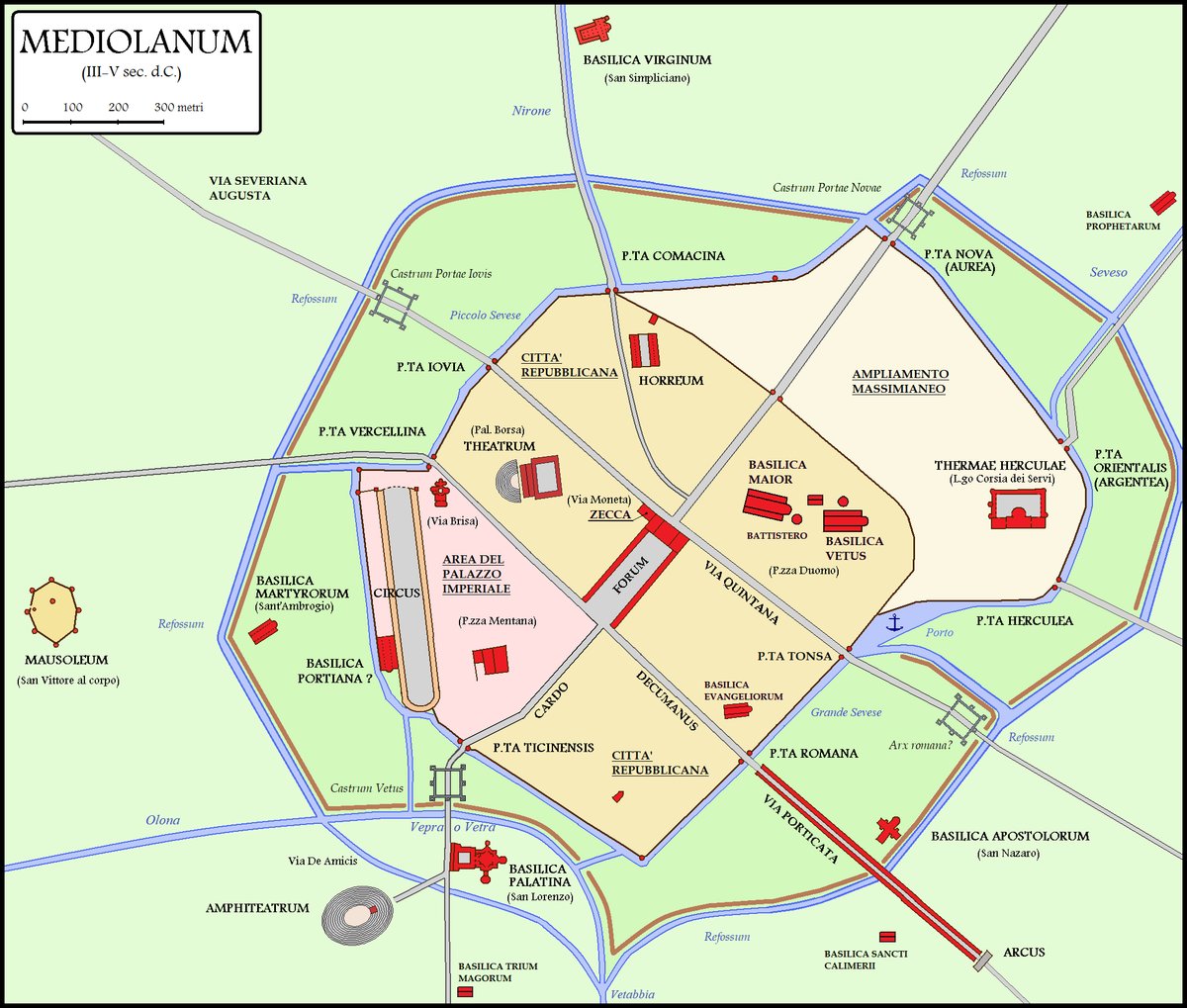
Constructed between the late fourth and early fifth centuries, the Basilica di San Lorenzo Maggiore was the largest, centrally planned building at the time of its construction. It sat atop an artificial hill near the main gate, hemmed in by waterways that still flow south today. Art historians describe it as a building of daring originality, providing a glimpse of the great churches built by Constantine and his successors in Byzantium.
Was it an imperial statement or a dynastic tomb? Some scholars suggest it was built to please the Arian Bishop of Milan, Auxentius, while others believe it served as a mausoleum for the Theodosian dynasty. Regardless of the original intent, it was an example of the classical architectural canons admired by humanists. During the Renaissance, artists and architects such as Bramante and Leonardo studied its proportions and were influenced by its style.
The history of the site includes a darker chapter: until 1840, the open space behind the basilica was used as a place of executions. The building also survived the terrible "fire of the Stork" in 1071 and a dome collapse in 1573. That collapse triggered a miracle involving a sick woman being cured in front of the icon of the Madonna del Latte, which was subsequently moved to the high altar.
Visitors can still view the complex from the park of the basilicas today. The church remains a symbol of the legacy of the Roman Empire in Milan, having survived fires, earthquakes, and the shift from a Roman capital to a medieval powerhouse.
Sources: Wikipedia, OpenStreetMap, Wikidata, Wikimedia Commons

Written by Nicolo Ciampini
Discuss this with the author and others
No comments yet. Be the first to start the conversation.