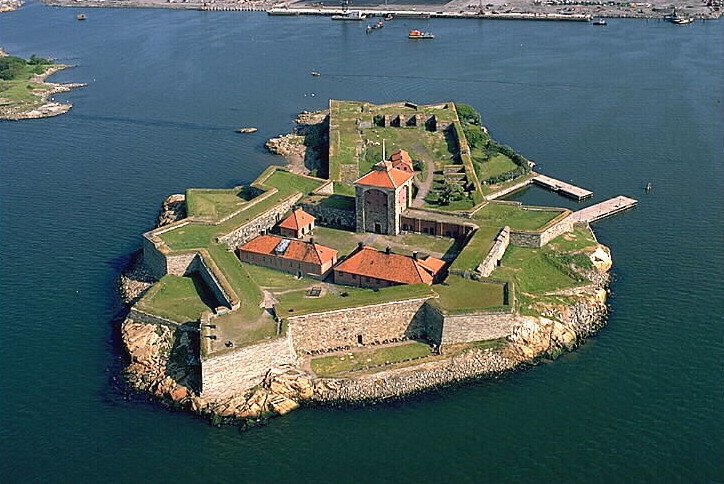

New Älvsborg, called to distinguish it from the ancient Älvsborg, is a sea fort on the island of Kyrkogårdsholmen within the urban area of modern Gothenburg, Sweden. Constructed in 1653, this imposing fortress was designed to protect Sweden's access to the North Sea and the Atlantic Ocean, serving as a crucial defensive line against potential Danish-Norwegian attacks. As the years passed, New Älvsborg was about to prove its strategic importance, playing a pivotal role in the annals of Swedish military history.
In 1719, a Danish-Norwegian force led by Peter Tordenskjold attacked New Älvsborg for three unrelenting days, yet the fort's garrison, equipped with 90 artillery pieces, endured the barrage and held their ground.
Yet, New Älvsborg was not merely a fortress. It was also a symbol of a larger struggle. The Treaty of Roskilde in 1658, forged after the heavy fighting, ceded the provinces of Bohuslän and Halland to Sweden, thus significantly reducing the strategic importance of New Älvsborg, but the turmoil it withstood proved critical in defining the battle lines between Sweden and Denmark-Norway.
It was not long before New Älvsborg saw its decline. By the end of the 19th century, the fortress fell into disrepair and was eventually decommissioned in 1869. Today, New Älvsborg stands as a symbol of Sweden's proud military history, a testament to the fierce determination that has shaped the nation over the centuries.
Sources: Wikipedia, OpenStreetMap, Wikidata, Wikimedia Commons
Written by Nik Frost
Discuss this with the author and others
No comments yet. Be the first to start the conversation.