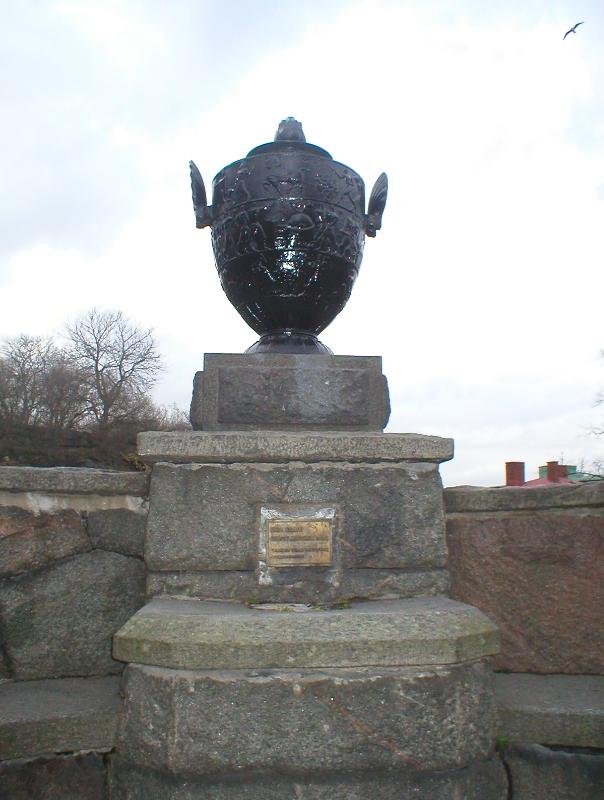

Created from gjuterijärn by the renowned Swedish artist Eric Grate, the Bergslagsurnan functions as a powerful emblem of Sweden's extensive ironworking history. Its reliefs portray different stages of iron production, from mining in Bergslagen to smelting in furnaces. These reliefs serve as a testament to the tireless work and dedication of the workers in the iron industry. Commissioned by Näfveqvarns Bruk in 1921-1922, the original price for one of these masterpieces amounted to 1,200 kronor.
The Bergslagsurnan was displayed at the international Paris Exhibition in 1925, earning Grate a silver medal. One of the best examples of the Swedish Grace style prominent in the 1920s, the Bergslagsurnan can be found in several locations, with one on John E Olsson Square in Gothenburg and another in front of Ulriksdal Palace in Solna. Another exemplar adorns Olof A Söderberg's grave on the Northern Cemetery in Solna.
Sources: Wikipedia, OpenStreetMap, Wikidata, Wikimedia Commons
Written by Nik Frost
Discuss this with the author and others
No comments yet. Be the first to start the conversation.