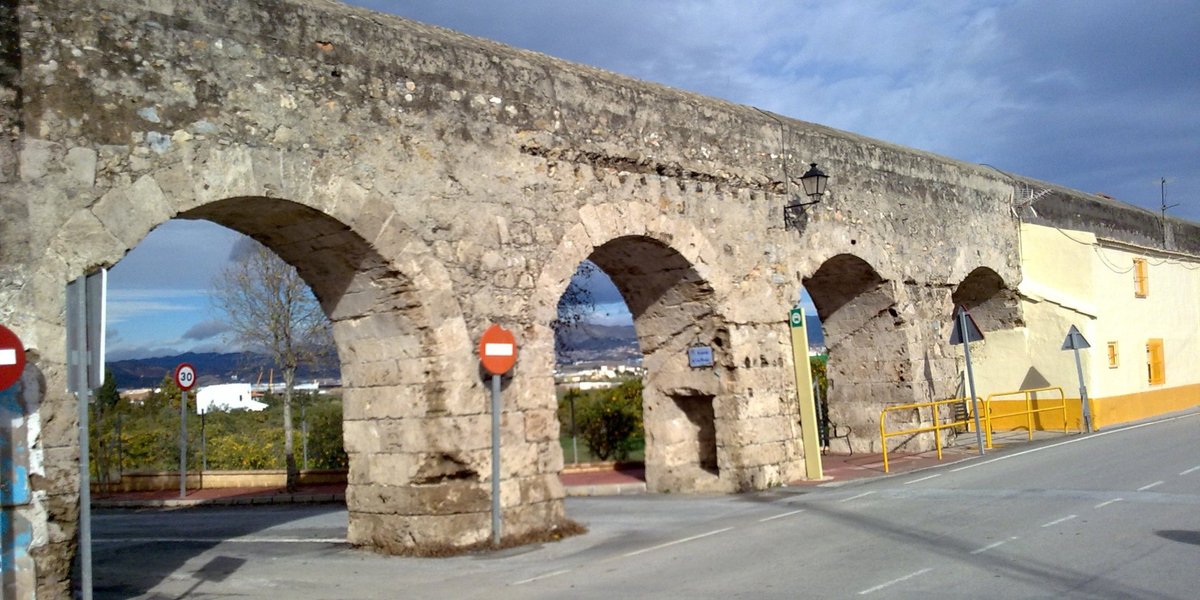

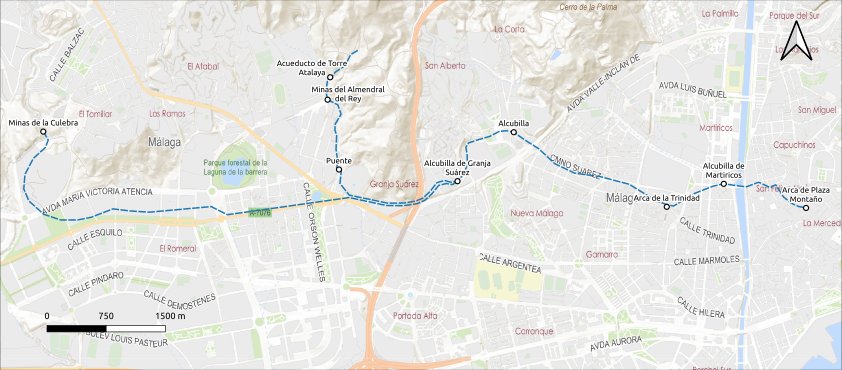
In 1727, work began on a massive engineering project to transport water from the Fuente del Rey to the city of Málaga. Architect Toribio Martínez de la Vega was commissioned to design a plan that included an aqueduct, an irrigation canal, and a bridge over the Guadalhorce river. While construction progressed at a steady pace for about six years, the project faced significant hurdles following the death of the local governor, Jerónimo de Solís y Gante, in 1733. The architect, Martínez de la Vega, also passed away shortly thereafter.
Following these deaths, the project entered a long period of stagnation. For many years, the local government of Málaga and other authorities engaged in a legal dispute over who should succeed Martínez de la Vega. This led to a boycott by the municipal council, which eventually resulted in the paralysis of the project and the cessation of wage payments. By 1781, the construction of the San Telmo Aqueduct rendered the Fuente del Rey project unnecessary for the city's needs.
Despite the long hiatus, some parts of the project continued to see activity. In the late 18th and 19th centuries, private interests funded the construction of the bridge over the Guadalhorce. While Martínez de la Vega built three of the arches, another three were constructed between 1792 and 1799, and the final three were completed in 1820. During this period, temporary wooden walkways were established to cross the river.
By 1930, these wooden paths were removed, and the project was definitively abandoned. Today, the ruins of the aqueduct still display solid masonry constructed with lime mortar and high-quality plastering. Visitors can still see the Arcos de Zapata and part of the Puente del Rey, which stand as remains of the original 18th-century plan.
Sources: Wikipedia, OpenStreetMap, Wikidata, Wikimedia Commons


Written by Nicolo Ciampini
Discuss this with the author and others
No comments yet. Be the first to start the conversation.