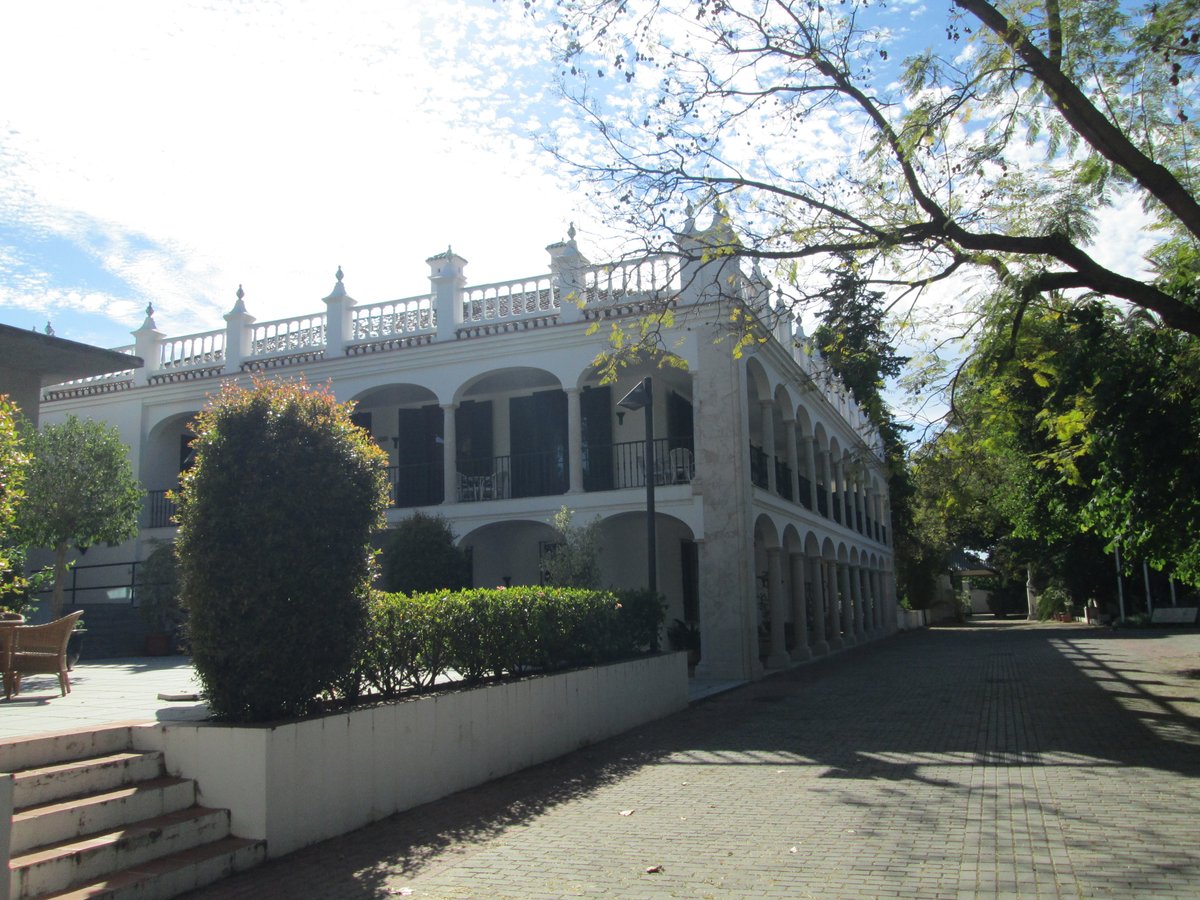

Jardín histórico La Cónsula, ensconced in the Malaga district of Churriana, has served as the headquarters of the Escuela de Hostelería de Málaga since 1993, but its origins hail back to the 18th-century San Rafael farm. Owned by D. Juan Roose Kupckovius, a cónsul de Prusia, the farm inspired the construction of a casa de recreo y del jardín principal de estilo clasicista francés. Fast-forward to the 20th century, and the grand abode found itself patched with a little Hemingway charm, after the renowned author wrote an article for Life magazine detailing a duelo taurino between Luis Miguel Dominguín and Antonio Ordóñez.
This encounter would later spark the imagination for his book The Dangerous Summer, where Hemingway describes La Cónsula as el mejor lugar del mundo por «su luz divina y su cálido clima». The garden boasts an array of 700 specimens derived from 100 unique species, showcasing the Romneya trichocalix, Romneya coulteri, Cycas revoluta, and various especies tropicales y subtropicales. The mansion, a construcción de autor desconocido, carries a striking air reminiscent of colonial buildings, complete with a Tumba del cura - a cupola-shaped temple, originally constructed during the 17th-century tenure of the priest D. Pedro López.
A later touch of modernity came with the 1973 acquisition by the Ayuntamiento, followed by a key restoration in 1984. Today, the alliance between the Ayuntamiento de Málaga and the Junta de Andalucía oversees the resurrected La Cónsula estate, repurposing the mansion to house the Escuela de Hostelería de Málaga.
Sources: Wikipedia, OpenStreetMap, Wikidata, Wikimedia Commons

Written by Nicolo Ciampini
Discuss this with the author and others
No comments yet. Be the first to start the conversation.